
Read Ahead™: 15-Minute Catch-Up Plan for Struggling Readers
$27.00
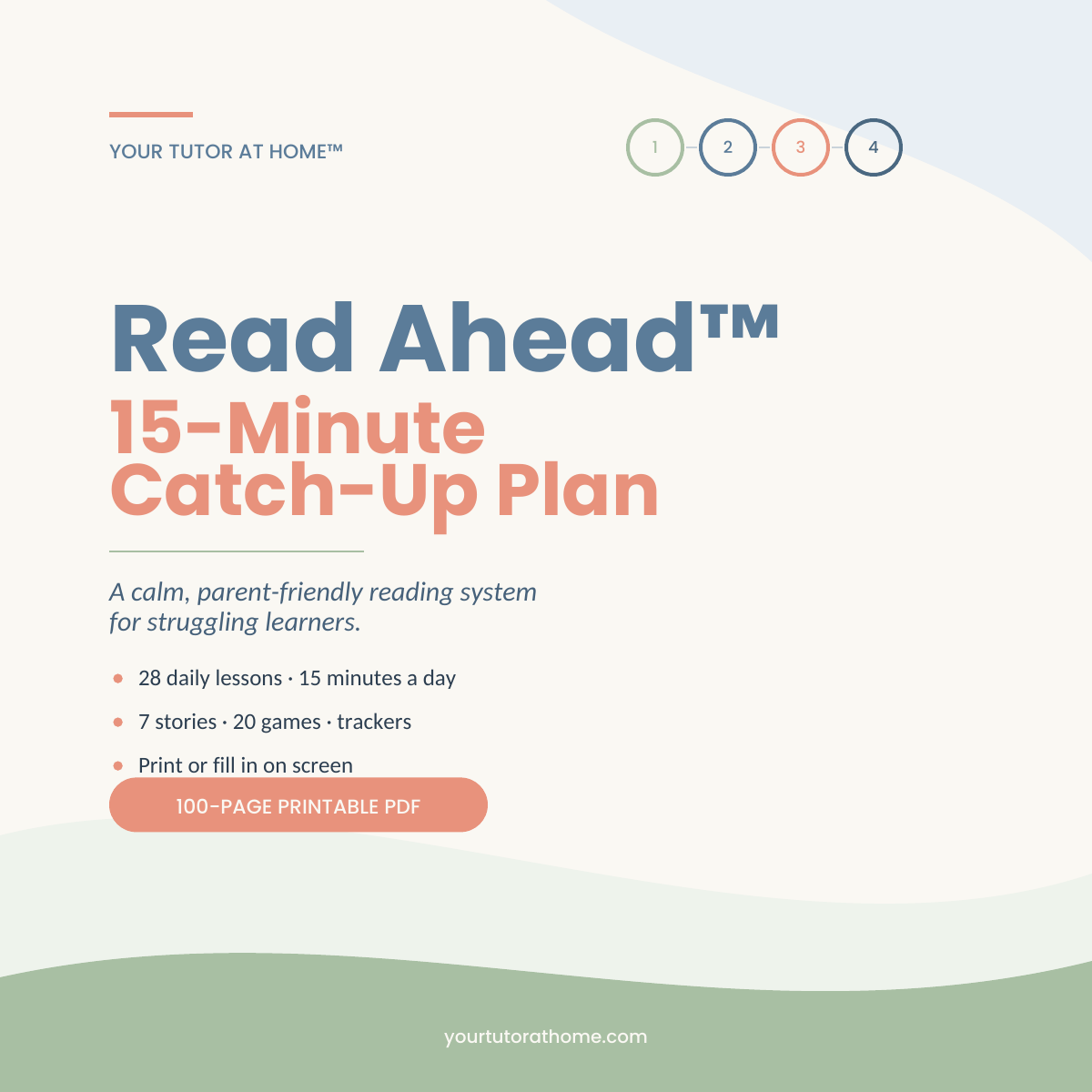
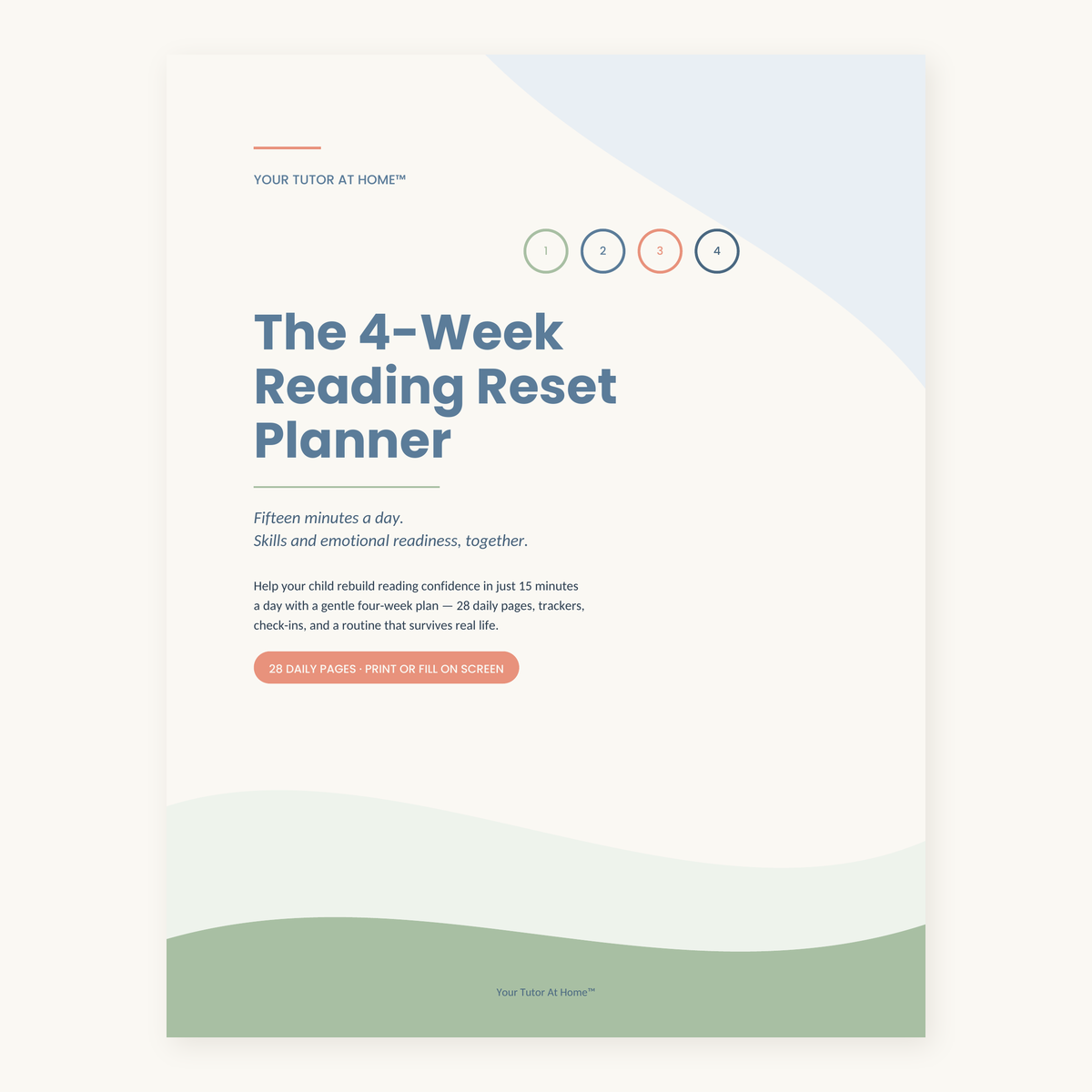
Help your child catch up in reading with just 15 calm minutes a day. No overwhelm, no tears, no hour-long sessions. 28 daily lessons, 7 decodable stories, 20 reusable games, trackers, passport, certificate. Print or fill in on screen. Instant PDF, ages 5–9.
Product Description
On this page
- Why your child fell behind (and why more reading isn’t fixing it)
- What the Read Ahead™ reading catch-up plan actually is
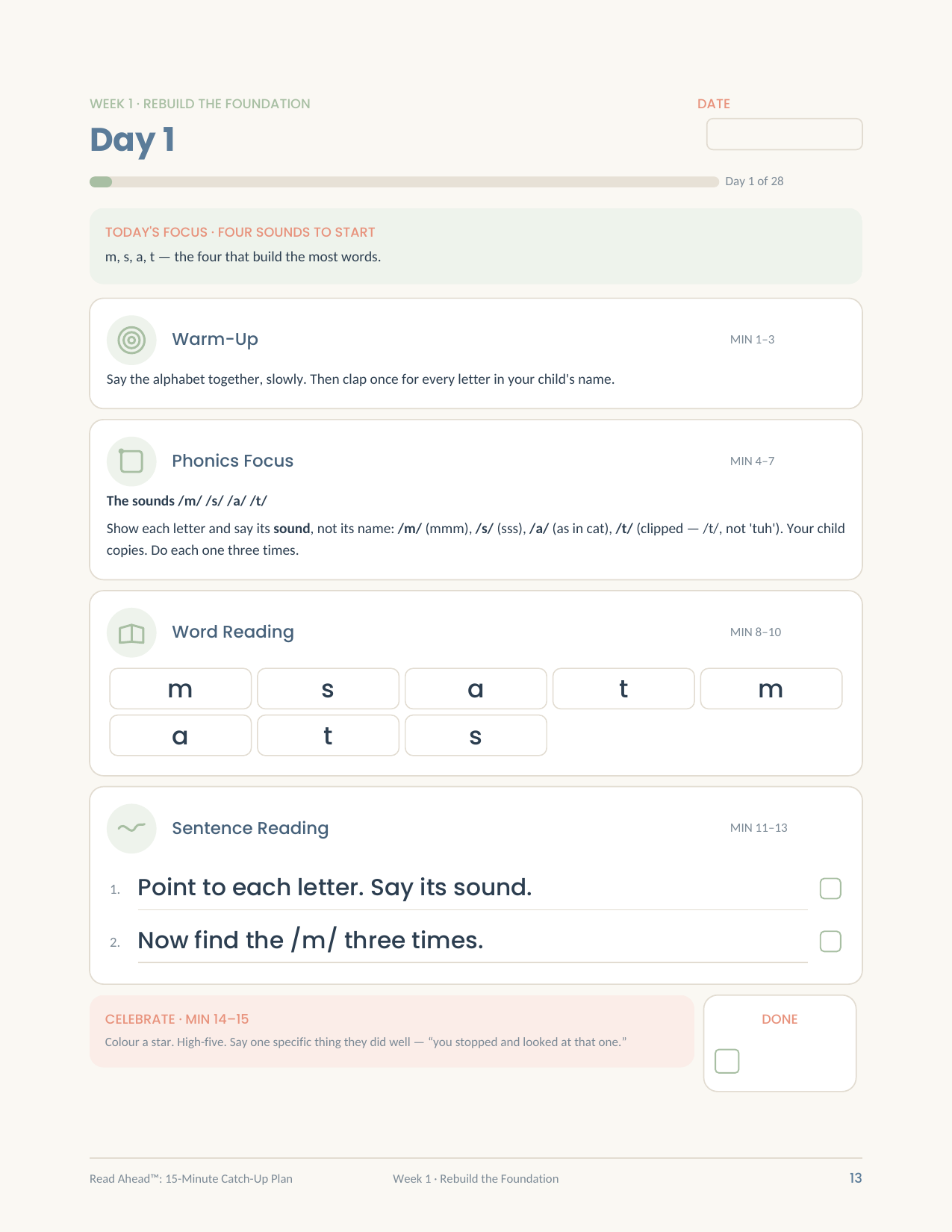
- The daily 15 minutes — the same five steps, every day
- The four weeks
- Everything else inside the reading catch-up plan
- Two editions of the reading catch-up plan, one purchase
- Who this reading catch-up plan is for
- What comes after the 28 days
- Format and details
Why your child fell behind (and why more reading isn’t fixing it)
Most children who fall behind aren’t behind because they aren’t smart. They’re behind because they missed one or two small things — a handful of letter sounds, or how to push three sounds into a word — and the class moved on without them. Everything after that is built on top of the bit they missed.
And the usual response is to ask for more reading. More pages, more minutes, more nights at the kitchen table. Which means more time spent failing at the thing that already isn’t working. You can’t fix a missing foundation by adding another floor.
Read Ahead™ is a reading catch-up plan built the other way round. It goes backwards before it goes forwards, finds the missing pieces, and puts them back in place before it asks your child to move on. It takes fifteen minutes a day and you do not need a teaching background to run it.
What the Read Ahead™ reading catch-up plan actually is
Twenty-eight days. One lesson a day, already written out for you. Week 1 is deliberately easier than your child’s current level — that is the whole point. A child who is quietly guessing at words needs a week of being right before they will risk being wrong again.
Nothing in this reading catch-up plan asks you to diagnose anything, invent activities, or decide what to teach next. You open the page for the day, follow five short steps, and close it. The sequence does the deciding.
The daily 15 minutes — the same five steps, every day
The routine never changes, because the sameness is what makes it possible for a tired parent and an anxious child to keep going for four weeks.
- Warm-Up (min 1–3) — always something they can already do. The session starts with a win.
- Phonics Focus (min 4–7) — one sound, one pattern. Never more than one.
- Word Reading (min 8–10) — CVC words, sight words, blending.
- Sentence Reading (min 11–13) — large print, wide spacing, one line at a time.
- Celebrate (min 14–15) — non-negotiable. It’s what they remember tomorrow.
Fifteen minutes is not a compromise. Short, successful practice done daily beats a long session done twice and then abandoned, and research on early literacy intervention consistently favours brief, frequent, explicit practice — see the guidance at Reading Rockets.
The four weeks
The reading catch-up plan runs in four blocks, and each one only starts where the last one finished:
- Week 1 — Rebuild the Foundation. Letter sounds, beginning and ending sounds, short vowels, first blending.
- Week 2 — Build Reading Confidence. CVC words one vowel at a time, sight words, simple blends.
- Week 3 — Read Small Sentences. Short decodable sentences, plus who / what / where.
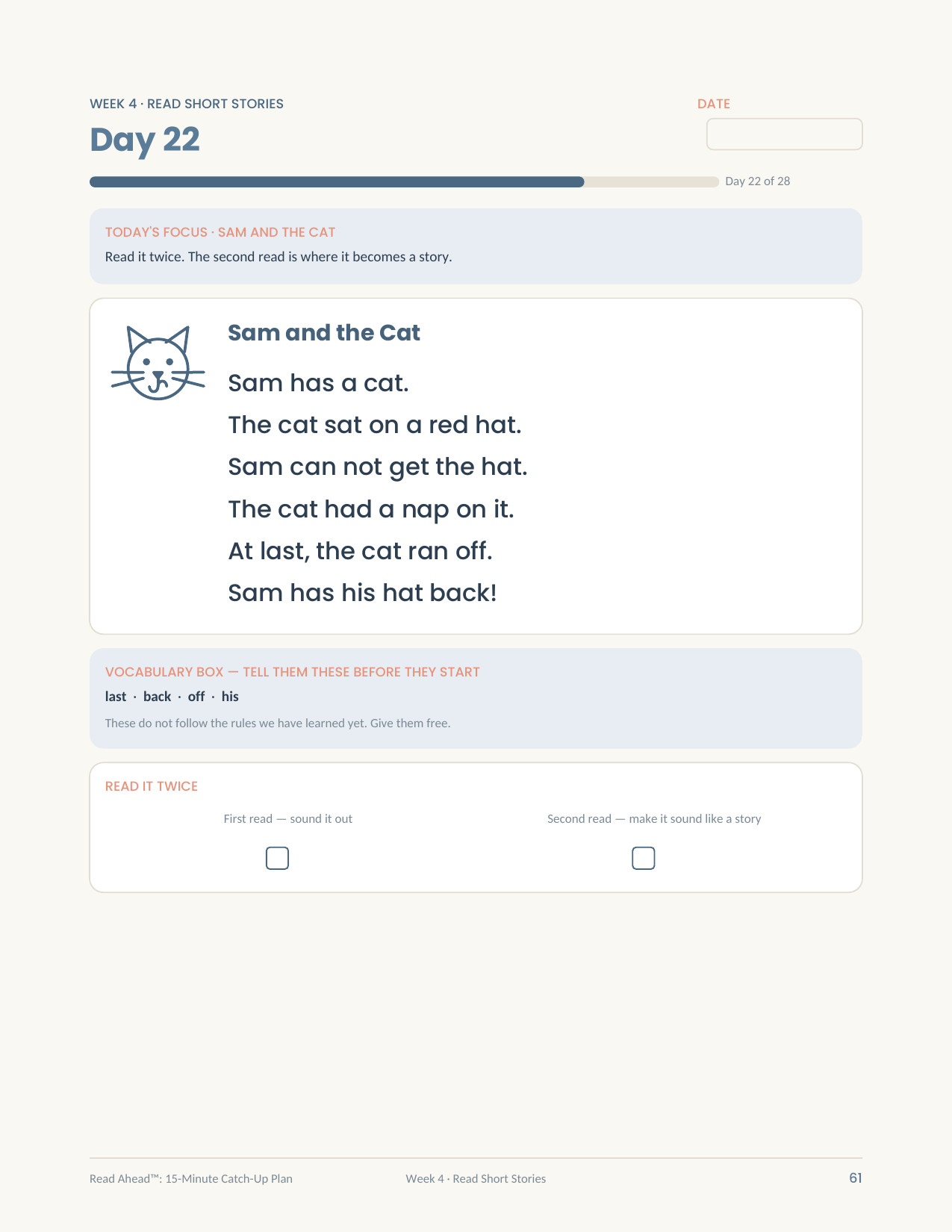
- Week 4 — Read Short Stories. Seven six-sentence stories, each with a picture, three questions, a vocabulary box and space to draw.
By day 28 your child has read seven complete stories on their own. Not because the stories were easy, but because the twenty-seven days before them were built in the right order.
Everything else inside the reading catch-up plan
The daily lessons are the spine. Around them sits everything you need to keep a four-week stretch running when motivation dips:
- Why Reading Falls Behind — the plain-language explanation of what actually went wrong.
- Signs Your Child Needs a Catch-Up Plan — checklist with a score guide.
- Parent Success Tips and a full Parent FAQ.
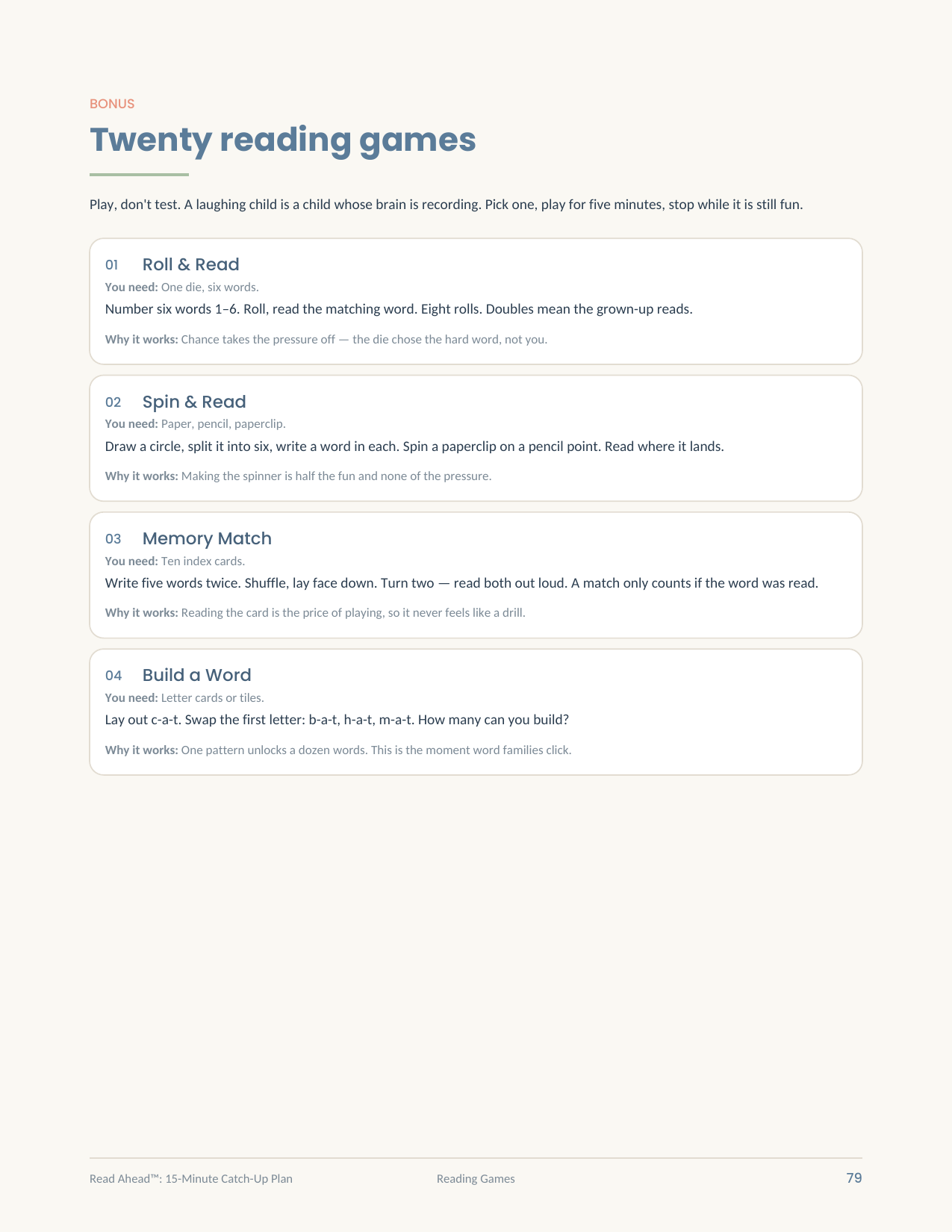
- 20 reusable games you can pull out on any day, in any week.
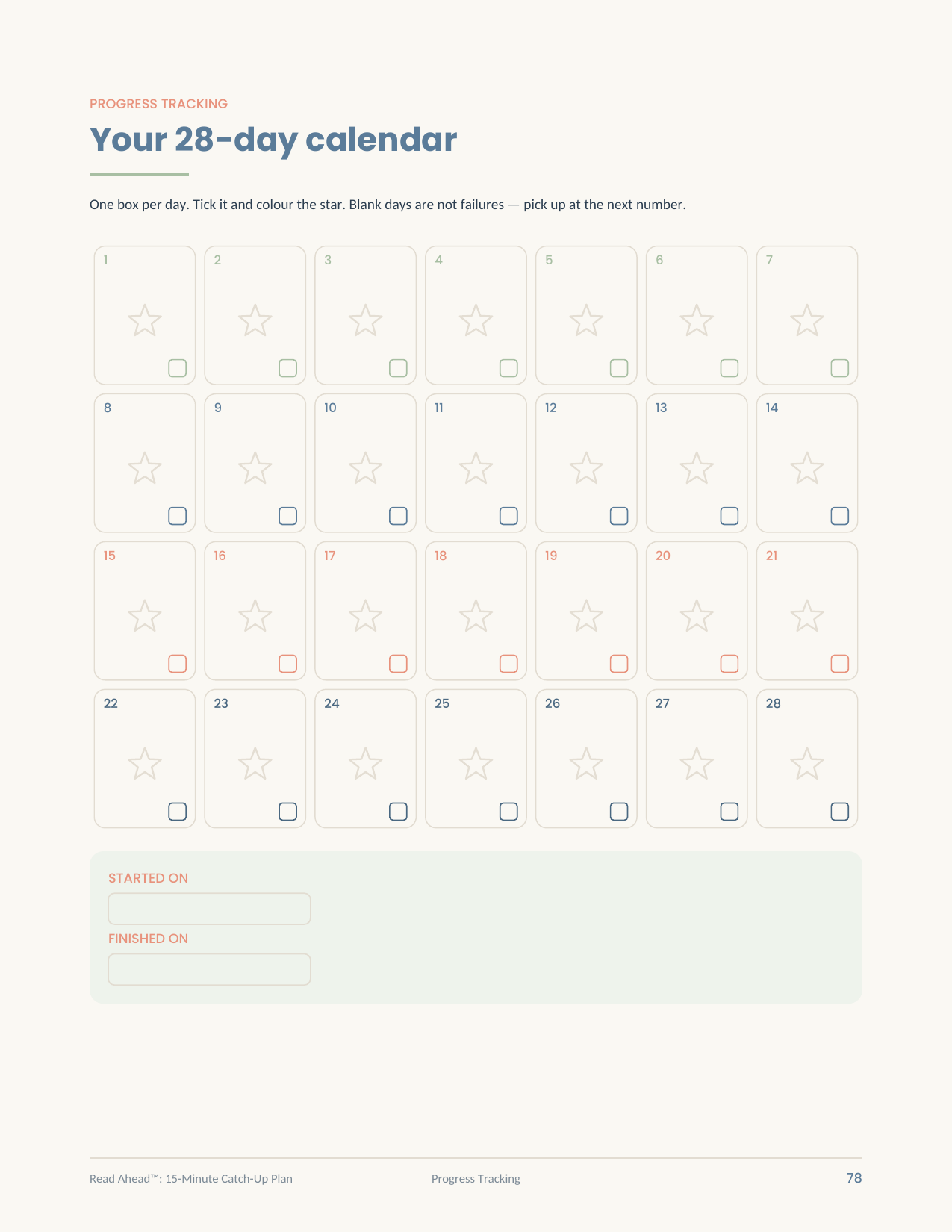
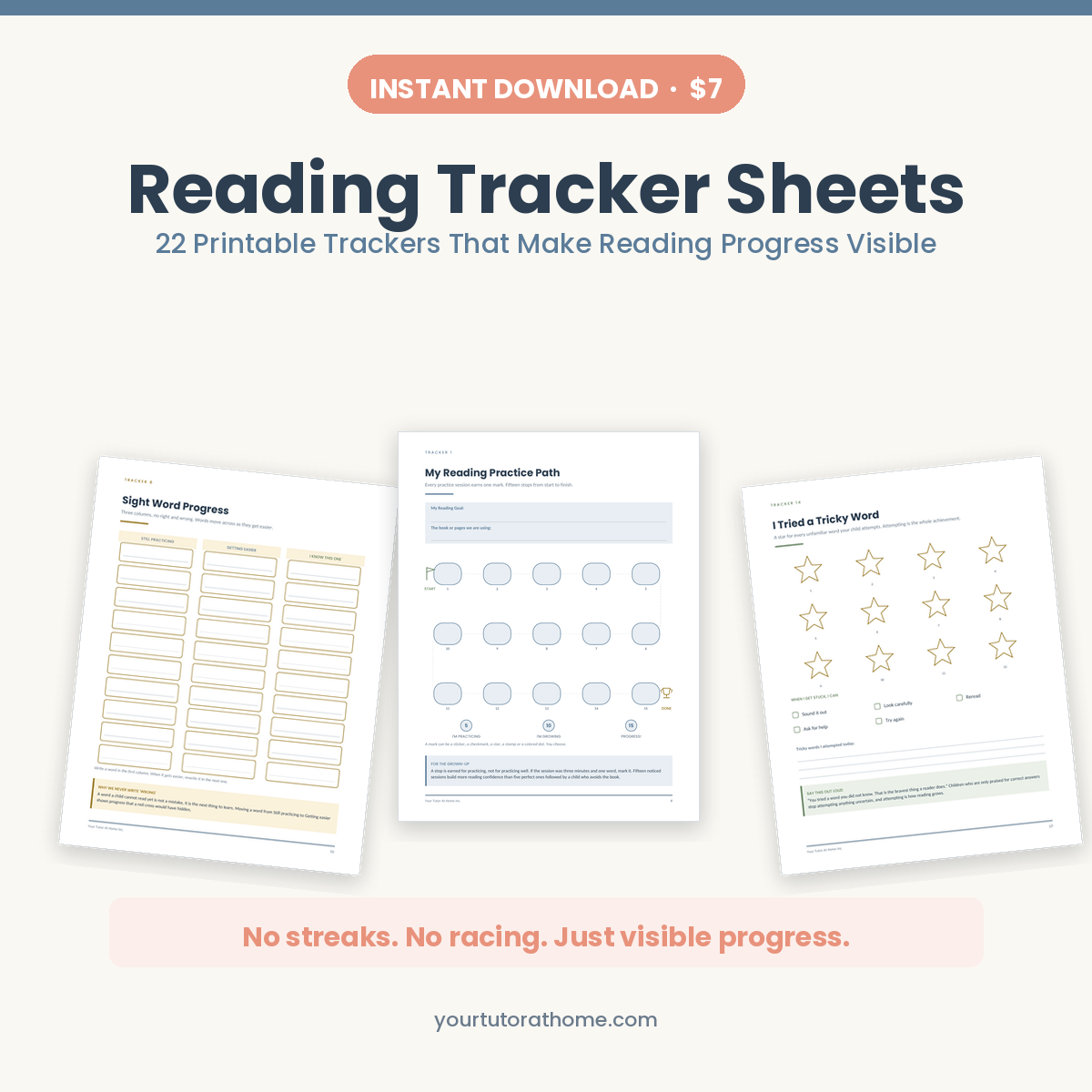
- Confidence tracker, observation log, fluency tracker and graph, 28-day calendar.
- Reading passport, star chart, printable stickers and a completion certificate.
- Emergency Reading Reset — for the day it falls apart. It will, once.
- 40 indoor and 20 outdoor activities, plus the 100 Reading Challenge and seasonal trackers.
- A What’s Next roadmap for day 29 onwards.
Two editions of the reading catch-up plan, one purchase
Every page comes twice. Print the whole thing and work on paper, or open the fillable edition and let your child type straight onto the page — useful for children who find handwriting itself a barrier, and for anyone who would rather not run 100 pages through a printer. Same content, same order, your choice each day.
Who this reading catch-up plan is for
Children aged roughly 5–9 (K–3rd grade) who are behind their class in reading, who guess at words, who read a word correctly on one line and miss it on the next, or who have started saying they hate reading. It suits neurodivergent learners well because the structure is identical every day and the sessions are short by design; the Understood library is a useful companion if you are also exploring a possible learning difference.
Start somewhere else first if reading currently ends in tears most nights. Drilling phonics into an overwhelmed child teaches them they are bad at reading. Calm first — then this. If you are not yet sure what is going wrong, the free 15-Minute Reading Strategy Guide™ is the better starting point, and the Free Reading Checklist™ will help you name the problem before you spend anything.
What comes after the 28 days
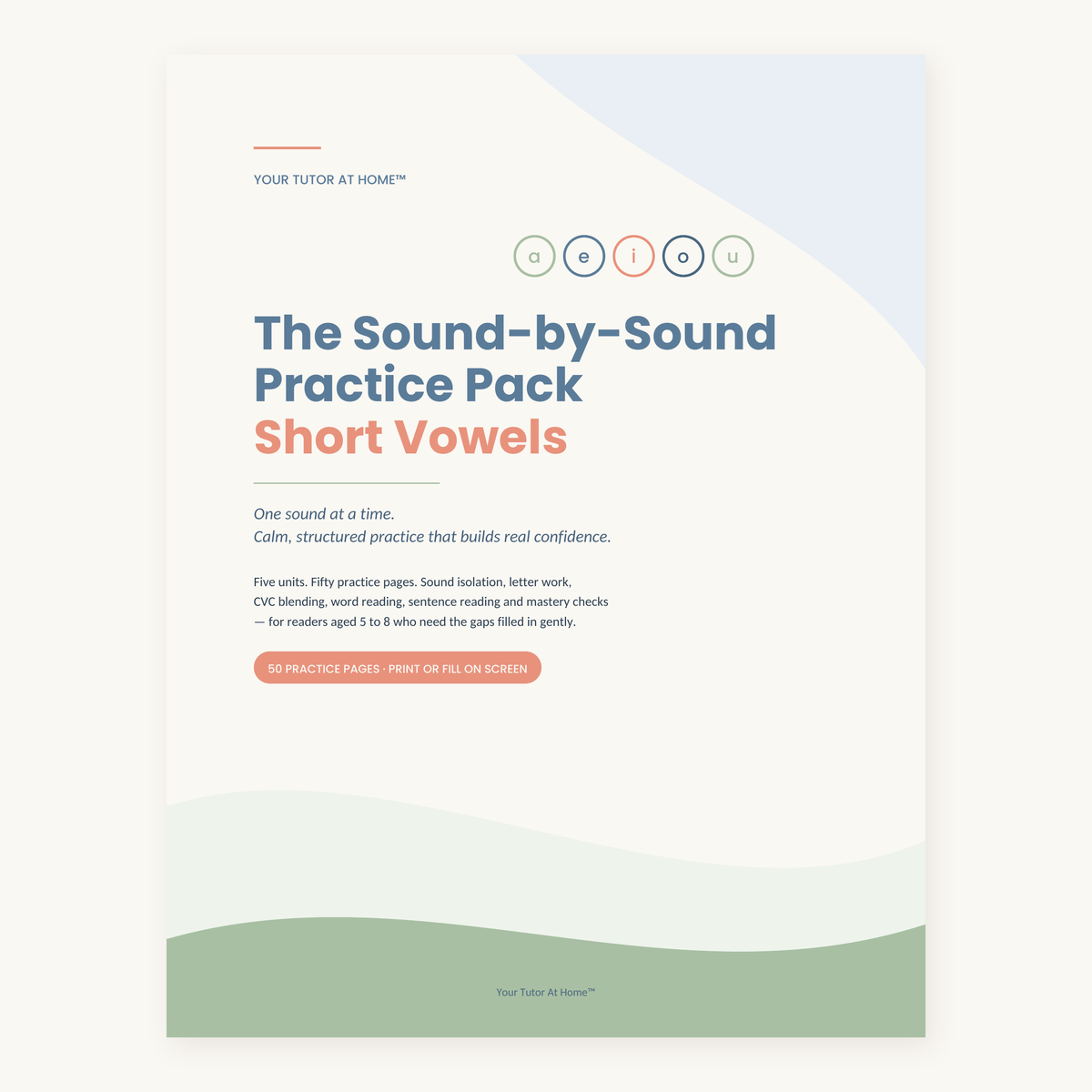
A reading catch-up plan is a bridge, not a destination. Most families move into targeted skill work once the foundation is back. If short vowels are still the sticking point, the Sound-by-Sound Practice Pack™ takes all five one at a time. For broader decoding practice, Reading Support: Phonics Worksheets™ covers 66 worksheets and five decodable passages. If the reading is now technically fine but your child still shrinks from it, the Reading Confidence Workbook™ is the one to reach for.
Format and details
The whole reading catch-up plan arrives as an instant PDF download — 100 pages, two editions, US Letter. Nothing ships. Lifetime access, licensed for personal single-family use. Ages 5–9, K–3rd grade.
Written by Mrs. Nathalie — experienced tutor, 20+ years working with struggling readers, neurodivergent learners, and children of all learning styles.

Reviews
There are no reviews yet.