
Calm Focus & Attention Builder™
$17.00
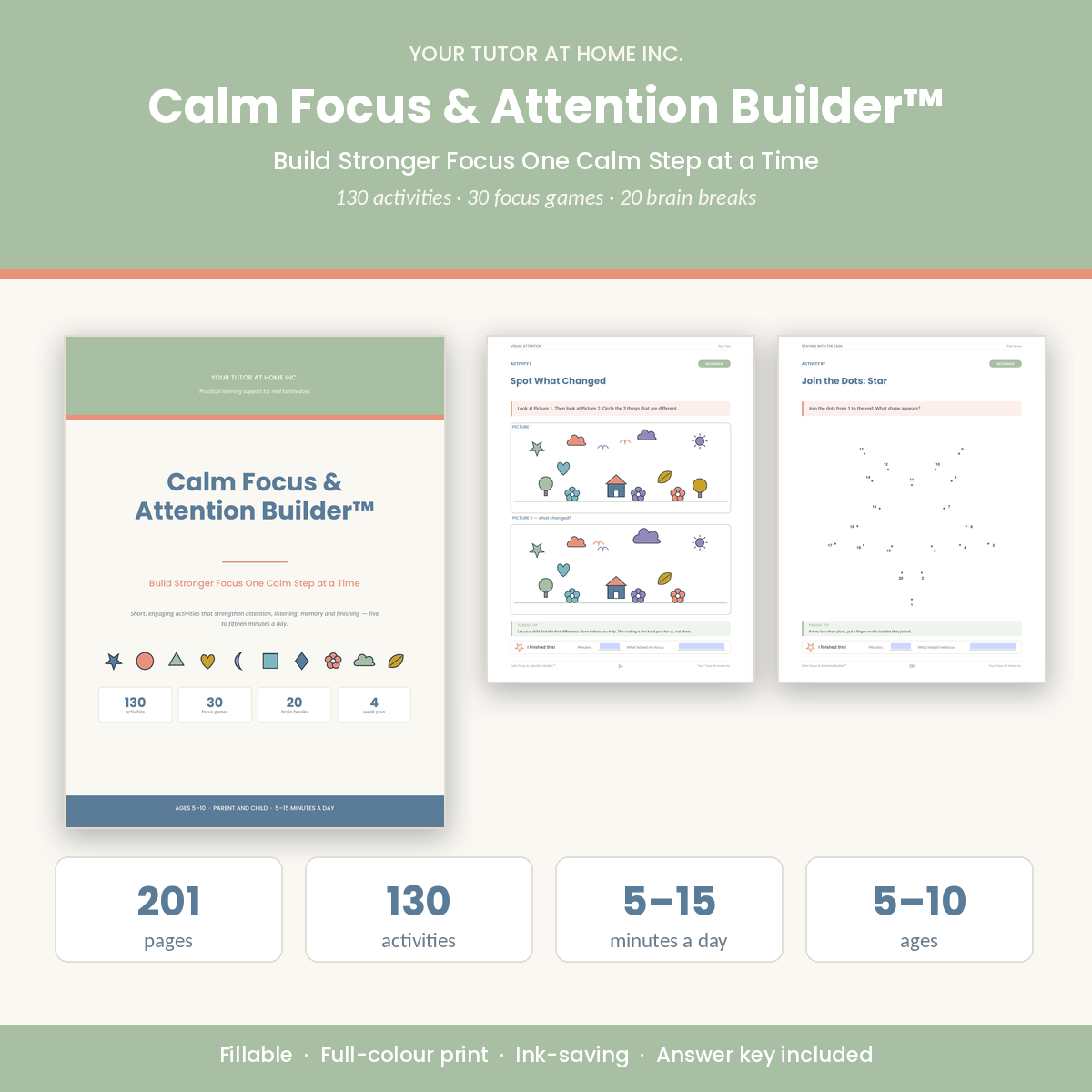
Focus is a skill, not a personality — and skills grow with practice. Calm Focus & Attention Builder™ gives you 130 short focus activities, 30 games and 20 brain break cards that build attention, listening, memory and finishing, five to fifteen minutes at a time. Every puzzle is fresh, every activity has a clear ending, and nothing takes an hour. Fillable, full-colour and ink-saving PDFs. Instant download, ages 5–10.
Product Description
Your child can focus. Just not on demand, and not for an hour.
Most attention practice fails for the same reason: it is too long. A child asked for twenty-five minutes of concentration who gives up at nine has just practised giving up. A child asked for six minutes who finishes has practised finishing — and finishing is the part that transfers.
Every activity in this book takes five to fifteen minutes. Not one is a drill. Nothing takes an hour. The focus activities here are built around that single constraint, because a finished page teaches something an abandoned one never will.
Jump to:
Focus activities short enough to finish ·
The four-step session ·
The B.U.I.L.D. Framework™ ·
What else is inside ·
Three editions ·
Who this is for ·
Where this sits ·
An honest note
Focus activities that are short enough to finish
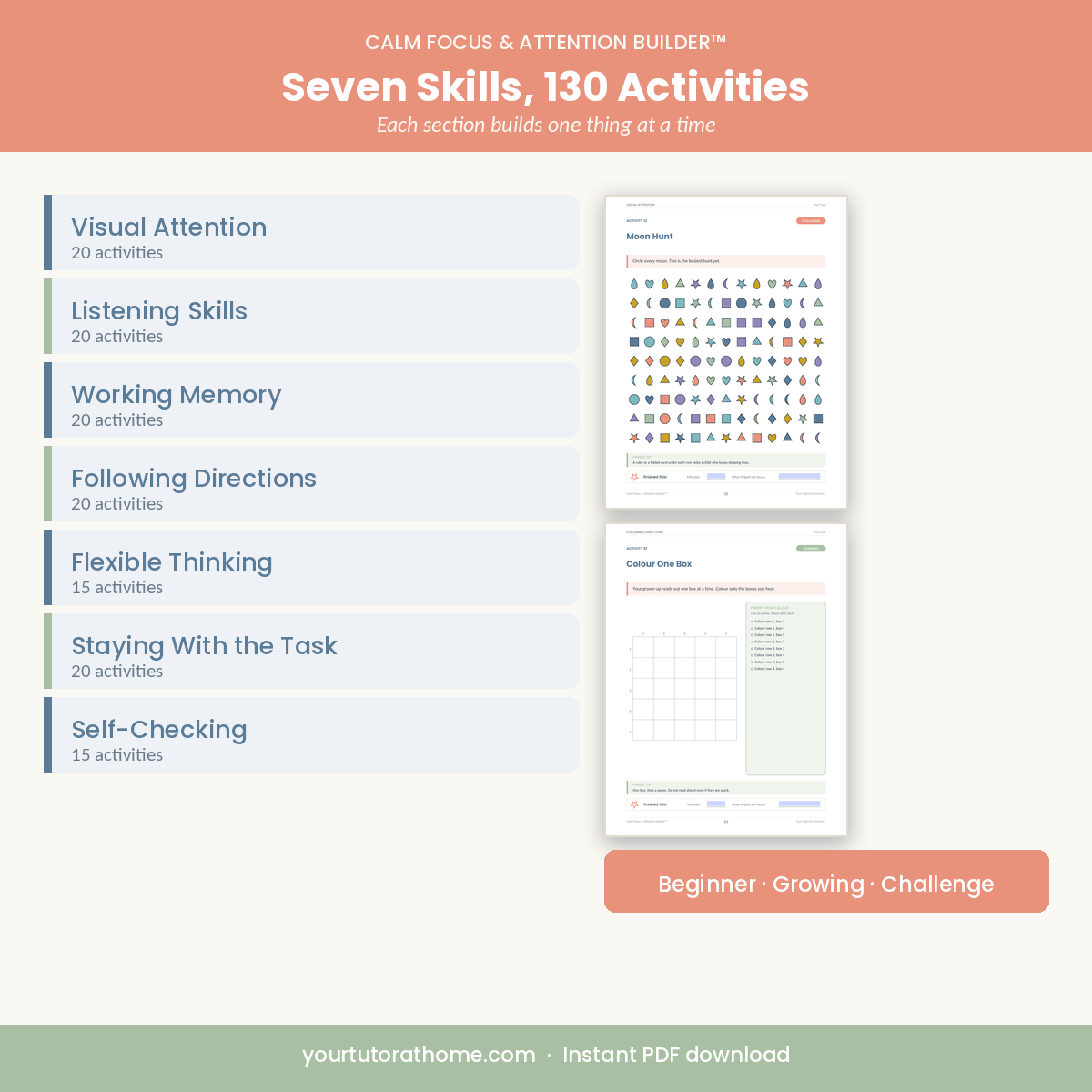
There are 130 focus activities here, sorted into seven skills, and each is marked Beginner, Growing or Challenge so you can pitch it at the right level tonight rather than guessing.
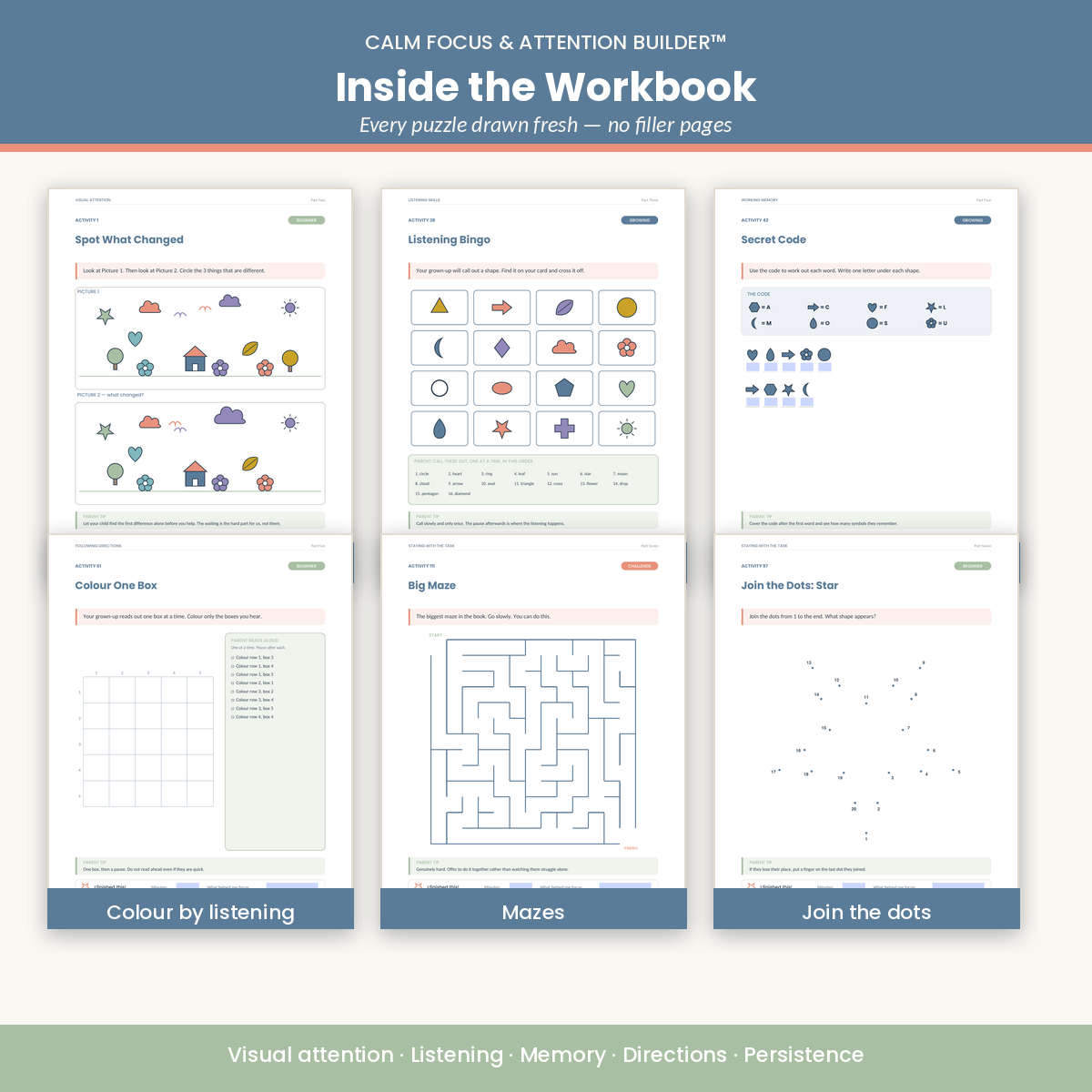
Every puzzle is drawn fresh rather than reused, so the focus activities in one section never repeat the pictures in another. The mazes are all solvable and all solved in the answer key.
- Visual Attention — 20 activities: spot-the-difference, shape hunts, pattern copying, hidden shapes
- Listening Skills — 20 activities: clap patterns, sound detective, listening bingo, direction challenges
- Working Memory — 20 activities: look-and-remember, secret codes, number recall, what-is-missing
- Following Directions — 20 activities: colour-by-listening grids, sorting, step-by-step drawing
- Flexible Thinking — 15 activities: odd one out, change-the-rule sorts, opposite games
- Staying With the Task — 20 activities: mazes, join-the-dots, tracing, long pattern rows
- Self-Checking — 15 activities: error detectives, check-the-work pages, a reusable checking list
The four-step session
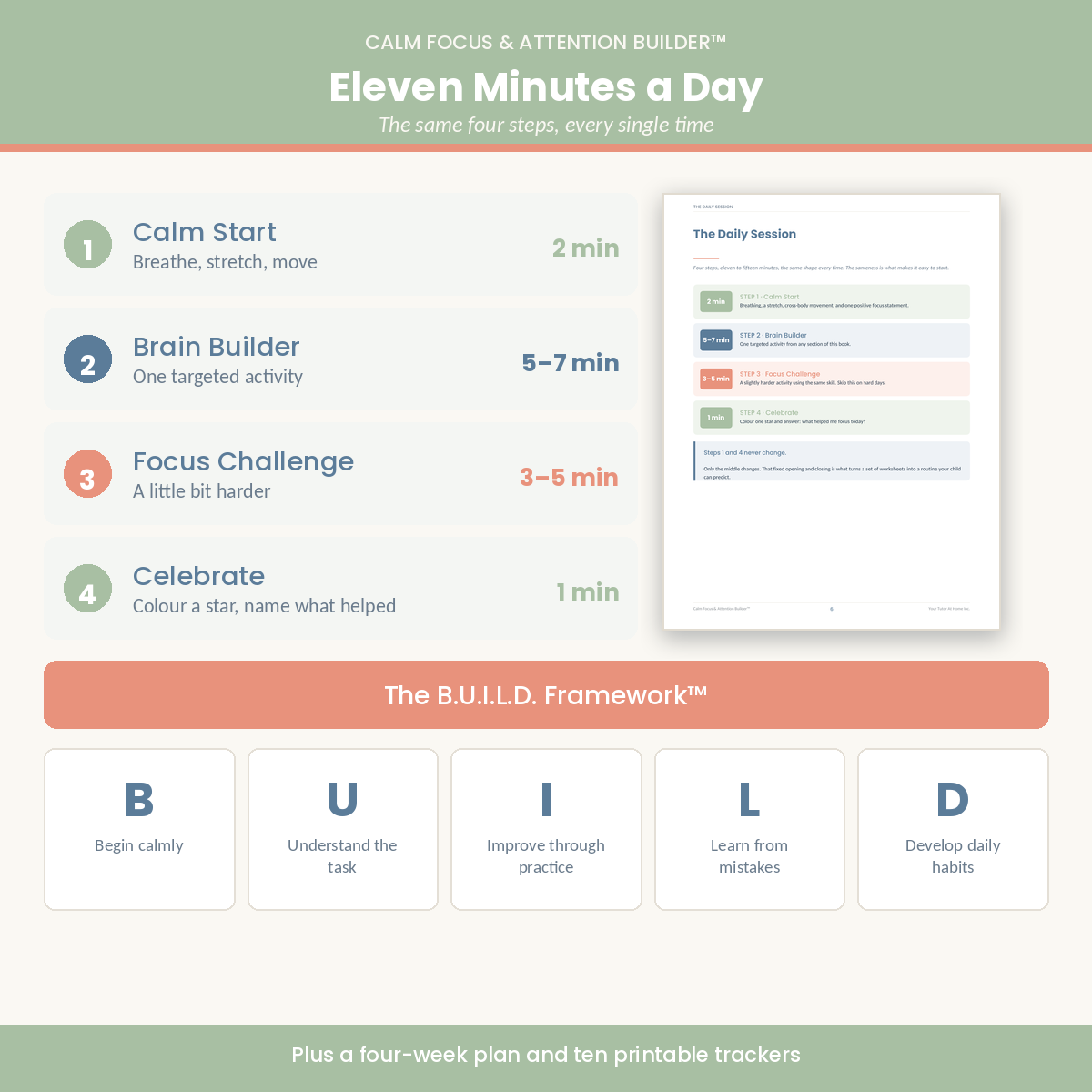
Every session has the same shape, and the sameness is what makes it easy to start.
- Calm Start (2 min) — breathing, a stretch, cross-body movement, one focus sentence.
- Brain Builder (5–7 min) — one targeted activity.
- Focus Challenge (3–5 min) — slightly harder, same skill. Skip it on hard days.
- Celebrate (1 min) — colour a star, and answer: what helped me focus today?
The middle two steps are where the focus activities go; the outer two never vary.
Steps one and four never change. That fixed opening and closing is what turns a pile of worksheets into a routine your child can predict — and predictable beginnings are exactly what children with shaky attention need most. Understood makes a similar point about structure: what looks like a motivation problem is very often a skills problem wearing a motivation costume.
The B.U.I.L.D. Framework™
Begin calmly · Understand the task · Improve through practice · Learn from mistakes · Develop daily habits.
The L is the one most of us skip. When a child gets something wrong, the instinct is to fix it fast and move on. Sitting with the mistake for ten seconds — “where do you think it went wrong?” — is worth more than the correction, and it is where self-checking begins. It is also why the last fifteen focus activities in the book are entirely about checking your own work.
What else is inside
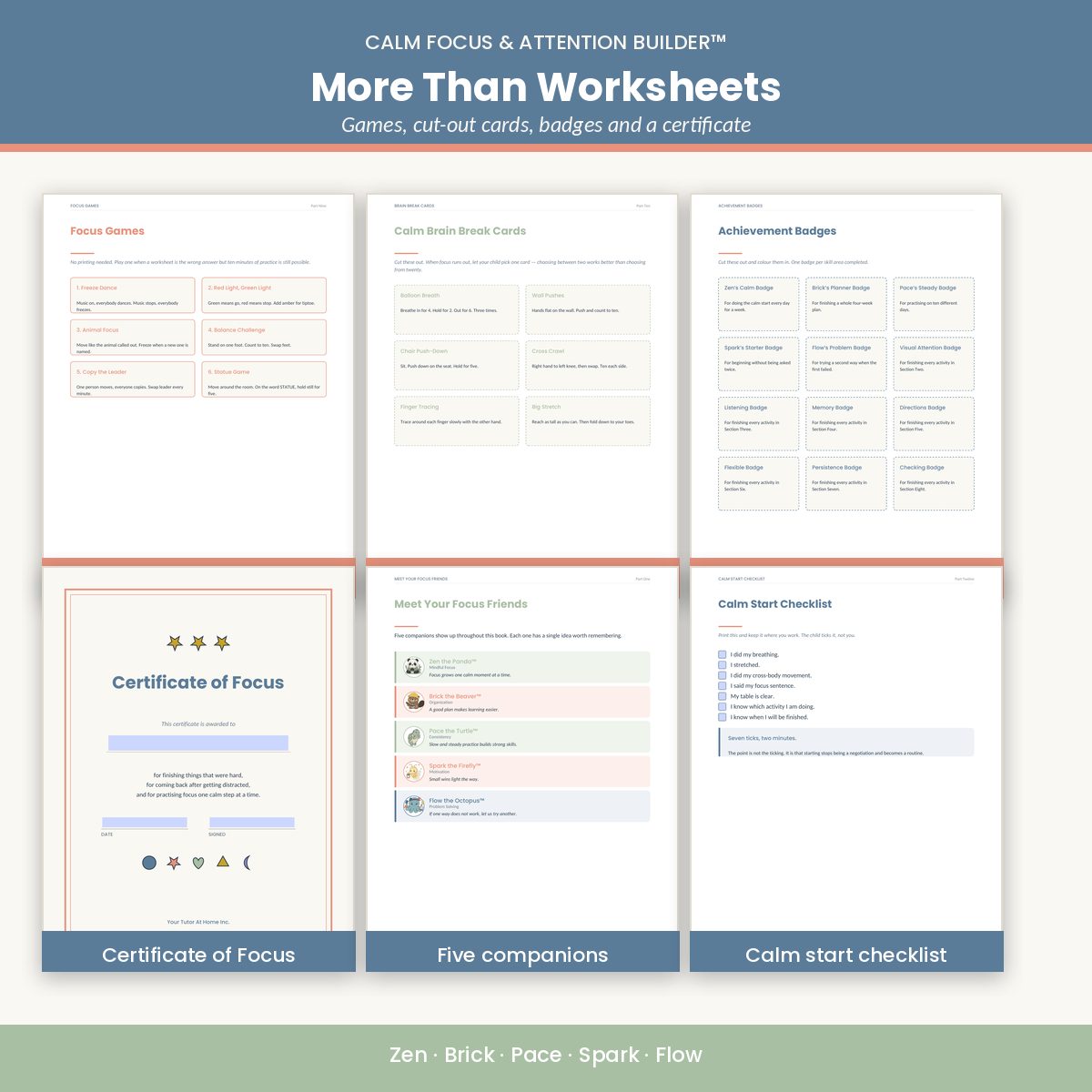
- 30 focus games needing no printing and almost no equipment — for the days a page is the wrong answer
- 20 cut-out brain break cards for resetting a body that has stopped cooperating
- A four-week programme if you would rather not choose an activity every day
- Ten printable trackers — daily log, weekly goals, progress chart, calm start checklist, reflection pages
- A full answer key, including worked solutions to all five mazes
- A certificate and twelve achievement badges
- Five companions — Zen the Panda™, Brick the Beaver™, Pace the Turtle™, Spark the Firefly™ and Flow the Octopus™
The games matter more than they look. A child who plays Silent Ball for four minutes has practised impulse control as genuinely as one who completed a page, which means the focus activities keep going on days when sitting down is out of the question.
Short, structured practice at home is well supported by free resources too — Reading Rockets has a large library on the same principle applied to reading.
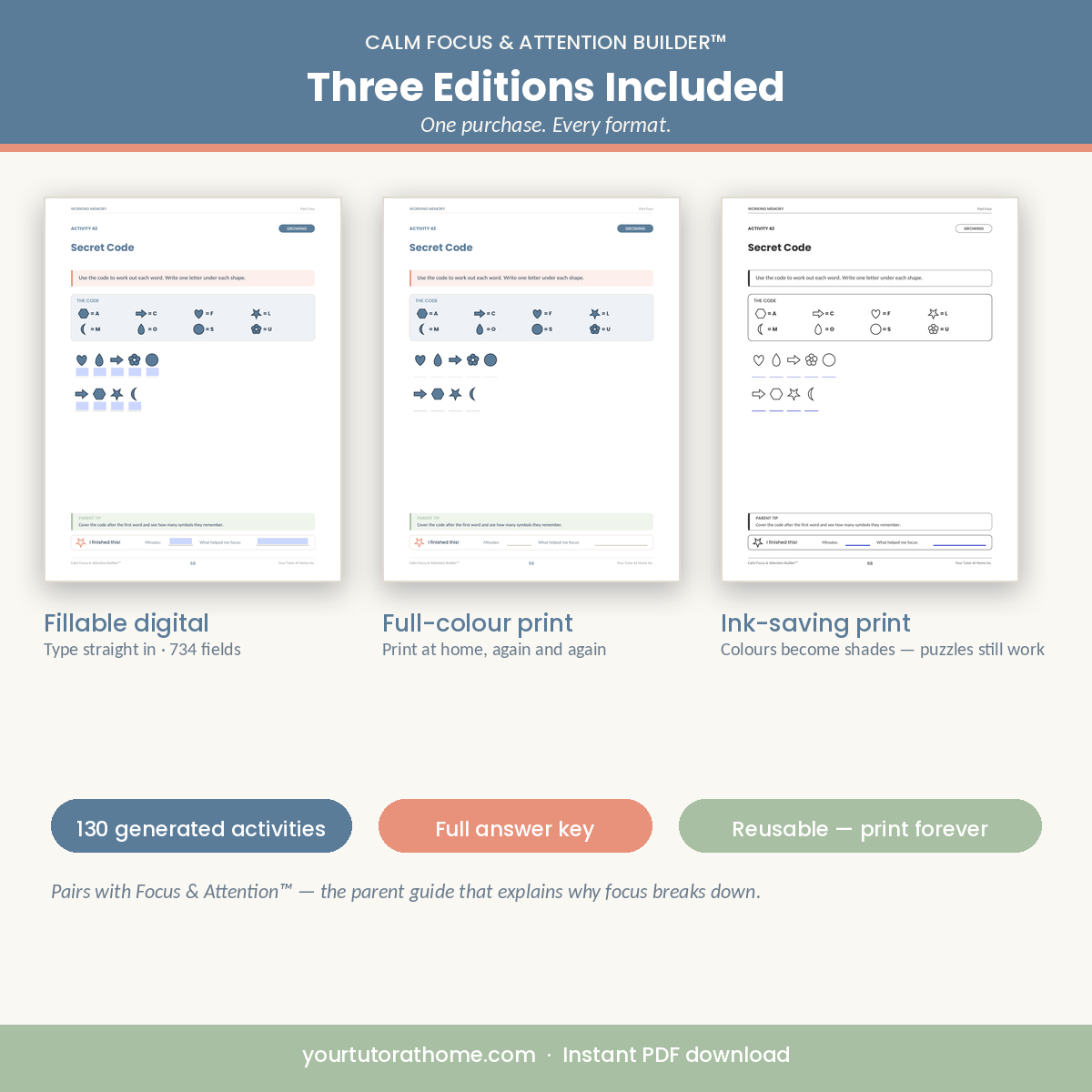
Three editions of the focus activities
A fillable digital edition with 734 form fields your child can type straight into on a tablet, a full-colour print edition, and an ink-saving edition. The ink-saving version deserves a note: because these focus activities depend on telling colours apart, the six-colour palette is mapped to six distinct greys rather than dropped. The puzzles still work on a black-and-white printer, and the large page fills come out instead.
Who this is for
These focus activities were written for parents of children aged 5–10 who struggle with staying focused, following directions, finishing activities, working memory, impulse control during learning, transitions or task persistence. It suits children with ADHD, autism, anxiety and executive-functioning differences, and it suits children with none of those who simply find sitting still hard. If you are wondering what is typical for your child’s age, the CDC’s ADHD pages are a calm, non-commercial place to read more.
Where this sits in the library
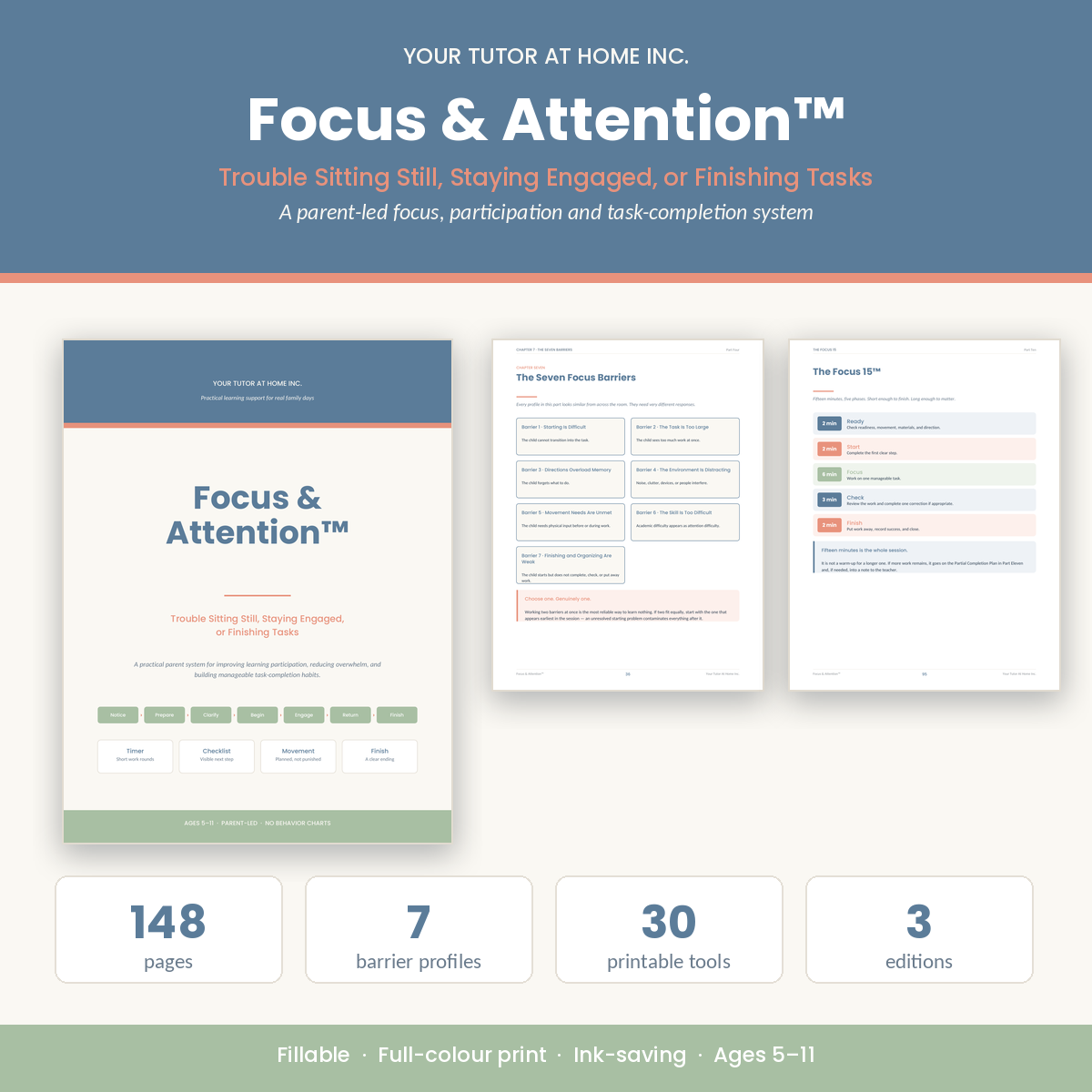
These focus activities are the practice half of a pair. If you are still asking why your child struggles to focus, start with Focus & Attention™ — the parent guide that walks through seven different barriers and helps you identify which one you are actually dealing with. Together they answer both questions: what is happening, and what do we practise about it.
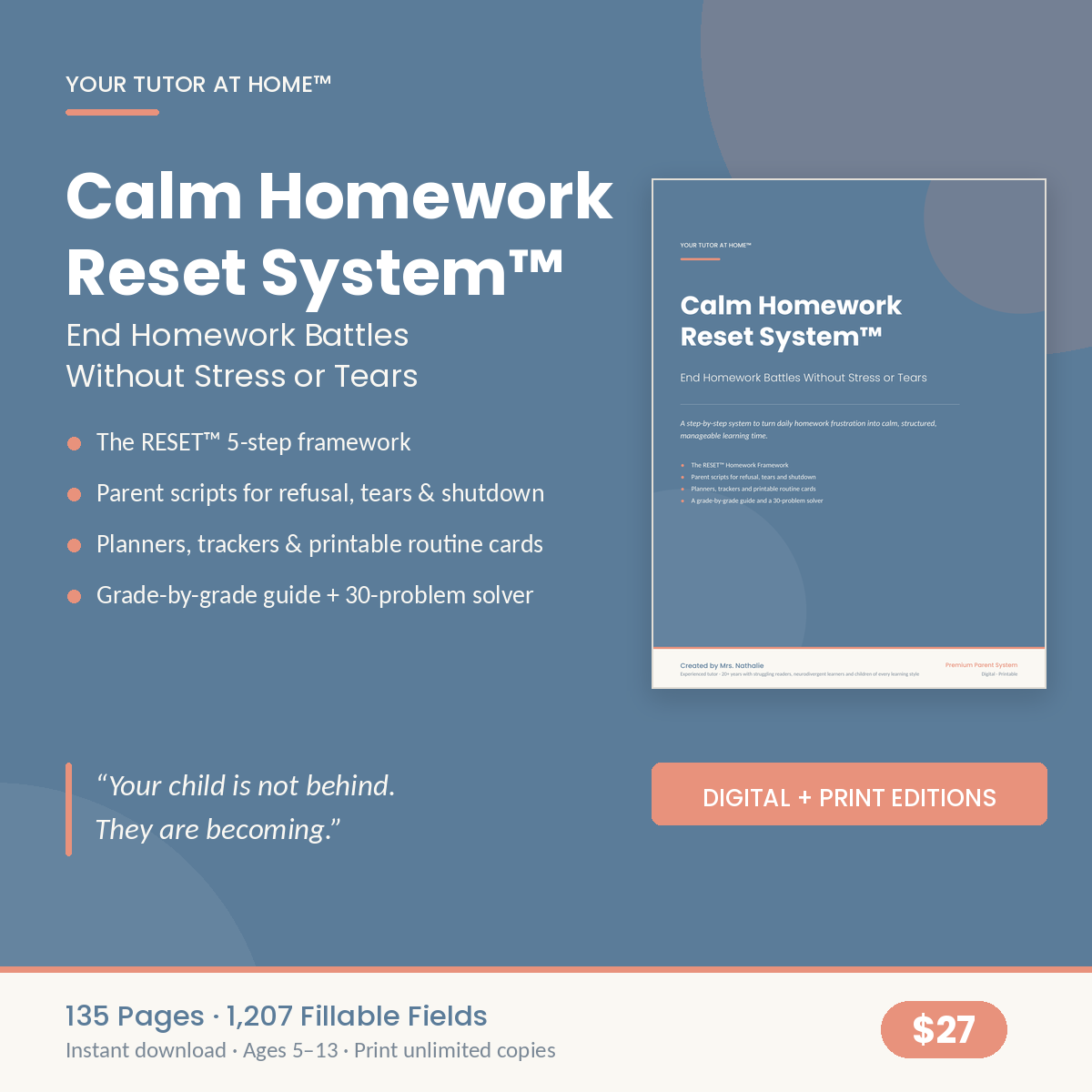
If reading is the underlying difficulty rather than attention, the free reading quiz is a better first step. If the fight is specifically about homework, try the Calm Homework Reset System™. And once these skills are growing, the 15-Minute Calm Learning Routine™ Workbook turns them into a consistent daily routine.
An honest note
This workbook does not diagnose or treat ADHD or any other condition, and it does not promise a child who sits still. Attention grows slowly and unevenly — a child who manages six minutes today and four tomorrow is not going backwards. That is simply what growth looks like at this age.
What it does offer is a calm plan, realistic expectations, and enough short focus activities that you will not run out. Used two or three times a week, there is well over a year of practice in here.
Your child is not behind. They are becoming.
Reviews
There are no reviews yet.