
Calm Learning Routine System™: Build a Daily Learning Routine That Works in 15 Minutes
$37.00
Create a calmer, more consistent daily learning routine for kids — without adding another exhausting hour to your evening.
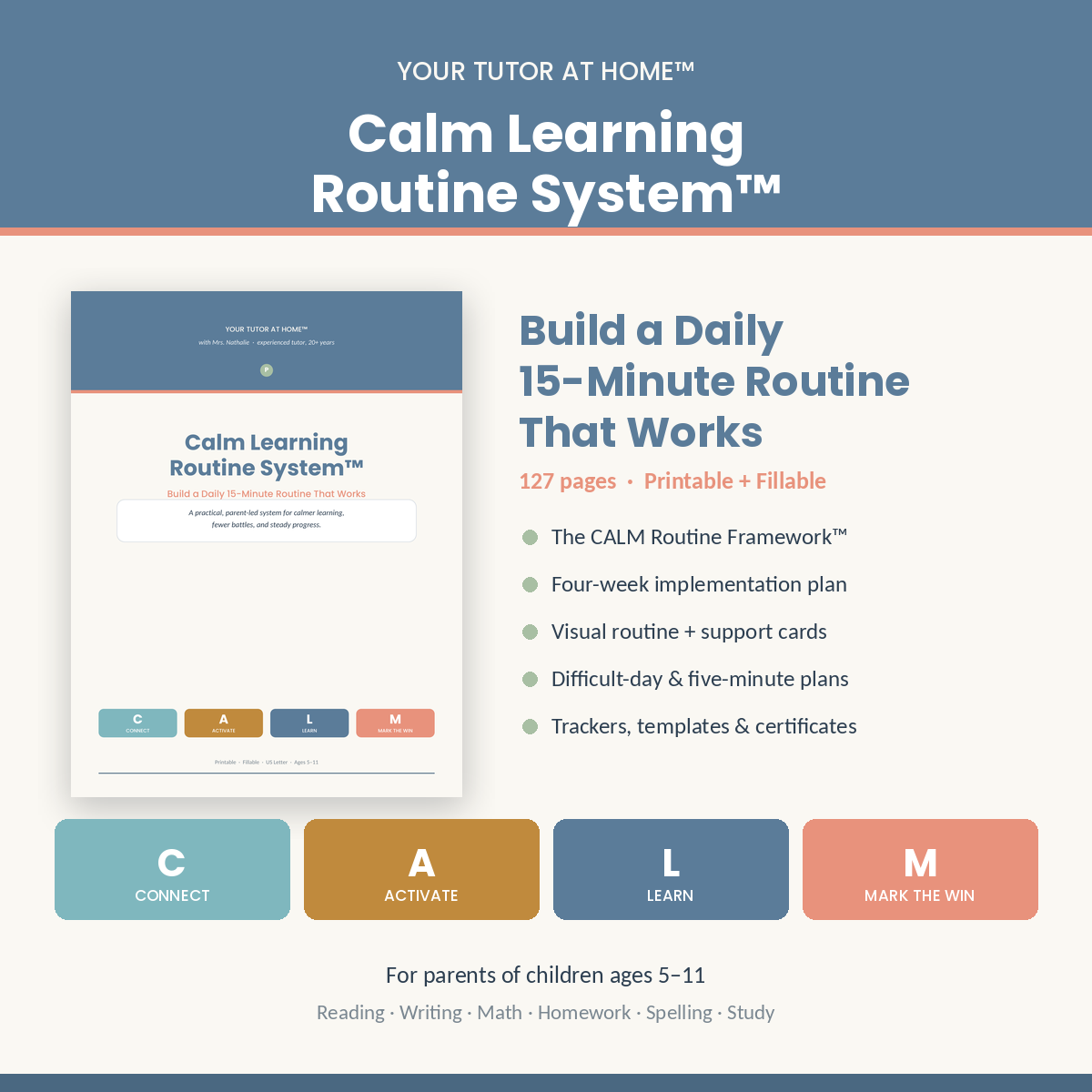
The Calm Learning Routine System™ gives parents a practical framework for building a focused 15-minute routine around reading, writing, math, homework, or study practice. With step-by-step planning pages, visual routine cards, readiness checklists, four weeks of implementation support, difficult-day alternatives, and reusable trackers, families can stop improvising every evening and start following a routine they can actually maintain.
127 pages · Printable + fillable PDF · Ages 5–11
Product Description
A daily learning routine for kids that actually fits your real life
If learning time turns into avoidance, frustration, distraction or arguments, the problem may not be a lack of effort. Your family may simply need a clearer structure. This system helps you build a daily learning routine in just 15 minutes a day — covering reading, writing, math and homework — with a four-week parent plan, visual routine cards, readiness checklists, difficult-day options and printable progress trackers.
Instead of pushing through long sessions that end in tears, you will learn how to choose the right time, prepare a calmer environment, set one achievable goal, and stop before frustration takes over.
In this guide
- Why most daily learning routines break down
- The CALM Routine Framework™
- Why a daily learning routine runs 15 minutes
- What you will be able to do
- Everything in the 127-page daily learning routine guide
- Who this daily learning routine is for
- How to start your daily learning routine this week
- An honest note about what this is
- About Mrs. Nathalie
Why most daily learning routines break down
Routines rarely fail because a family is not trying. They fail because the session is too long, the time changes every day, the materials are not ready, the child cannot see when it will end, or a missed day gets treated as a failure.
That last one matters more than parents expect. A daily learning routine does not fail because you skipped a day. It fails when it becomes too difficult to restart — when Tuesday’s missed session turns into a doubled Wednesday, and Wednesday turns into giving up entirely.
Every one of those failure points is structural, not personal — they are properties of how the routine was set up, not of your child. Which means every one of them can be designed out in advance, before the first session, rather than fought over at the kitchen table each evening.
The CALM Routine Framework™
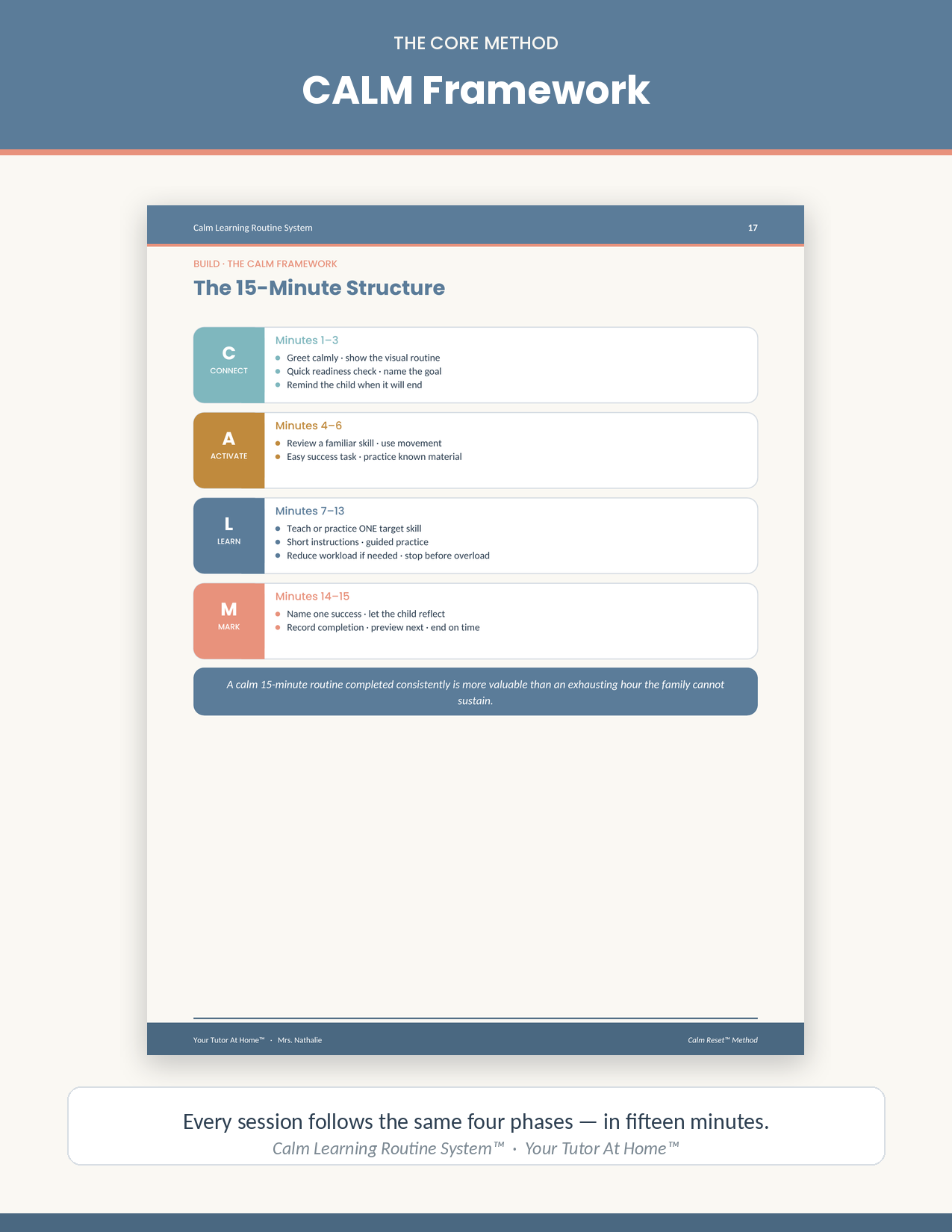
Every session follows the same four phases, so your child always knows what is coming. Those four phases are the whole daily learning routine, and predictability is doing quiet work inside them: a child who recognizes the shape of the session spends far less energy bracing against it.
- C — Connect (minutes 1–3). A calm transition, a quick readiness check, and a clear ending in sight.
- A — Activate (minutes 4–6). A short warm-up or familiar success task that wakes up the brain.
- L — Learn (minutes 7–13). One small, clearly defined skill — not everything at once.
- M — Mark the Win (minutes 14–15). Name a success, record it, end on time.
Ending on time is not a detail. It is the phase most families skip, and it is the one that decides whether tomorrow’s session happens at all. A daily learning routine that stops while things are still going well leaves your child with a memory of succeeding, not a memory of being pushed.
Why a daily learning routine runs 15 minutes, not an hour
A calm 15-minute routine completed consistently is worth far more than an exhausting hour your family cannot sustain. Fifteen minutes survives a bad day, a late pickup, a sibling meltdown and a parent who is running on nothing. An hour does not, and the hour that does not happen teaches your child that learning time is unpredictable and unpleasant.
Consistency, not intensity, is what makes a daily learning routine work. Five short sessions in a week will move a child further than one long one, because skills consolidate through repetition spaced across days rather than through endurance in a single sitting.
What you will be able to do
- Choose the right learning time for your child’s actual energy, not the time that suits the calendar
- Set up a calmer, lower-distraction learning space
- Pick one achievable goal instead of trying to fix everything at once
- Give shorter directions, and model before expecting
- Use the Help Ladder to support without taking over
- Recognize overload early — and know exactly how to reduce the task in the moment
- Handle refusal calmly, with a step-by-step response plan already written
- Restart after a missed day without guilt or a doubled workload
Everything in the 127-page daily learning routine guide
- Complete 127-page parent guide
- The CALM Routine Framework™ and the full 15-minute structure
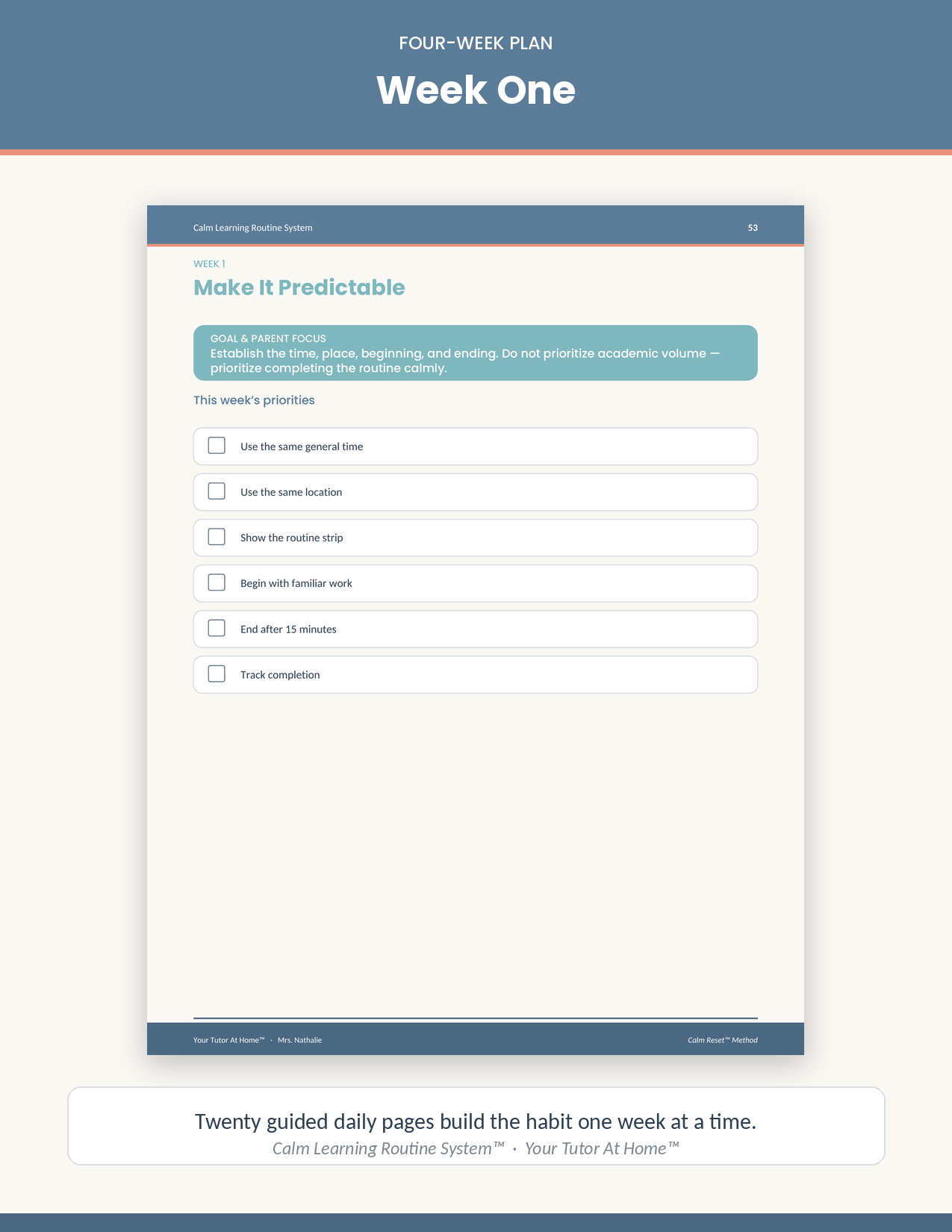
- Four-week implementation plan with 20 guided daily pages
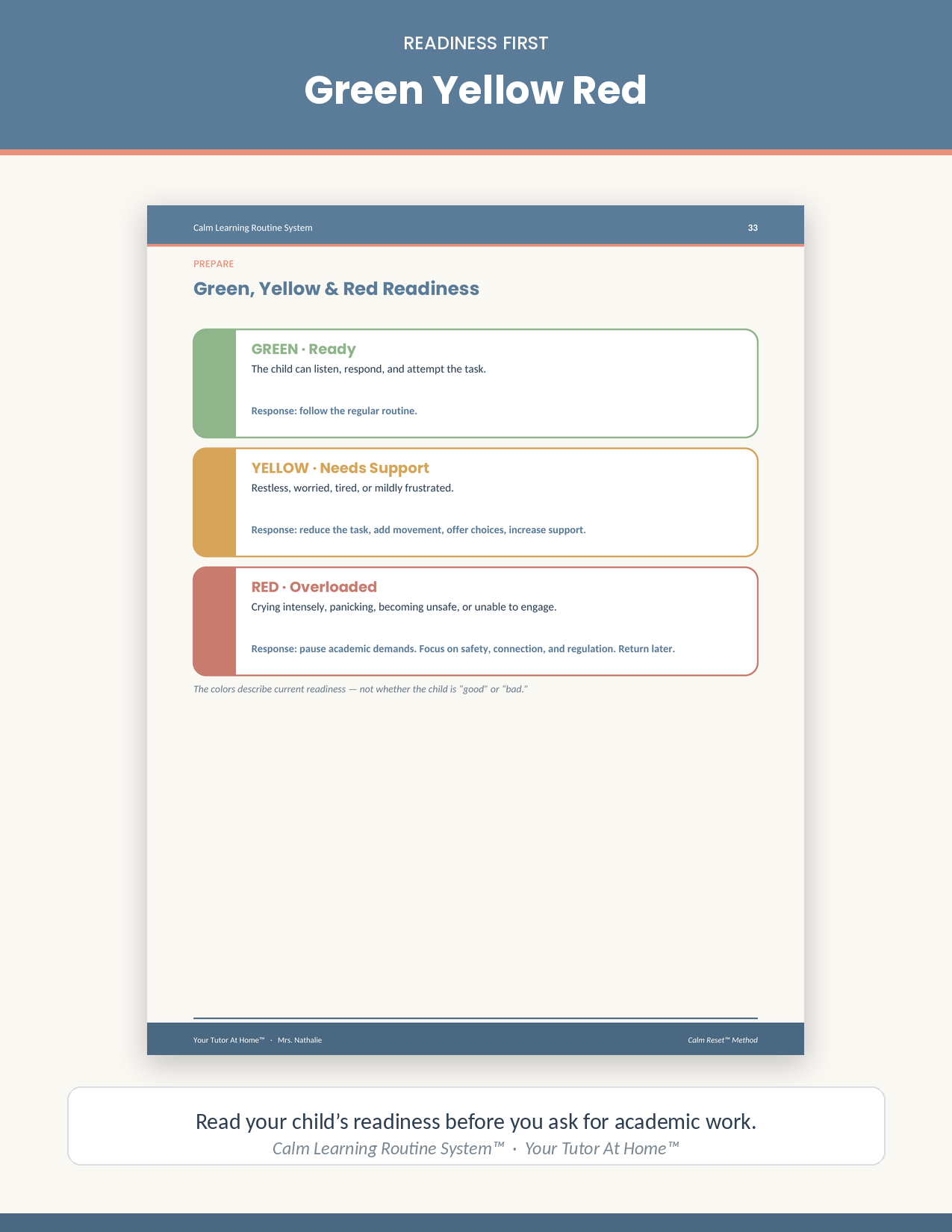
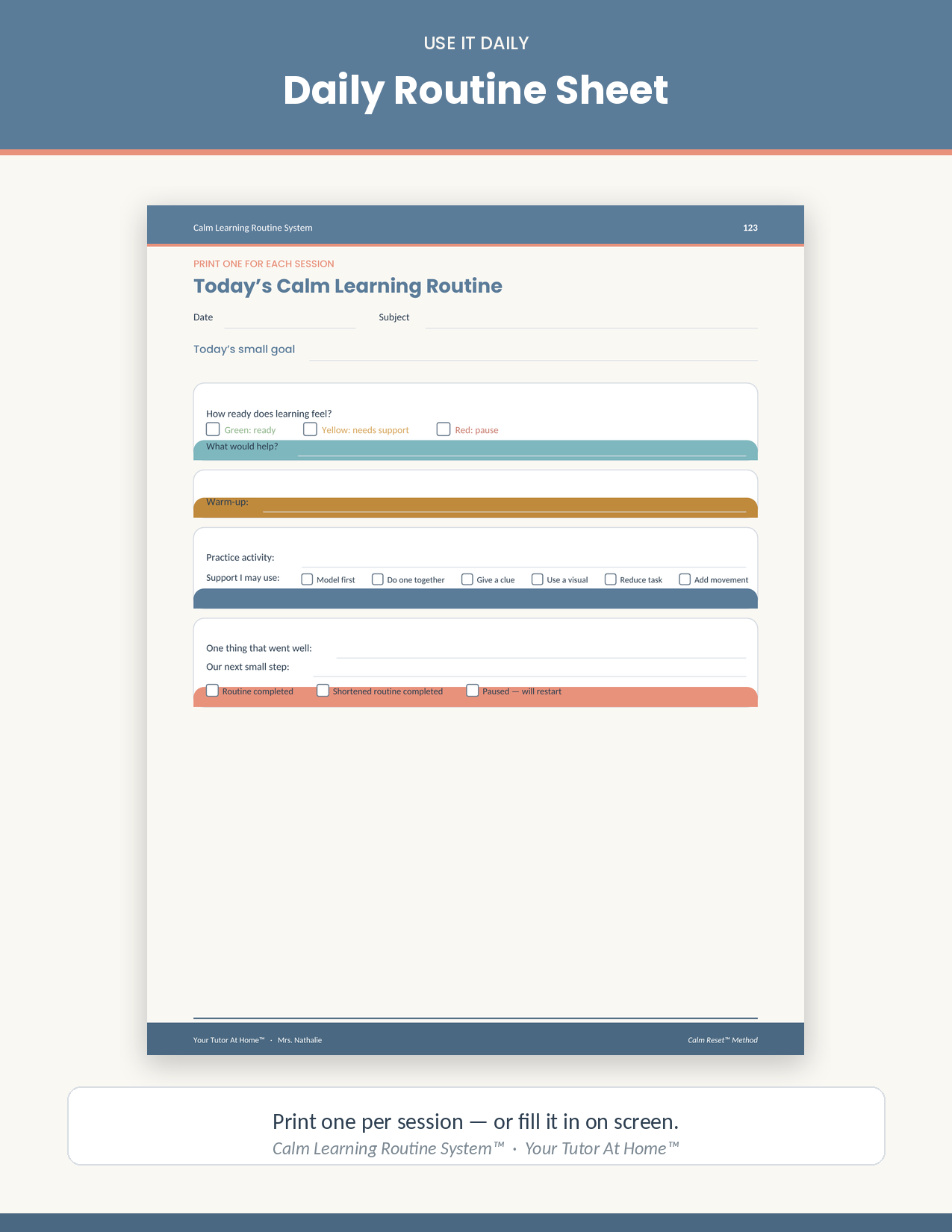
- Ready-to-Learn checklists and a green / yellow / red readiness system
- Visual routine cards, choice cards, calm support cards and encouragement cards
- Difficult-day plans, including a five-minute minimum routine and a no-print routine
- Subject templates for reading, writing, math, homework, spelling and study
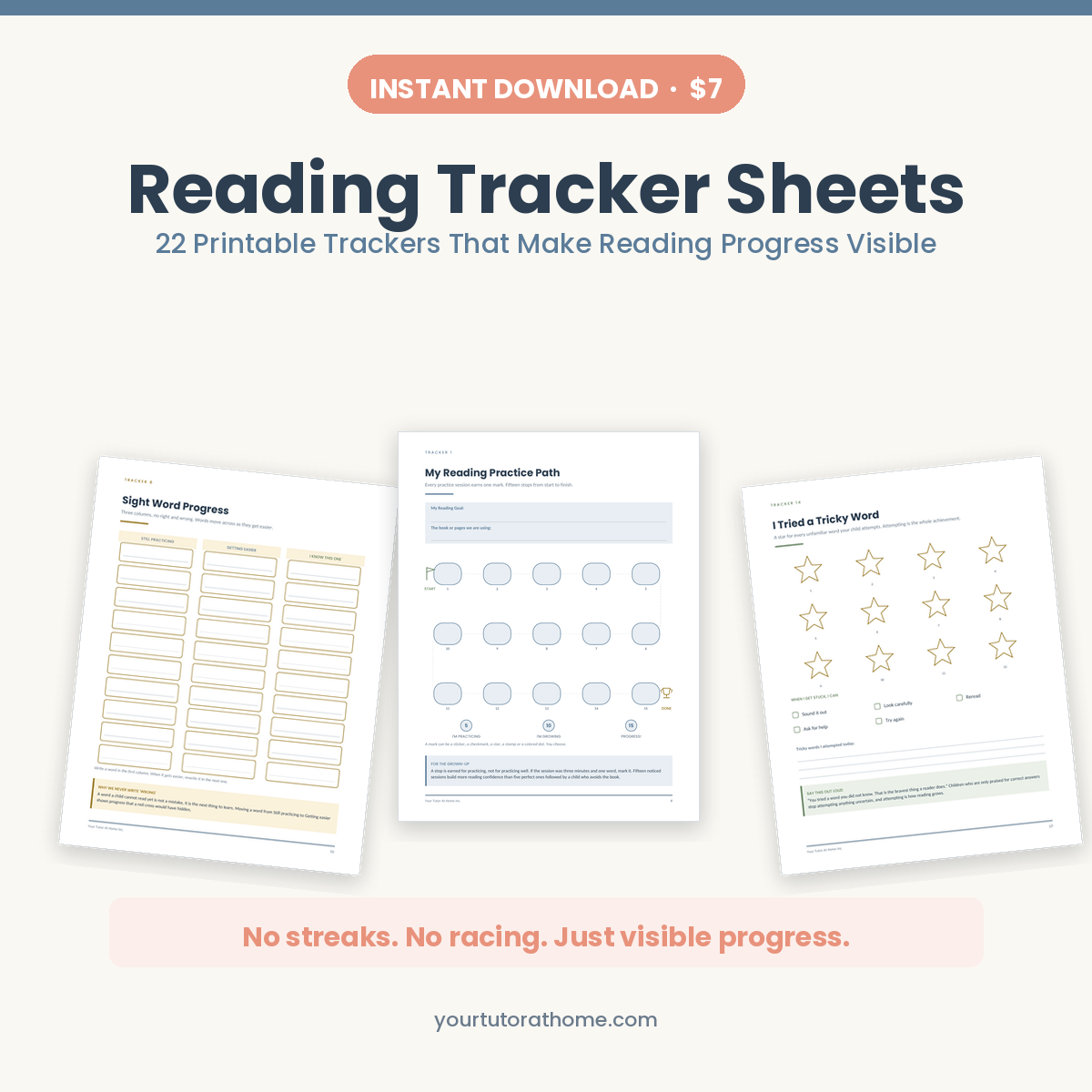
- Daily, weekly, confidence, skill-progress and parent-stress trackers
- 30-day routine calendar, a five-minute warm-up bank and calm transition ideas
- Printable completion certificates for child and parent
- Both a fillable digital PDF and a clean print version, in one purchase
The green / yellow / red readiness system is the piece parents tell me they use most. It gives you a way to read the moment before you start — whether to teach as planned, reduce the task, or stop for today — so the decision is made on evidence rather than on hope.
Who this daily learning routine is for
Built for parents and caregivers of children ages 5 to 11 who resist homework, become frustrated quickly, struggle to stay focused, need predictability, or find long assignments overwhelming — including children with ADHD, dyslexia, autism, anxiety and other learning differences.
It works around the materials your child’s school already sends home, so it adds structure without adding content. If reading specifically is where things break down, the free 2-minute reading quiz will point you to the right starting place first, and the free 15-Minute Reading Strategy Guide covers what to do inside a reading session once you have a daily learning routine in place.
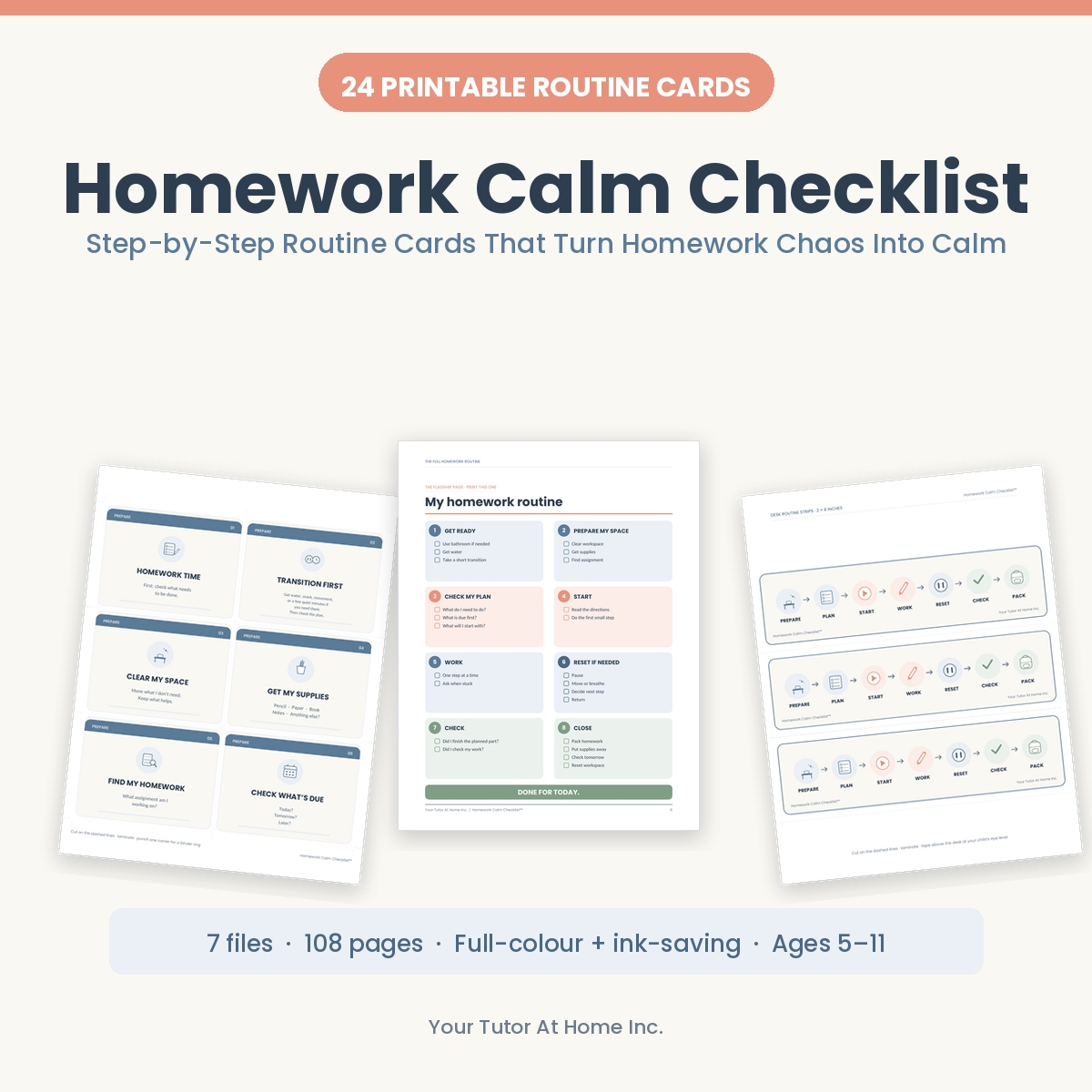
Many families run this alongside Daily Routine Cards for the visual layer, or the Calm Homework Reset System when the school homework hour is the specific battleground.
How to start your daily learning routine this week
You do not read 127 pages before you begin. Read the framework section, run the readiness checklist once, and pick your 15 minutes for tomorrow. That is the whole first step.
Week one of the four-week plan asks for almost nothing academically. Its only job is to establish that the session starts when you say it starts and ends when you say it ends. Once your child trusts that, the skill work in weeks two to four has somewhere stable to land.
If you would like more background on the thinking behind short, predictable sessions, Understood.org is the best free resource on learning and thinking differences, the Child Mind Institute covers attention and anxiety in accessible parent language, and CHADD has practical guidance for families managing ADHD at home.
An honest note about what this is
This is not another stack of random worksheets, and it is not a full academic curriculum. It is a routine-building system that helps you turn good intentions into a practical daily process around the materials you already use.
It will not make every child love learning. What it will give you is a clear, flexible daily learning routine you can use to make learning time shorter, calmer and more consistent — and a way back in on the days it goes wrong, which is the part most plans leave out entirely.
About Mrs. Nathalie
Created by Mrs. Nathalie, an experienced tutor with more than 20 years working with struggling readers, neurodivergent learners, and children of all learning styles.
Format: instant PDF, 127 pages, fillable and print editions included, US Letter. Lifetime access, print at home as often as you need. Personal, single-family use. This digital resource is delivered electronically — no physical product will be shipped.
Reviews
There are no reviews yet.