
I Need to Understand Why Reading Is Hard™: Get Clarity on What’s Actually Blocking Progress
$17.00
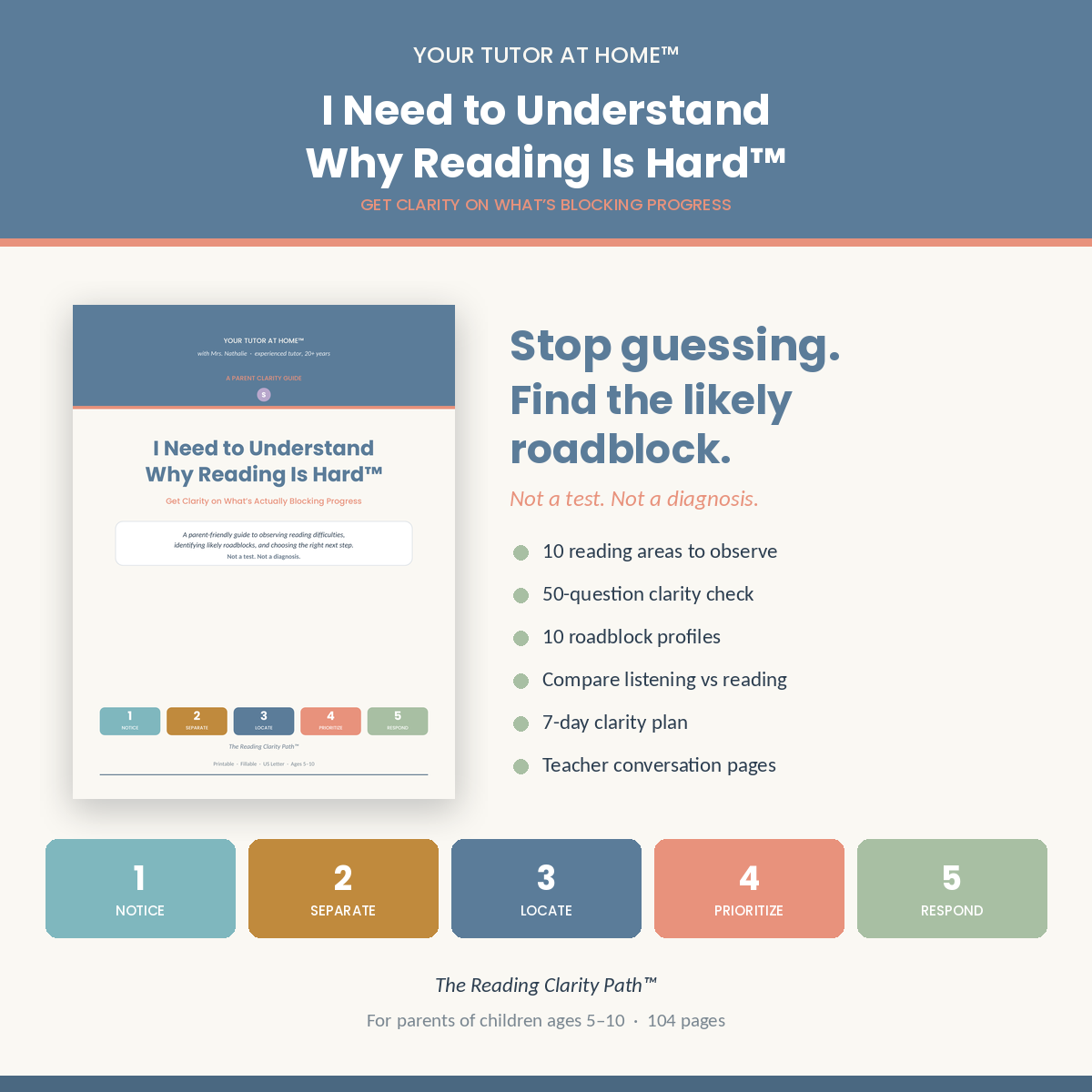
You know your child is struggling with reading — but do you know where the learning process is actually breaking down?
This parent-friendly clarity guide helps you observe reading behaviour, identify the likely roadblock, separate skill difficulties from confidence or attention barriers, and choose a more useful starting point. Not a test. Not a diagnosis.
104 pages · Printable + fillable PDF · Ages 5–10
Product Description
Why is reading hard for my child? Getting clarity before you buy another worksheet
If you have found yourself asking why is reading hard for my child, you are not alone — and you are asking exactly the right question. Most parents are told to simply practice more. But practice only helps when it matches the problem, and until you know where reading is actually breaking down, more practice can quietly reinforce the wrong habit.
This is a parent-friendly clarity guide, not a curriculum and not a diagnostic test. It helps you observe what your child does when reading, separate skill difficulties from confidence or attention barriers, identify the most likely roadblock, and choose one focused next step — without trying to diagnose your child yourself.
In this guide
- Why is reading hard for my child?
- Why “read more” often does not work
- What actually makes reading hard
- What you will do inside the guide
- The ten roadblocks that make reading hard
- Where this fits with our other resources
- Who this is for
- Common questions parents ask
- An honest note about what this is not
- About Mrs. Nathalie
Why “read more” often does not work
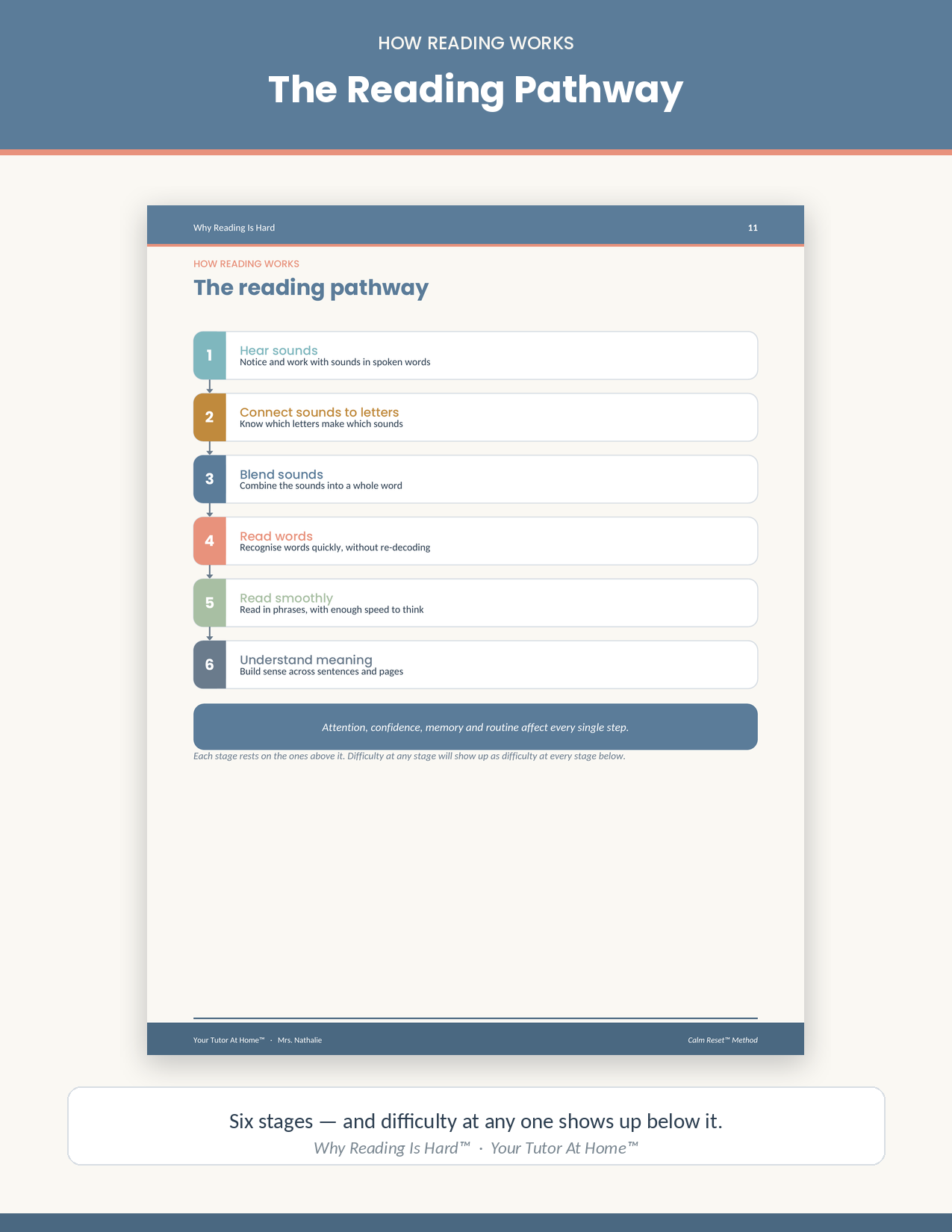
Reading is not one skill. It is a stack of skills — sound awareness, letter-sound knowledge, blending, word recognition, fluency and comprehension — sitting on top of attention, memory and emotional readiness. A child can be genuinely strong in one area and completely stuck in another. That is why generic advice so often fails: adding more of the whole thing does not repair one missing part.
So when a child finds reading hard, the useful question is never how much practice, but which layer. Twenty more minutes a night aimed at the wrong layer will not move anything, and it will cost you goodwill you cannot easily get back.
What actually makes reading hard
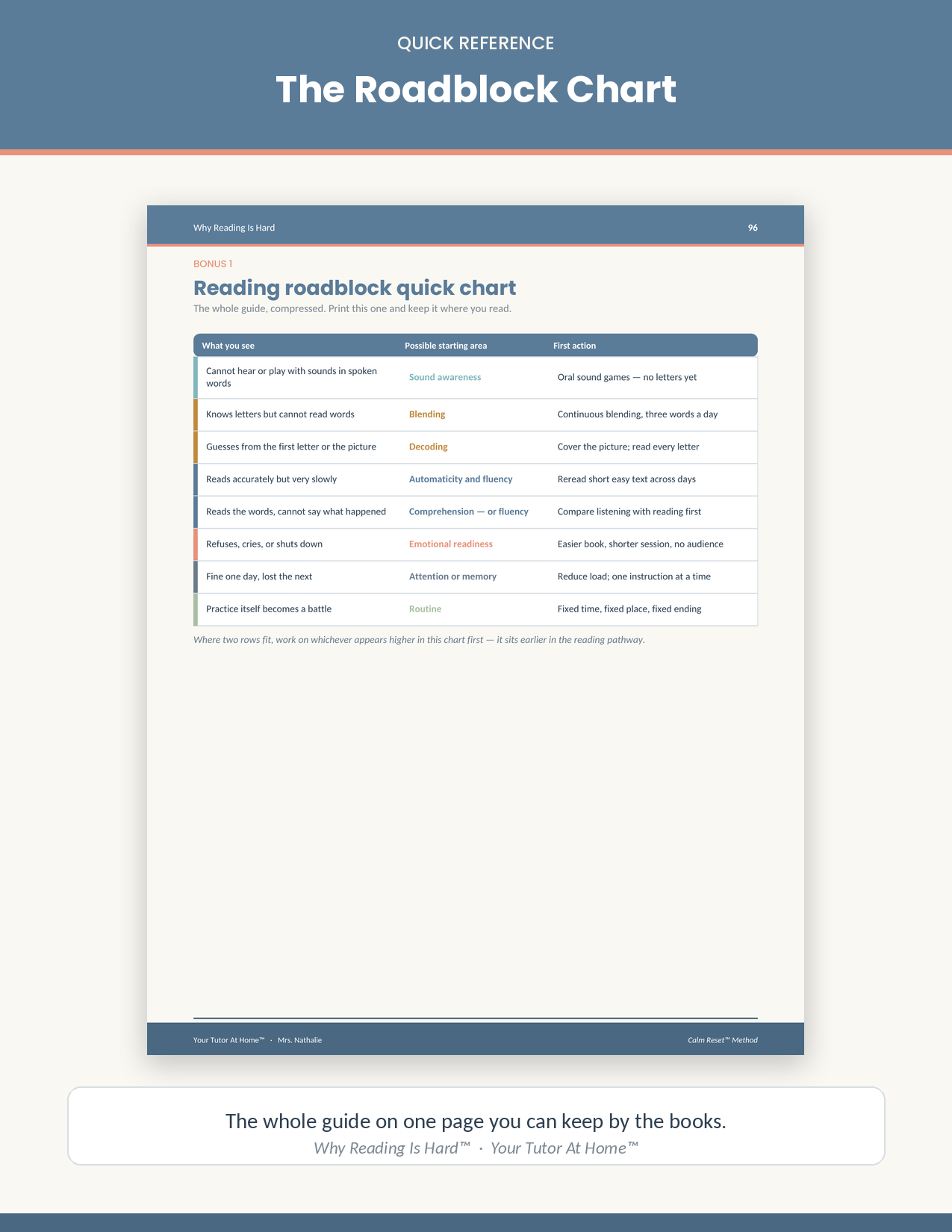
Any one of the layers above can be the unstable link, and each one makes reading hard in a different, recognizable way. A child stuck at blending sounds out every letter and then cannot pull the word together. A child stuck at automaticity reads the same word correctly on one line and misses it two lines later. A child stuck at fluency reads accurately but so slowly that the meaning has evaporated by the end of the sentence.
Those three children look similar from across the kitchen table. They need completely different help. Once you can see which one you have, the question of why is reading hard for my child usually stops being a mystery — you stop guessing, and the next step gets smaller and better aimed.
This is also why emotional readiness sits in the same stack as the skills. A child who has decided they are bad at reading will find reading hard on a day when the skills are perfectly available, because the skills are not the thing in the way.
What you will do inside the guide
- Learn how reading actually develops, in plain language, so you know what you are looking at
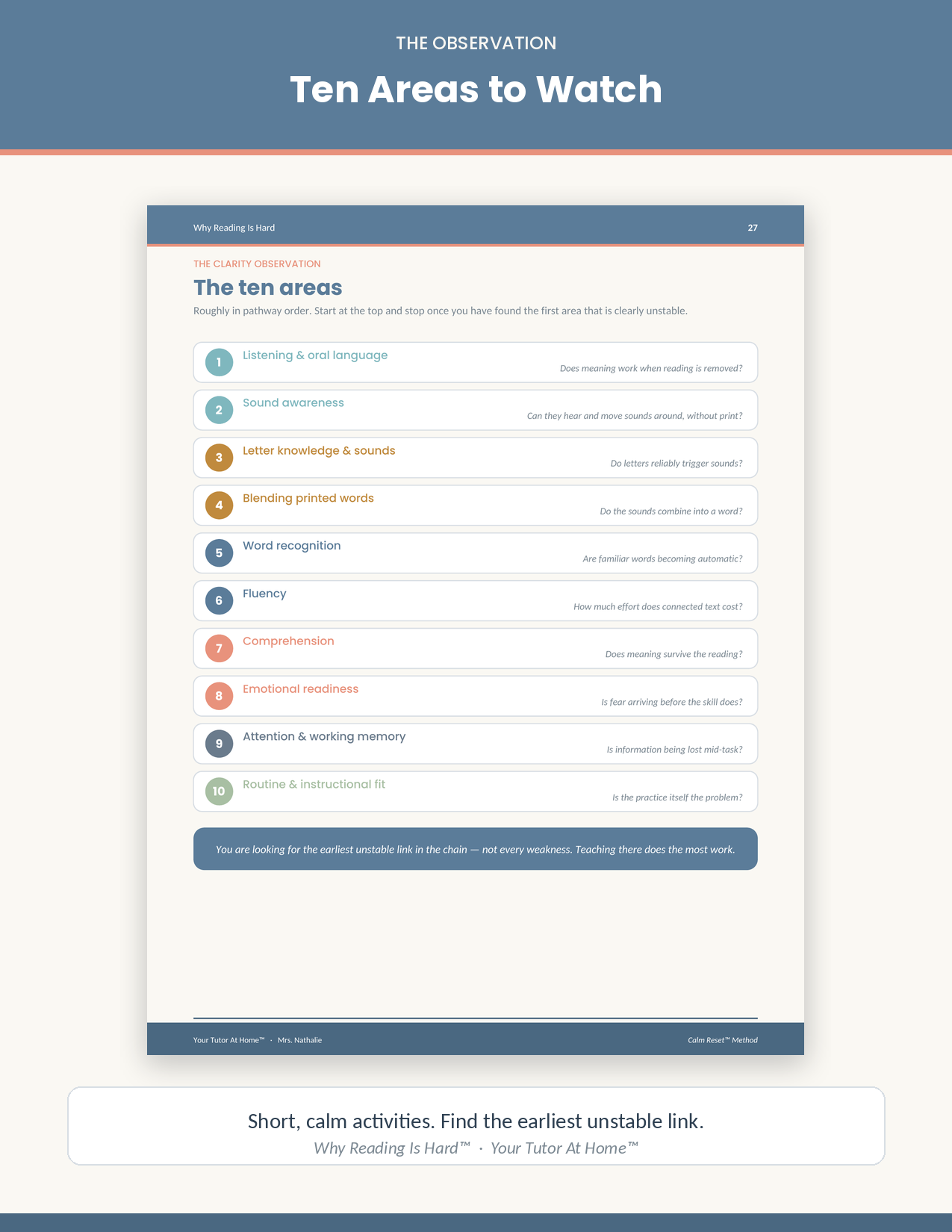
- Observe ten key reading areas through short, calm activities — not tests
- Complete a 50-question clarity check across nine skill and readiness areas
- Compare listening and reading, to tell a comprehension problem from a fluency one
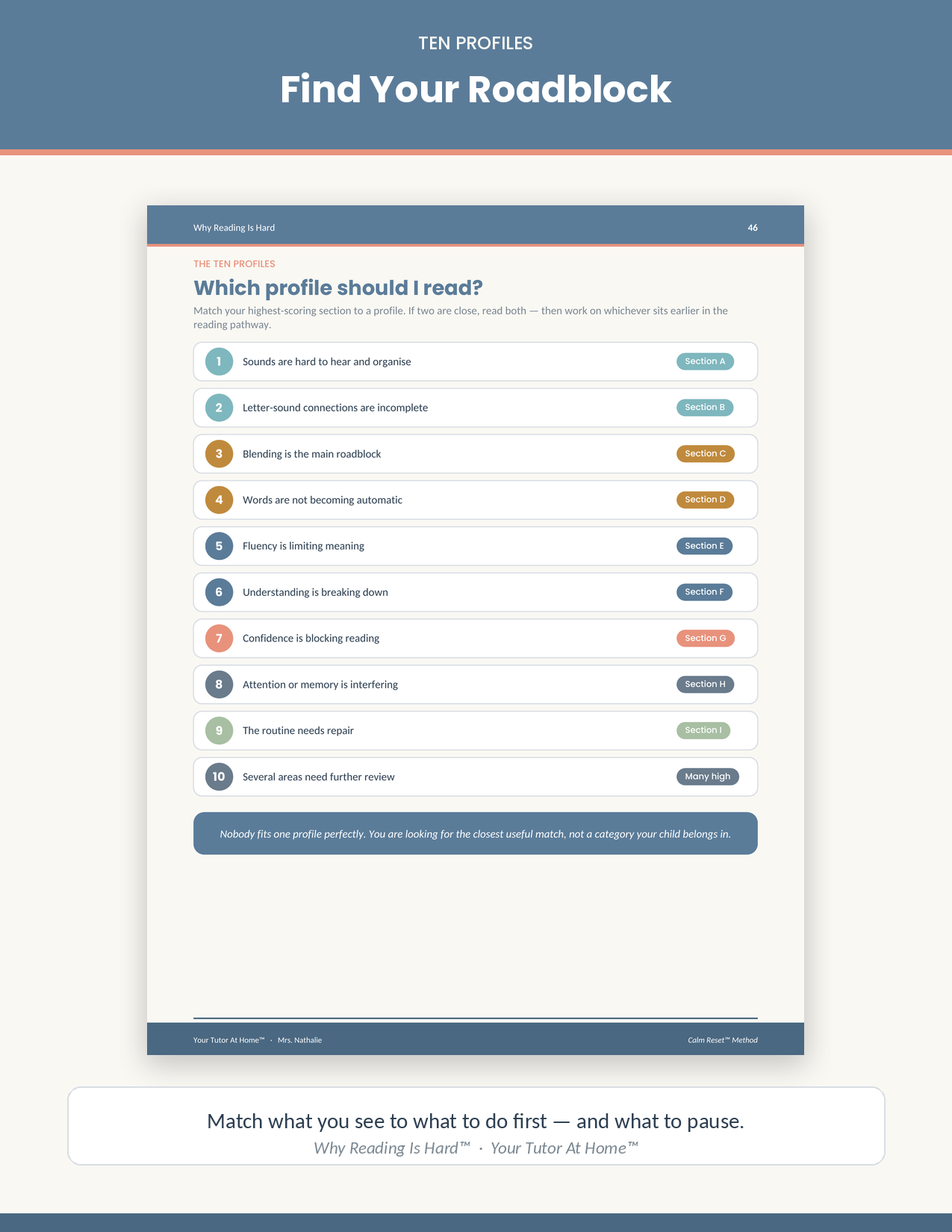
- Match your results to one of ten roadblock profiles, each with what to do first and what to pause
- Follow a seven-day clarity plan — try one support, repeat it, compare
- Prepare for the school conversation with observations rather than conclusions
The ten roadblocks that make reading hard
The guide leads you toward one primary profile, and sometimes a secondary one: unsteady sound awareness, incomplete letter-sound knowledge, blending breaking down, words not becoming automatic, fluency limiting meaning, comprehension breaking down, emotional readiness blocking participation, attention or memory interfering, an unsupportive routine, or several areas needing further review.
Each profile explains what may be happening and gives you a realistic starting point. None of them label your child. They name the link in the chain that is making reading hard right now, which is a very different thing — a link can be strengthened, and it can change within a term.
Where this fits with our other resources
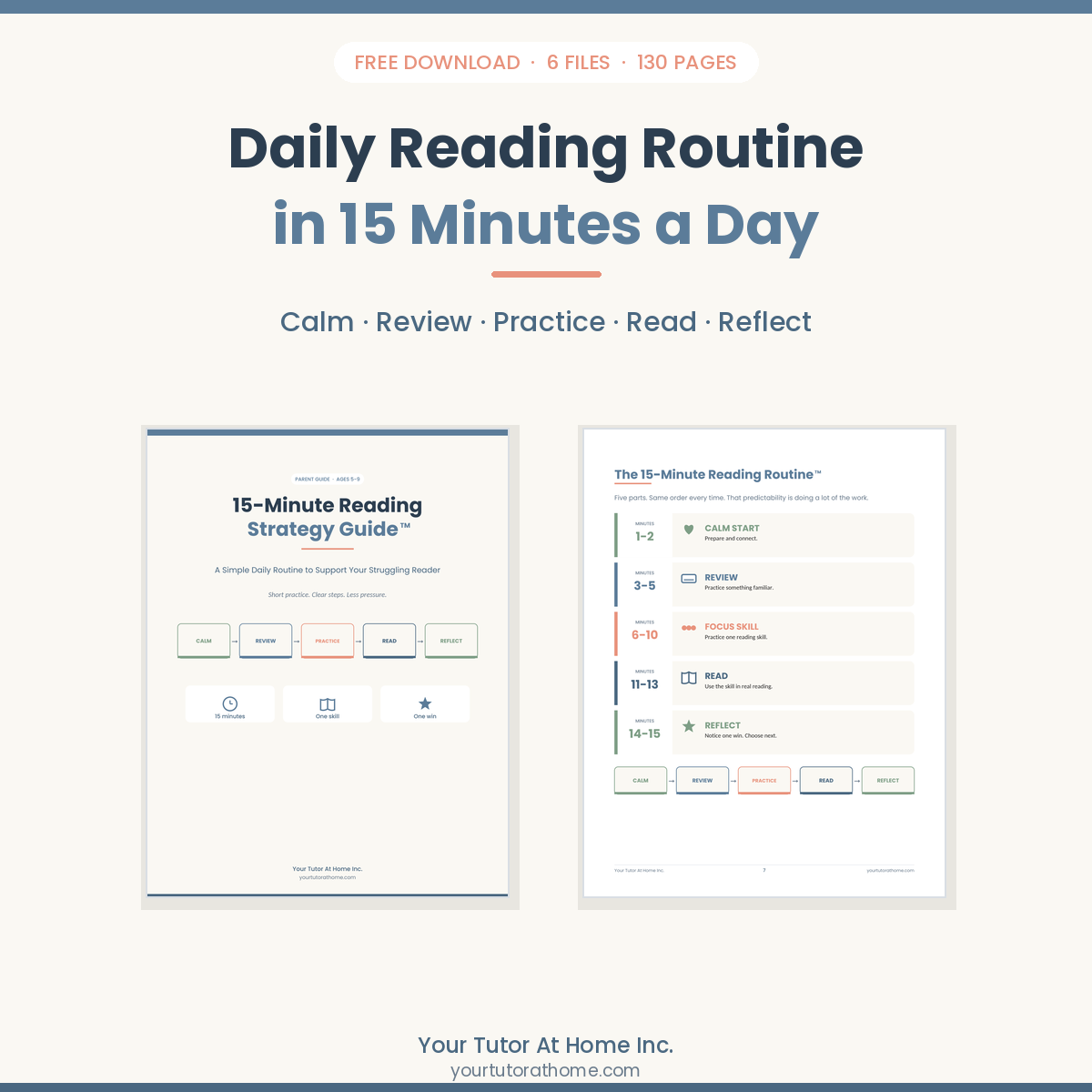
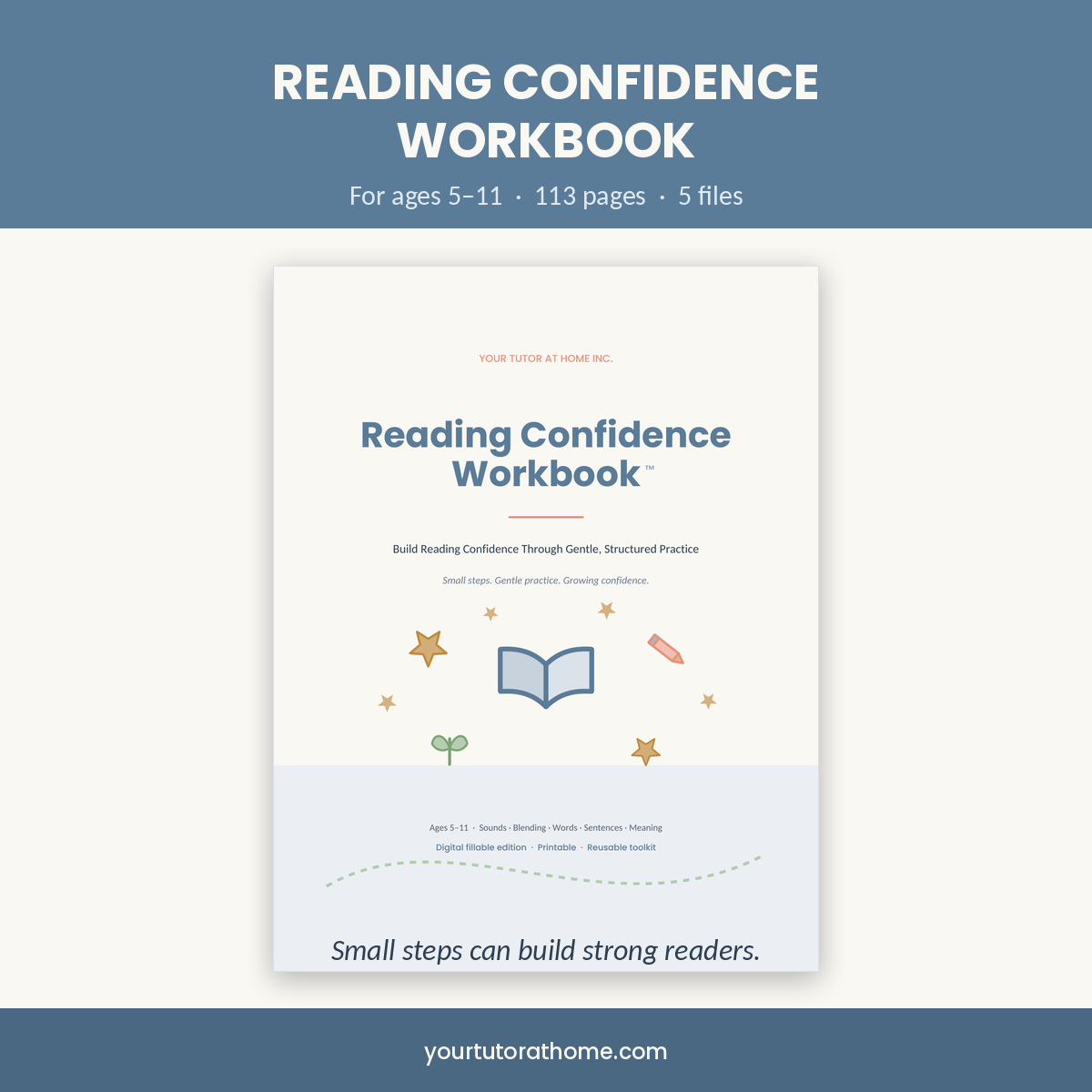
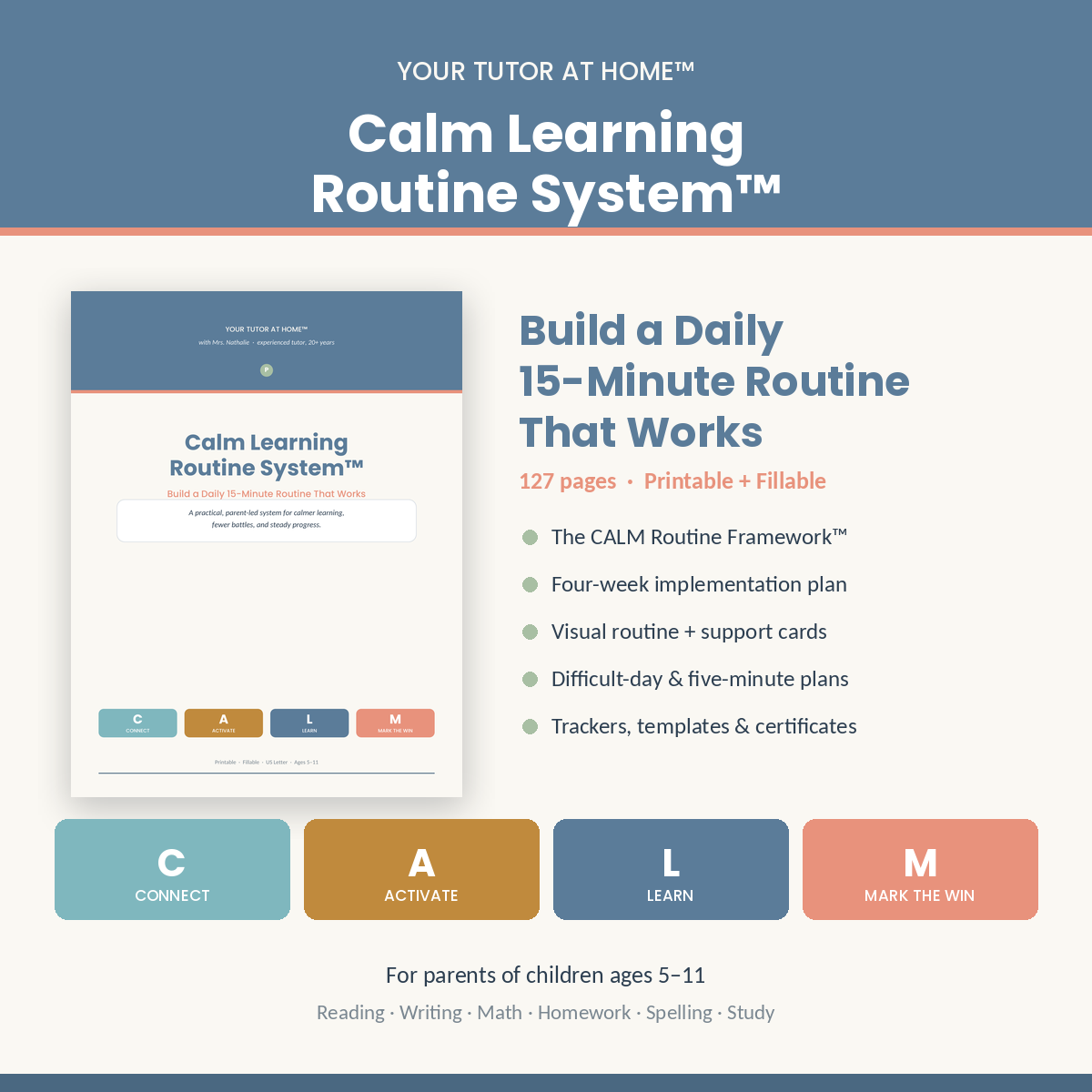
This is the fast, focused entry point. Once you know the roadblock, you can move to the resource that matches it: the Why Reading Gets Stuck Toolkit for a deeper reading-specific toolkit, the Calm Learning Routine System if routine is the block, or Read Ahead for structured daily practice. The C.A.L.M. Learning Method™ is there when you want the complete parent-led system rather than a single next step.
If you are not ready to buy anything yet, the free 2-minute reading quiz will point you toward the right starting place in less time than it takes to read this page.
For a fuller picture of how reading develops and why some children struggle, Reading Rockets and Understood.org both offer excellent free guidance, and the British Dyslexia Association is a trustworthy place to read about assessment. This guide is designed to help you organize what you see at home, so that if you do seek support, you arrive with clear observations rather than a vague worry.
Who this is for
Parents and caregivers of children ages 5 to 10 who find reading hard — who guess words, know sounds but cannot blend, read slowly, read without understanding, avoid or fear reading, or have received vague feedback to simply “practice more.”
If you know something is wrong but cannot name it, this guide was written for you. You do not need any teaching background to use it — if you can sit with your child for ten minutes and write down what you notice, you can complete every activity in it.
Common questions parents ask
Is this a dyslexia test?
No. It is not a screening tool or a diagnostic assessment of any kind, and it neither confirms nor rules out dyslexia. It helps you observe reading behavior and organize better questions for the professionals who can assess.
Will it tell me my child’s reading level?
No standardized level or age score. It identifies which type of skill is making reading hard and needs attention first, which is more immediately useful for deciding what to do on Monday morning.
My child understands stories but cannot read the words.
That pattern points toward word reading rather than comprehension. This is exactly the kind of distinction the guide helps you make, so you stop asking in general why is reading hard and start seeing the specific link in the chain that is unstable.
How long does it take?
Several short sessions across one or two weeks — five to fifteen minutes each. It is deliberately not something to complete in one sitting, because a tired child gives you unreliable information.
What if my child fits more than one profile?
Very common. Work on whichever sits earliest in the reading pathway, unless confidence or routine is the blocker — then start there. The guide walks you through choosing.
An honest note about what this is not
This is not a dyslexia screening, a standardized reading level, a medical or psychological evaluation, or a substitute for professional assessment. The profiles identify patterns that help you choose a starting point — they do not confirm or rule out any condition.
Whenever concerns are persistent, significant, or affecting your child’s wellbeing, please speak to your child’s teacher, your pediatrician, or a reading specialist. Nothing here should delay you asking for help.
About Mrs. Nathalie
Created by Mrs. Nathalie, an experienced tutor with more than 20 years working with struggling readers, neurodivergent learners, and children of all learning styles.
What this guide gives you is the thing every worried parent needs first when a child finds reading hard: a clearer direction, and a calmer, smaller next step. You do not need to become a reading specialist to help your child. You need to see the pattern clearly enough to choose a better-aimed next step — and then take it. Not a label, but a direction.
Format: instant PDF, 104 pages, printable and fillable editions, US Letter. Because access is immediate, all sales are final — please see our Refund Policy for full details. No physical product will be shipped.

Reviews
There are no reviews yet.