
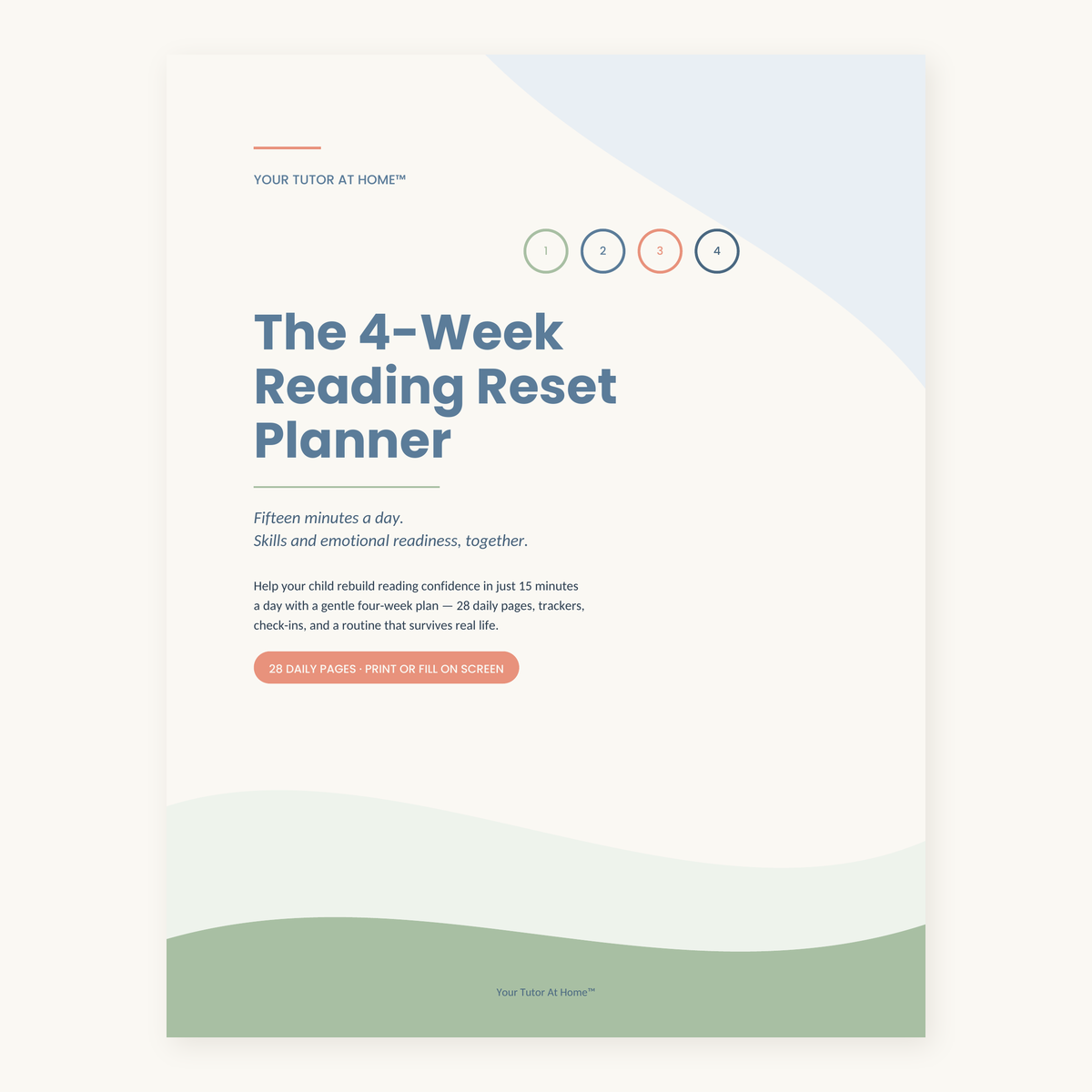

The 4-Week Reading Reset Planner — A 28-Day Reading Plan for Kids
$17.00
Most reading plans fail because they ask you to decide. At 7pm, after a long day, you have nothing left for deciding what to practice — so the plan quietly dies in week two.
This reading plan decides for you. All 28 days have the focus, the activity and the words to say already printed on the page. Fifteen minutes: check in, practice one skill, read together, finish with praise.
Two editions, one purchase. Print the pages you need, or type straight into every box on your phone, tablet or laptop.
69 pages · Instant PDF · Ages 5–10 · Lifetime access
Product Description
Most reading plans fail for the same reason: they ask you to decide. At 7pm, after a long day, you have nothing left for deciding what to practice. So the plan quietly dies in week two. The 4-Week Reading Reset Planner is a reading plan that decides for you. Every one of the 28 days already has the focus, the activity and the words to say printed on the page. You open it and you follow it.
In this guide
- Why most reading plans fail in week two
- A reading plan that decides for you
- The 15-minute daily routine
- What the four weeks look like
- The trackers and tools inside
- Two editions, one purchase
- Who this reading plan is for
- What this reading plan will and will not do
- What you get
- About Mrs. Nathalie
Why most reading plans fail in week two
You have probably started before. A stack of flashcards in January. A library app in March. Twenty minutes a night that turned into ten, then into an argument, then into nothing. It was not a willpower problem. It was a decision problem.
Every generic reading plan hands the hardest part back to you. It says practice sight words without saying which ones, or read together for fifteen minutes without saying what to do when your child refuses to open the book. You end up designing the session yourself, every single night, on the day you have least left to give. That is the point where a reading plan stops being a plan and becomes one more thing you are failing at.
There is a second reason these plans collapse. They start with skills. But a child who has learned that books mean being corrected does not have a phonics problem first. They have a body that tenses when a book appears. Skill work aimed at a tense child bounces straight off.
A reading plan that decides for you
This one removes both problems. It is a closed, sequenced, 28-day reading plan, and the sequence is deliberate: calm comes before skills, skills come before speed, and independence comes last.
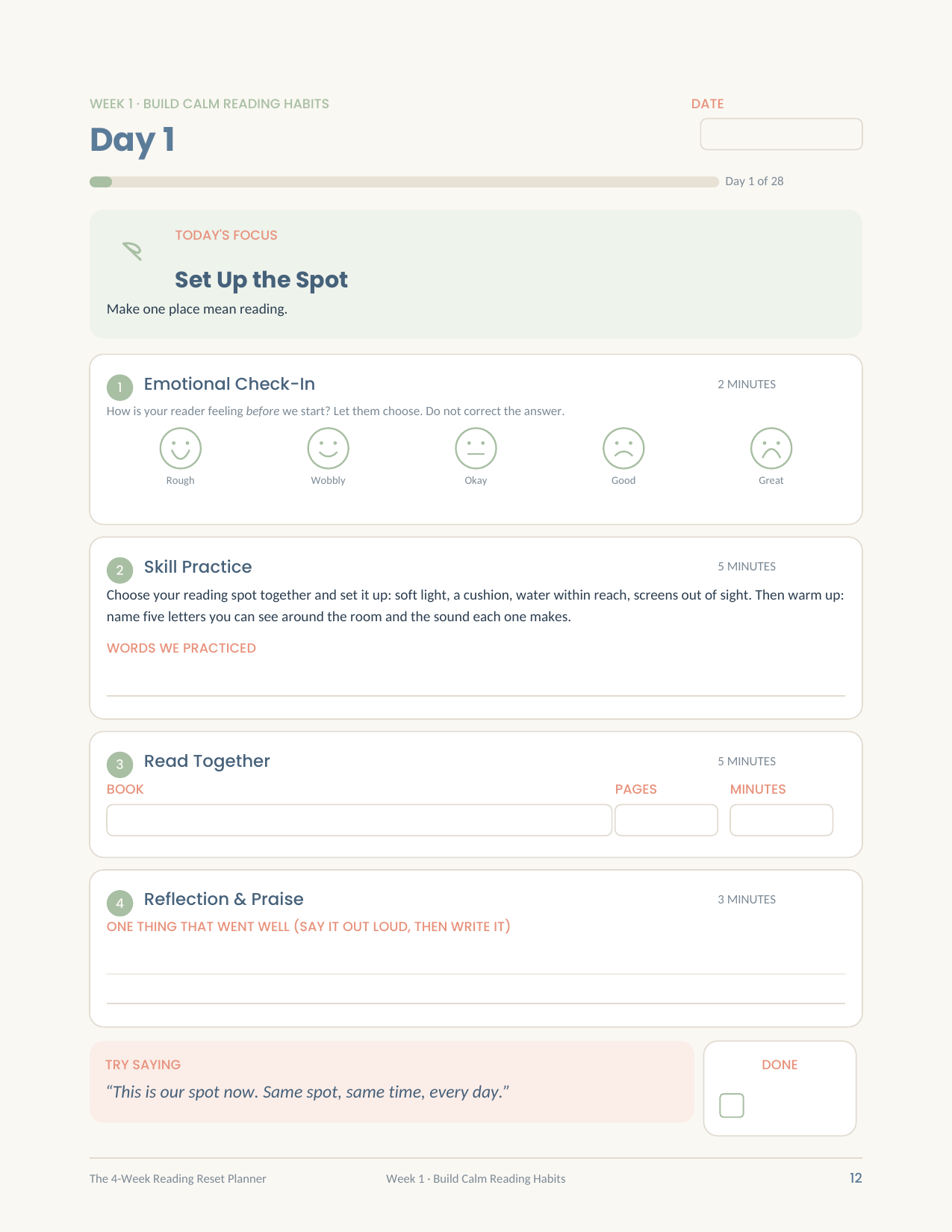
Each day is a single page. On that page you will find the day’s focus, the exact activity to do, and the actual sentences to say out loud when it goes well and when it does not. There is nothing to prepare, nothing to print separately, nothing to look up. If you can open the planner to today’s page, you can run today’s session.
The whole thing takes fifteen minutes. Not fifteen minutes of concentration on your child’s part, which very few struggling readers have on demand, but fifteen minutes of structure that includes room to settle and room to stop.
The 15-minute daily routine
Every one of the 28 days runs on the same four-part shape, so your child stops having to guess what is coming next. Predictability is doing quiet work here: a child who knows the shape of the session spends less energy bracing for it.
- Emotional check-in – 2 minutes. How is your reader arriving today? You mark it before anything else, because a session that starts on a bad afternoon needs to be run differently.
- Skill practice – 5 minutes. Today’s activity, already written for you. One skill, small enough to finish.
- Read together – 5 minutes. Your voice carries the risk. Your child is not performing; they are joining in.
- Reflection and praise – 3 minutes. One specific thing that went well. Specific, not general – the difference between “good job” and “you did not give up on that long word” is the whole point.
What the four weeks look like
The four weeks build on each other. Skipping ahead is the one thing that breaks the reading plan, because week three assumes the calm you built in week one.
Week 1 – Build calm reading habits
One job this week: be in the chair without it going wrong. No pressure on accuracy. You are teaching your child’s nervous system that reading time is survivable, which is the foundation everything else sits on.
Week 2 – Strengthen core reading skills
Now the skill work starts: sounds, blending, word families and chunks. Short, targeted, and always inside the same calm routine your child has now had a week to get used to.
Week 3 – Increase fluency and confidence
Echo reading, re-reading familiar text, and phrasing. This is the week reading starts to sound less like decoding and more like talking.
Week 4 – Build independence and celebrate progress
You step back on purpose, a little at a time, so your child notices they are carrying more of it. Day 28 re-reads the exact page from Day 1 – so your child hears, in their own voice, how far they came. That single moment does more for confidence than any sticker.
The trackers and tools inside
The daily pages are the spine of the reading plan. Around them sit the tools that make four weeks measurable instead of vague:
- Reading Reset Assessment – tick it before Day 1 and again on Day 28, so progress is something you can see rather than something you hope for
- Goal setting pages – one honest, reachable goal, written down
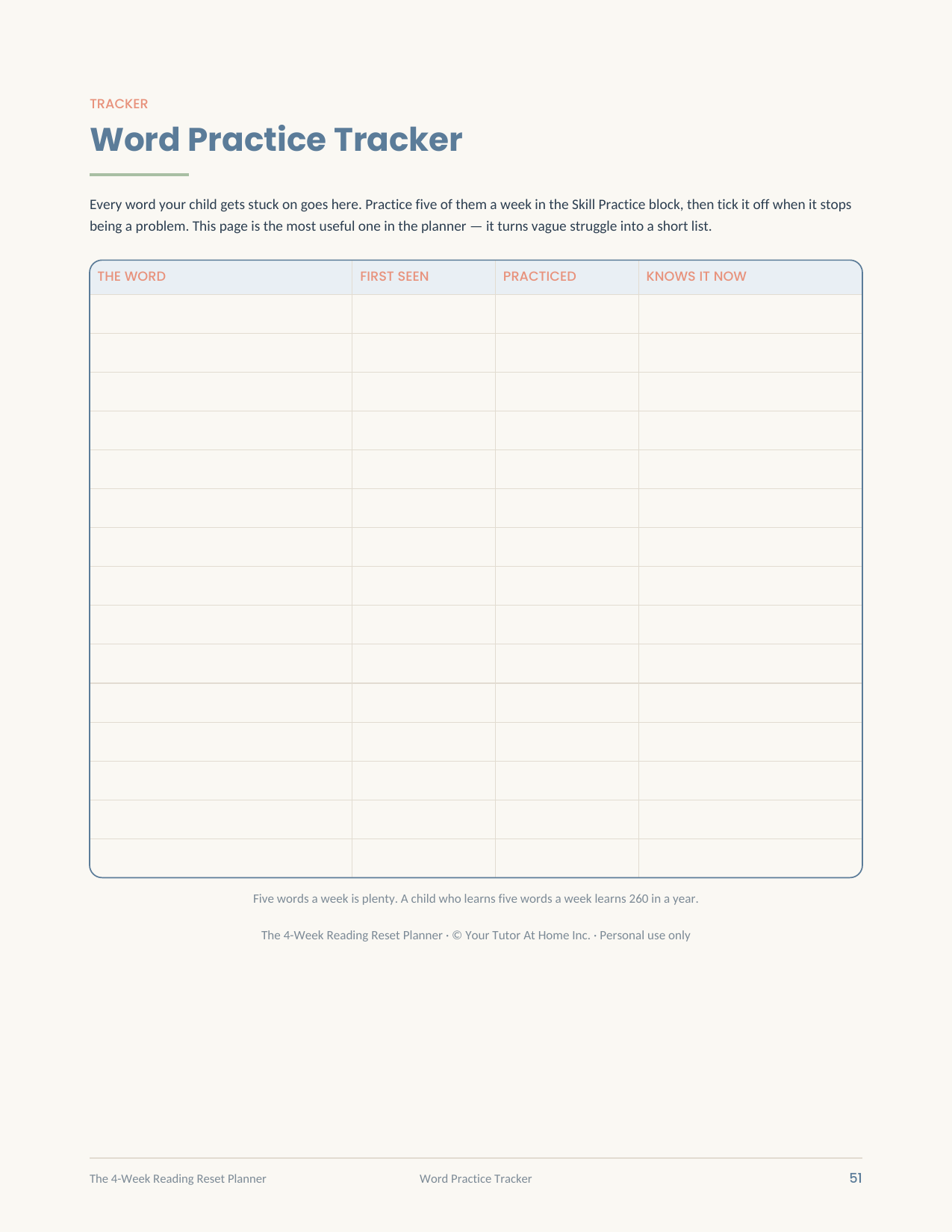
- Word practice tracker and reading log
- Emotion check-in tracker – four weeks of daily check-ins on one page, where the pattern becomes obvious
- Weekly confidence check-ins and weekly wins
- Parent reflection pages – because you are in this too
- Calm breathing page for the days that start badly
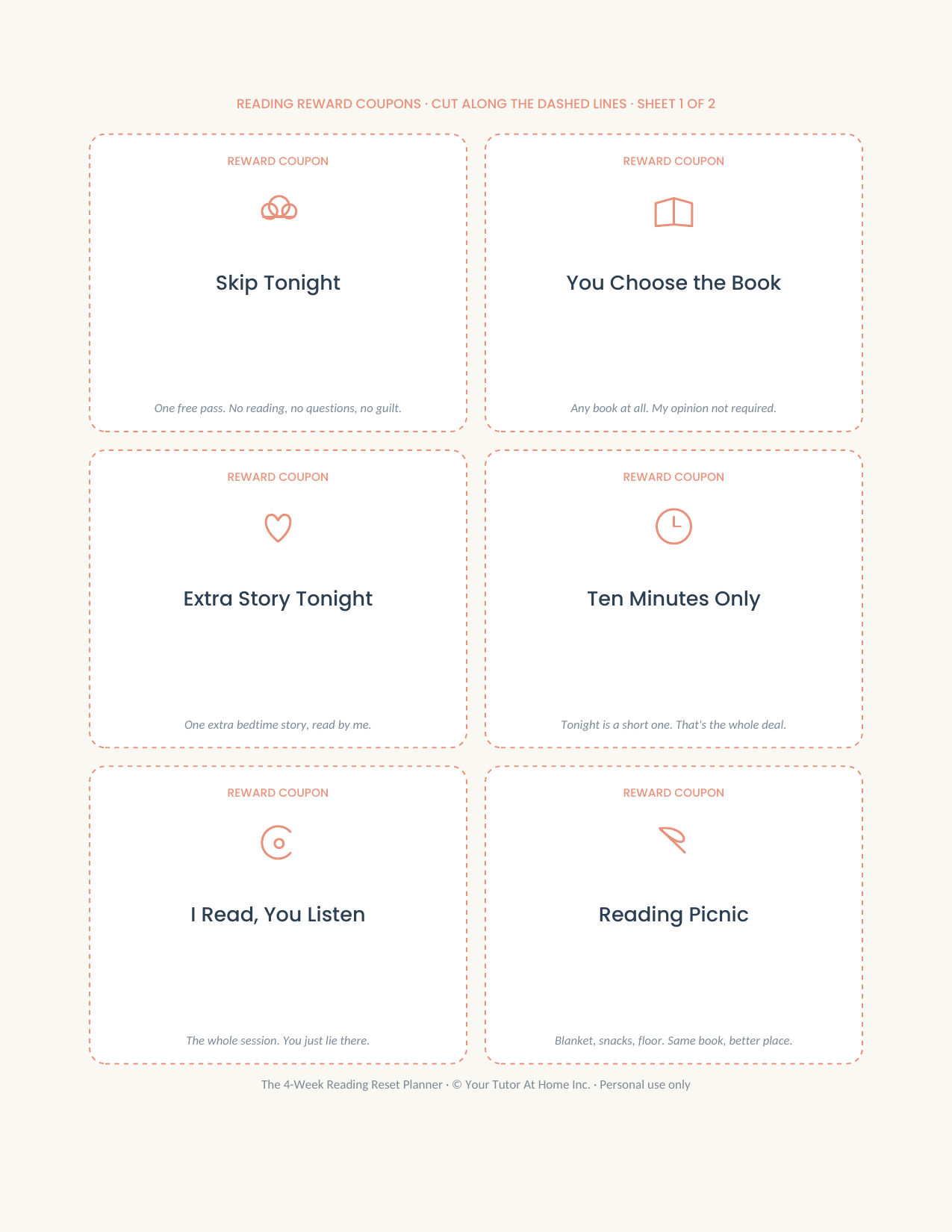
- Reading badges, 12 reward coupons and printable bookmarks
- What-to-read guidance – how to choose books at the right level without turning a library trip into a test
- Troubleshooting guide – what to do when your child refuses, when you miss days, when nothing seems to be landing
- Completion certificate
Two editions, one purchase
You get both a print edition and a fully fillable edition in the same download. Print only the pages you need and keep the rest on screen, or type straight into every box on your phone, tablet or laptop. Nothing to unlock, no upgrade, no second purchase.
Families who travel, share custody, or simply do not want another binder tend to use the fillable version. Families who like a folder on the kitchen table print the daily pages and the trackers only. Both are included.
Who this reading plan is for
Parents of children roughly ages 5 to 10 who can read a little but avoid it. Children who go quiet, get silly, or get angry when a book comes out. Neurodivergent learners who need the same predictable shape every time. Families who have tried apps and tutoring and want something with a beginning and an end.
It works alongside school rather than against it, and it does not require you to know phonics terminology. If you can read the page out loud, you can run it.
If you are not yet sure what is going wrong, start with the free Free Reading Quiz or the free 15-Minute Reading Strategy Guide, which explains how to structure a single practice session before you commit to a full reading plan.
What this reading plan will and will not do
Four weeks will not change a reading level. Anyone promising that is selling you something. Reading levels move over terms and years, not over 28 days.
What four weeks is genuinely enough to change is what your child’s body does when a book appears. The shoulders, the sigh, the sudden need for water. That is the change that makes every other change possible, because a child who is not braced can actually absorb instruction. Everything else – fluency, comprehension, level – is built on top of that, and none of it gets built while your child is bracing.
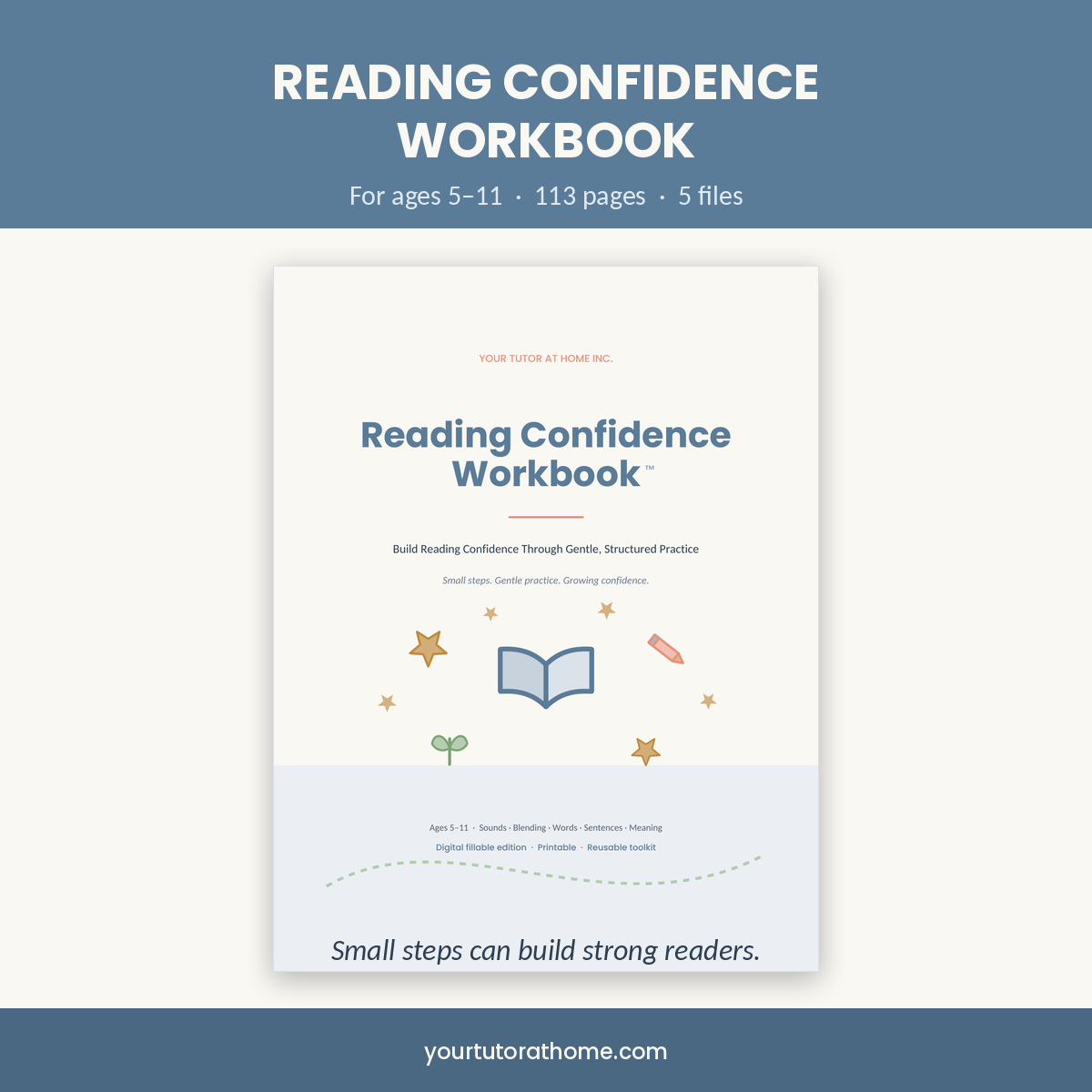
So the honest promise is a narrow one: 28 days of calm, consistent, decided-for-you practice, and a measurable shift in how reading feels in your house. When you are ready to go deeper on skills afterwards, Reading Support: Phonics Worksheets and the Reading Confidence Workbook are the natural next steps.
The approach here is consistent with what reading researchers have said for years about anxiety and practice. Reading Rockets has extensive parent guidance on shared reading and building fluency, Understood.org is the best free resource for learning and thinking differences, and the CDC’s positive parenting pages cover the developmental expectations behind ages 5 to 10.
What you get
- 28 dated daily pages, each with focus, activity and parent script already written
- The full set of trackers, check-ins, reflection pages and rewards listed above
- Print edition and fillable edition, both included
- 69 pages, US Letter, instant PDF download
- Lifetime access – re-download and re-run it with a younger sibling later
- Personal, single-family use
About Mrs. Nathalie
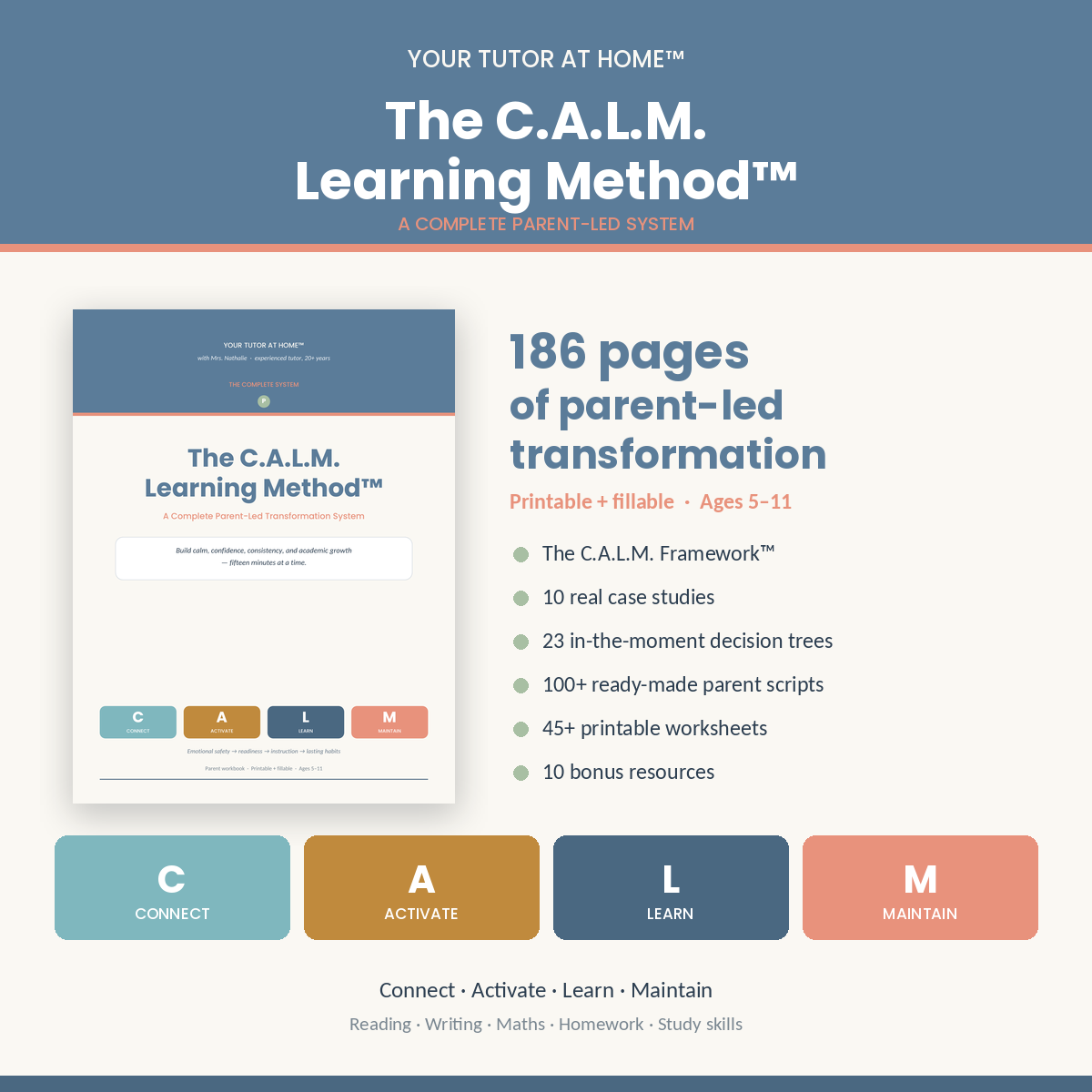
Written by Mrs. Nathalie, an experienced tutor with more than 20 years working with struggling readers, neurodivergent learners, and children of every learning style. Everything in this reading plan is built on the C.A.L.M. Learning Method – calm first, then skills, then confidence, then independence.
Open it tonight. Day 1 takes fifteen minutes and asks nothing of you except that you follow the page.

Reviews
There are no reviews yet.