
15-Minute Reading Strategy Guide™
$0.00
Not sure what to actually do during reading practice?
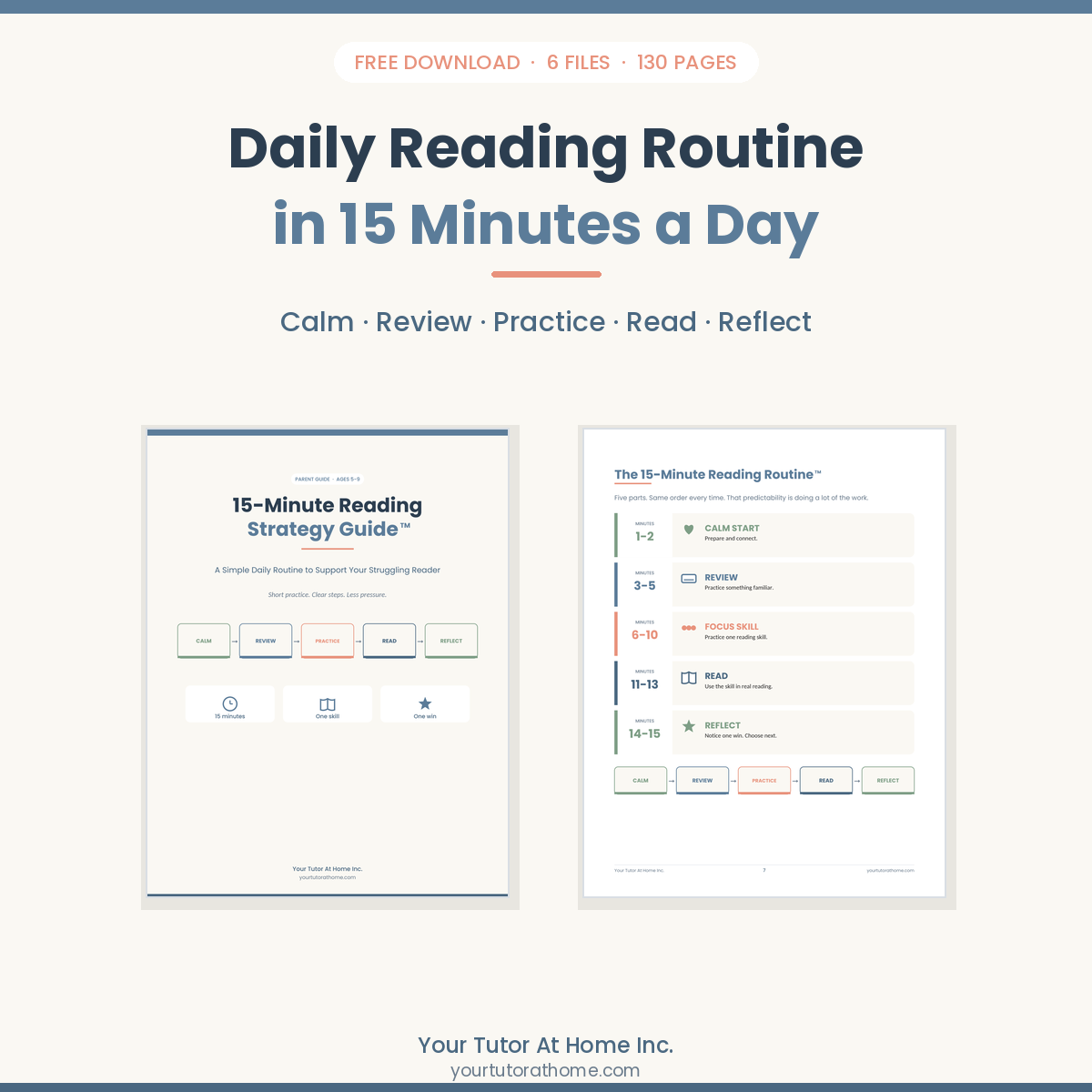
The 15-Minute Reading Strategy Guide™ gives you a daily reading routine with five clear steps: Calm, Review, Practice, Read, Reflect. One skill at a time, about fifteen minutes, then you stop.
Six printable files, 130 pages:
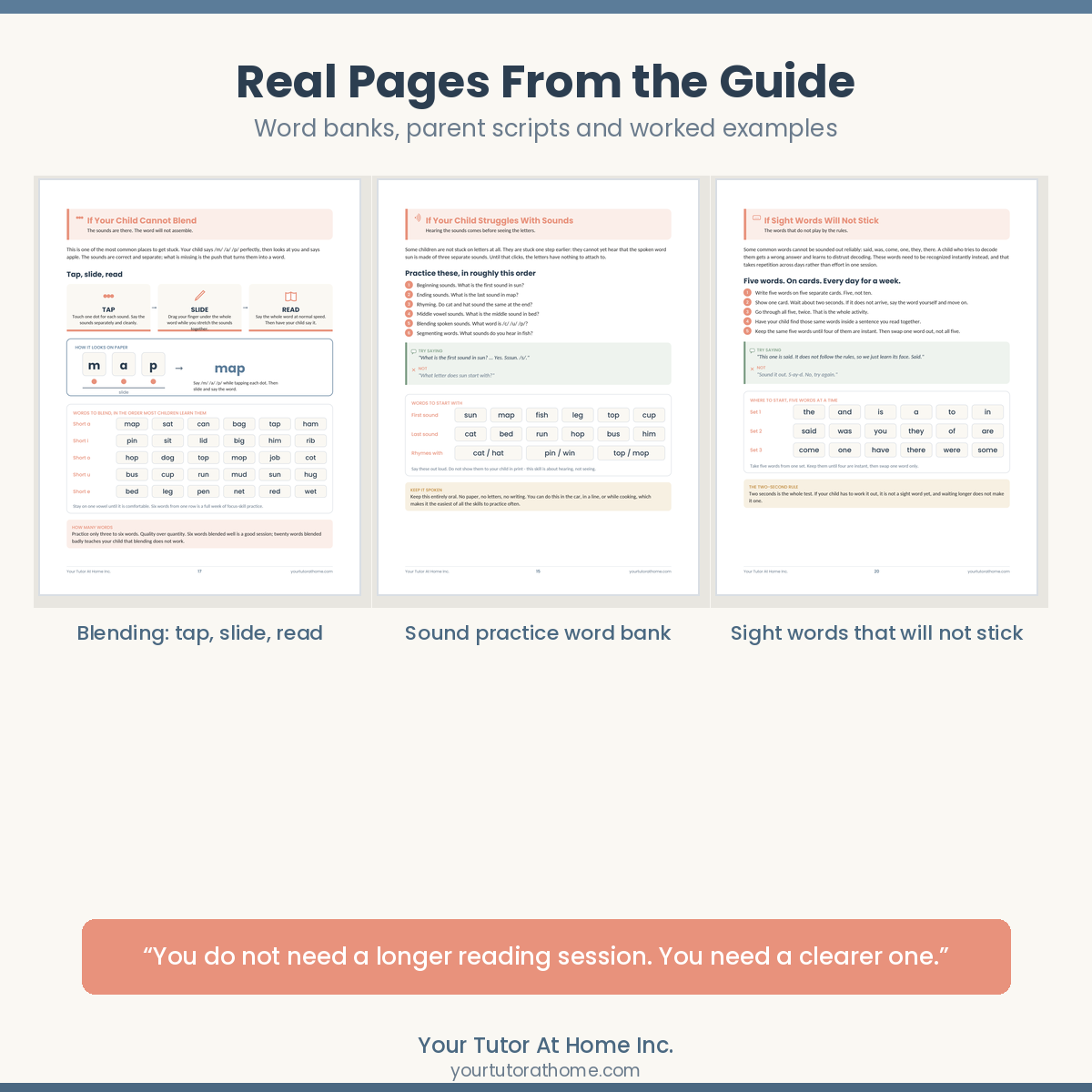
- 42-page parent guide with scripts, word banks and worked examples
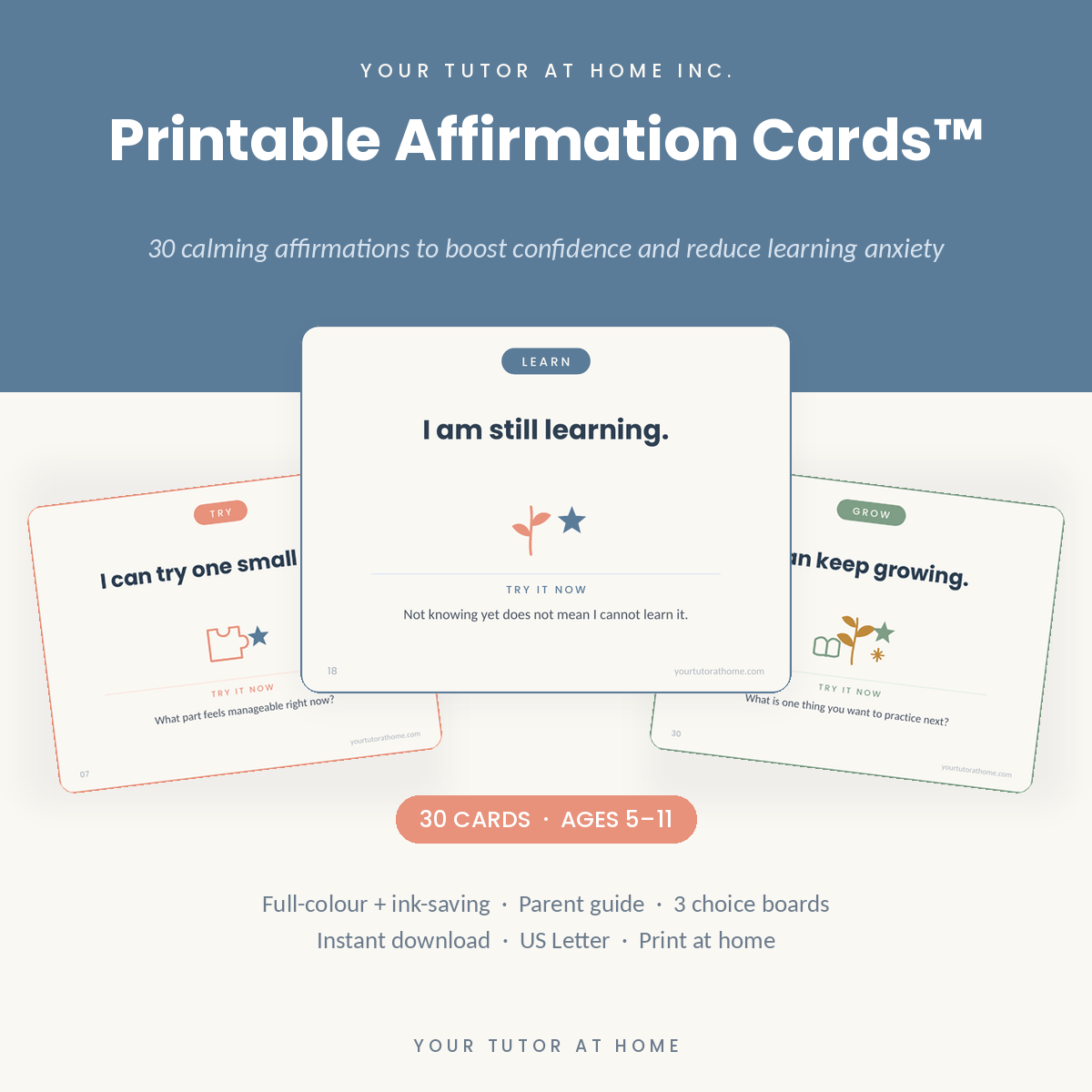
- Eight cut-and-keep routine, prompt and strategy cards
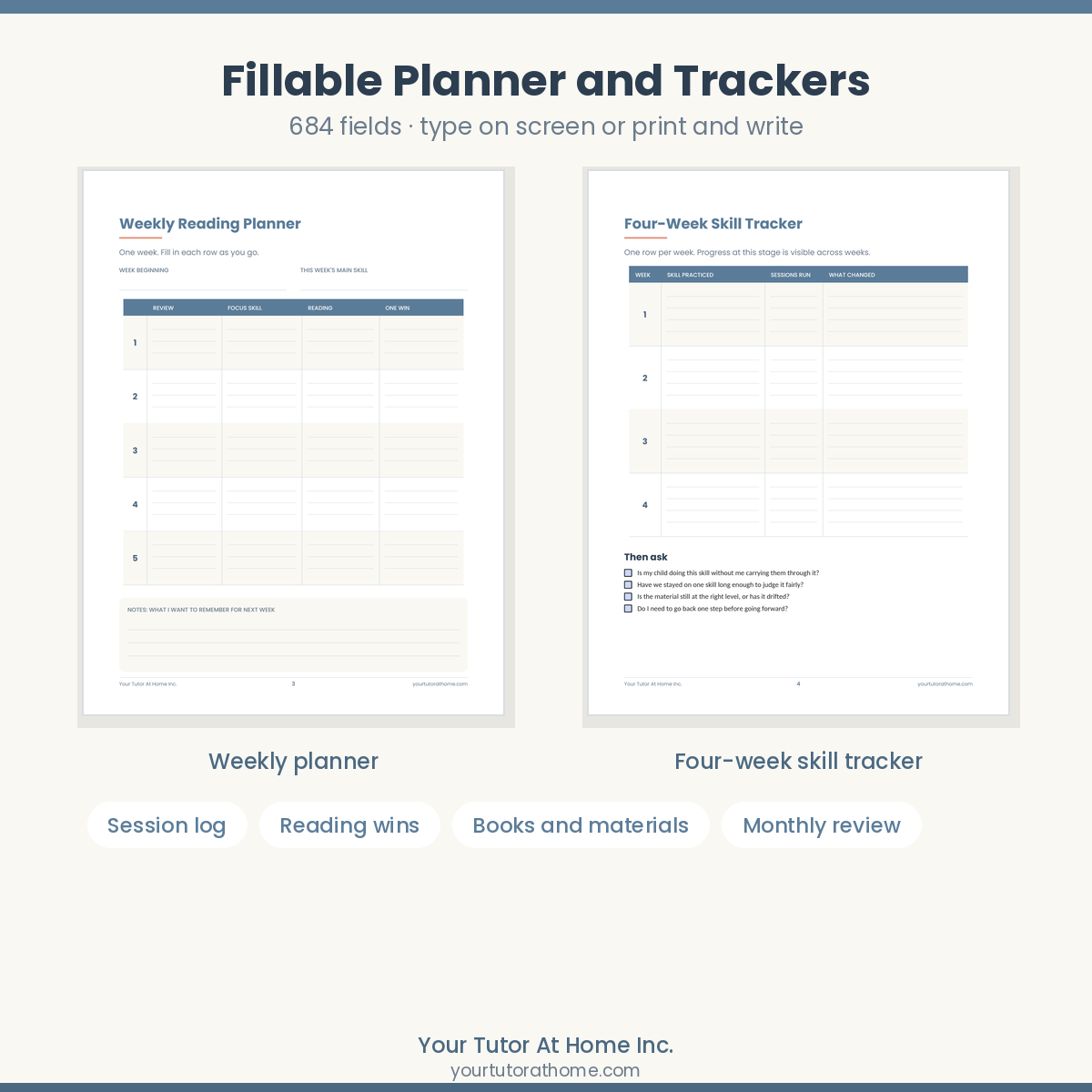
- Fillable weekly planner, session log and skill tracker
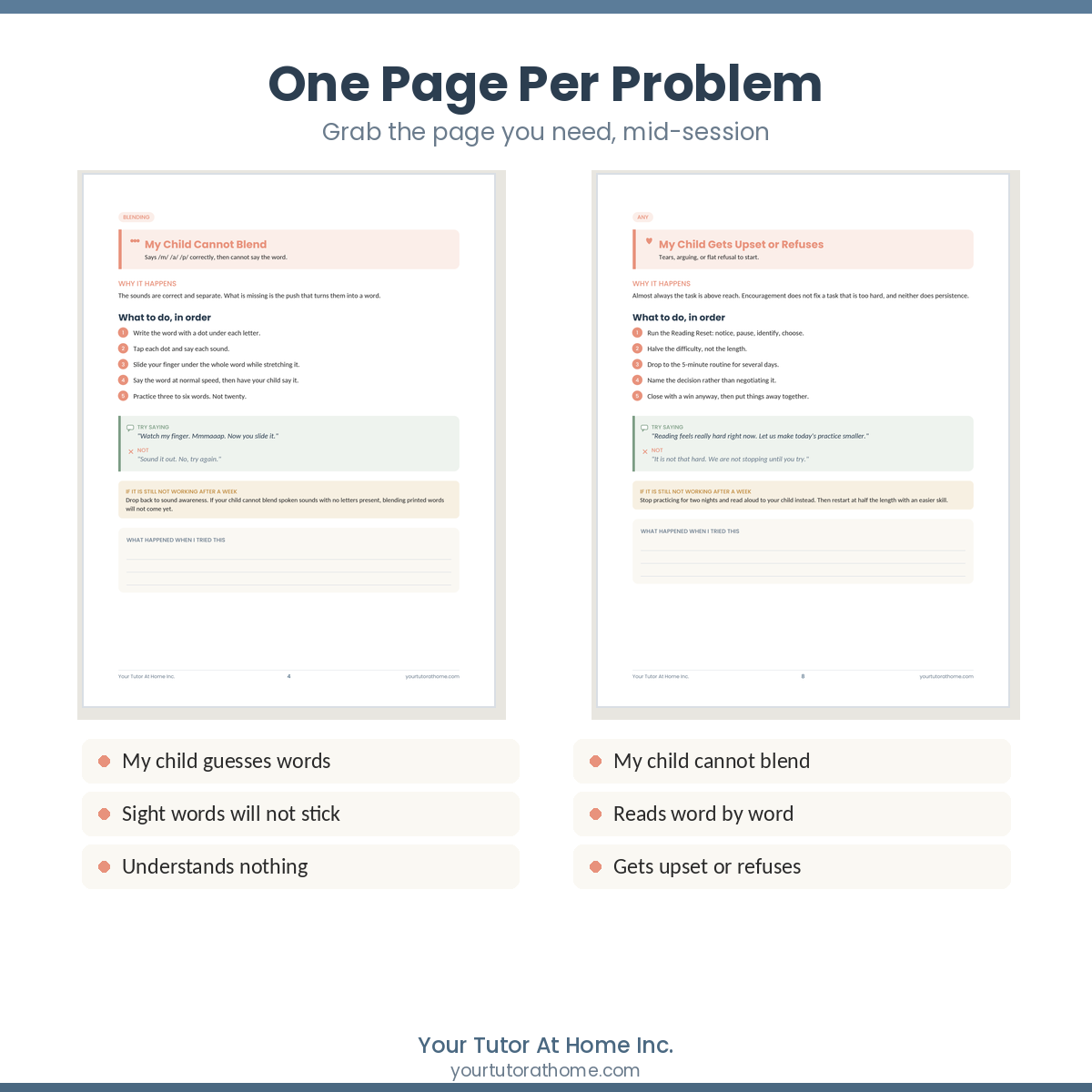
- Quick reference: one page per reading problem
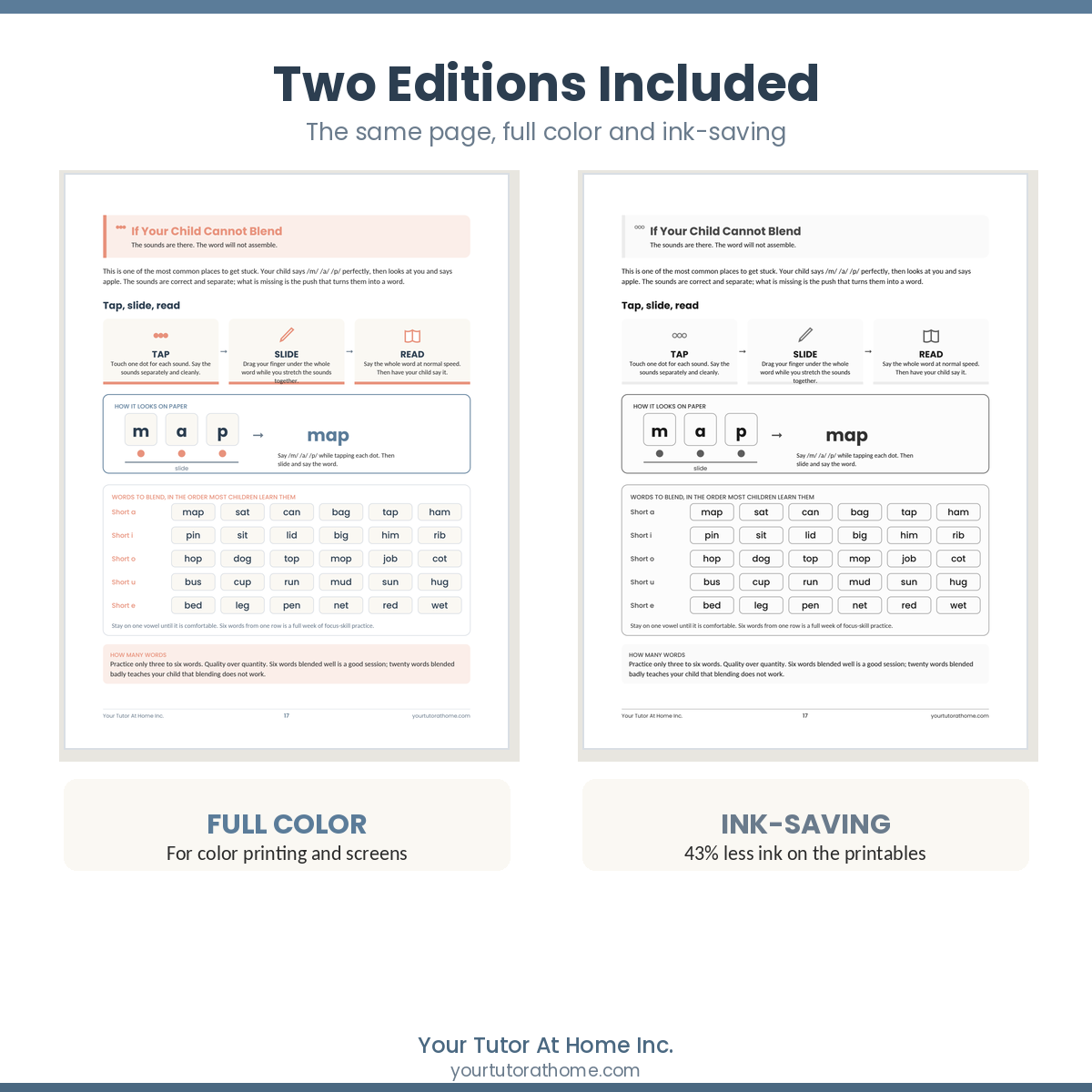
- Ink-saving editions of everything
Includes 5-minute and 10-minute versions for the days fifteen is too much. Ages 5-9, adjusted by reading level.
Free instant download. Six PDF files.
You do not need a longer reading session. You need a clearer one.
Product Description
Most parents of a struggling reader are not short on effort. They are short on structure. You sit down after dinner, you open the book, and within four minutes nobody is enjoying this. So the next night you try harder, and longer, and by Thursday reading practice is the worst part of the day for both of you.
A daily reading routine fixes that, and it does not do it by adding more practice. It does it by giving the practice a shape, so that you always know what comes first, what to say when your child gets stuck, and when to stop. This one is a free download, and it is complete — nothing is held back for a paid version.
Contents
- What a daily reading routine actually looks like
- Why fifteen minutes is enough
- What is inside the six files
- The five steps, explained
- What to do when reading gets hard
- Who this is for
- How to start your daily reading routine tonight
- What this is not
- Questions parents ask
What a Daily Reading Routine Actually Looks Like
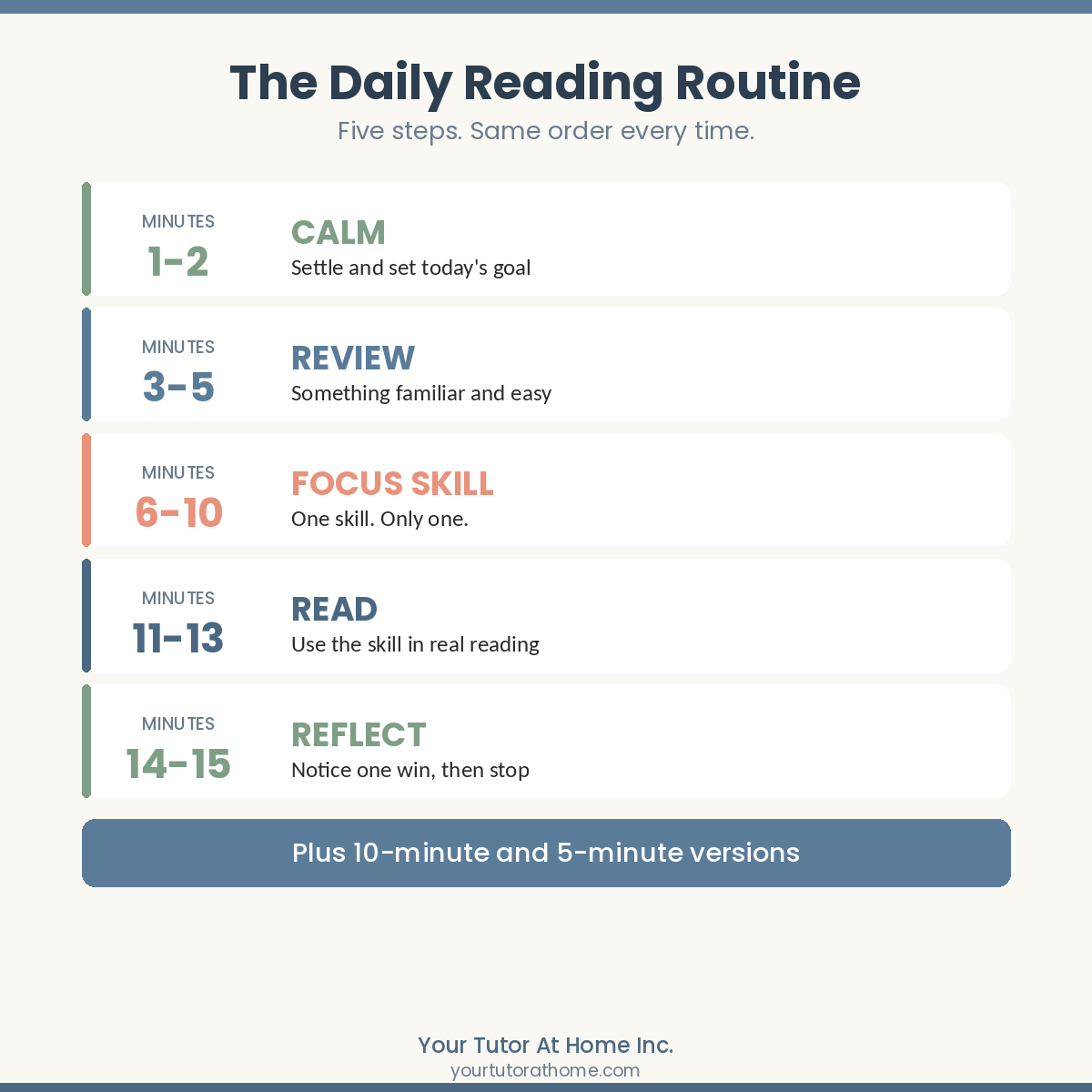
The 15-Minute Reading Strategy Guide™ is built around five steps that run in the same order every single time: Calm, Review, Practice, Read, Reflect.
That order is not decorative. Starting with something familiar means your child gets an early success before any real effort. Practicing one skill rather than five means the effort actually lands somewhere. Ending on a noticed win is what makes your child willing to sit down again tomorrow.
Once a daily reading routine runs the same way each evening, the arguing usually drops before the reading improves. That is normal, and it is the first sign it is working.
Why Fifteen Minutes Is Enough
A child who is sounding out every word is doing something genuinely effortful. Twenty minutes of that is not twice as useful as ten. It is often less useful, because the last ten minutes get spent managing frustration instead of practicing reading.
Fifteen minutes is short enough to feel manageable on a normal weeknight, long enough for one skill to get real practice, and easy enough to repeat. Repetition is what builds reading, not length, which is why a short daily reading routine beats an occasional long one.
This guide also includes a 10-minute routine and a 5-minute backup routine, so a hard day shortens the daily reading routine instead of cancelling it. That single design choice is what keeps families going in week three, which is where most home practice quietly stops.
What Is Inside the Six Files
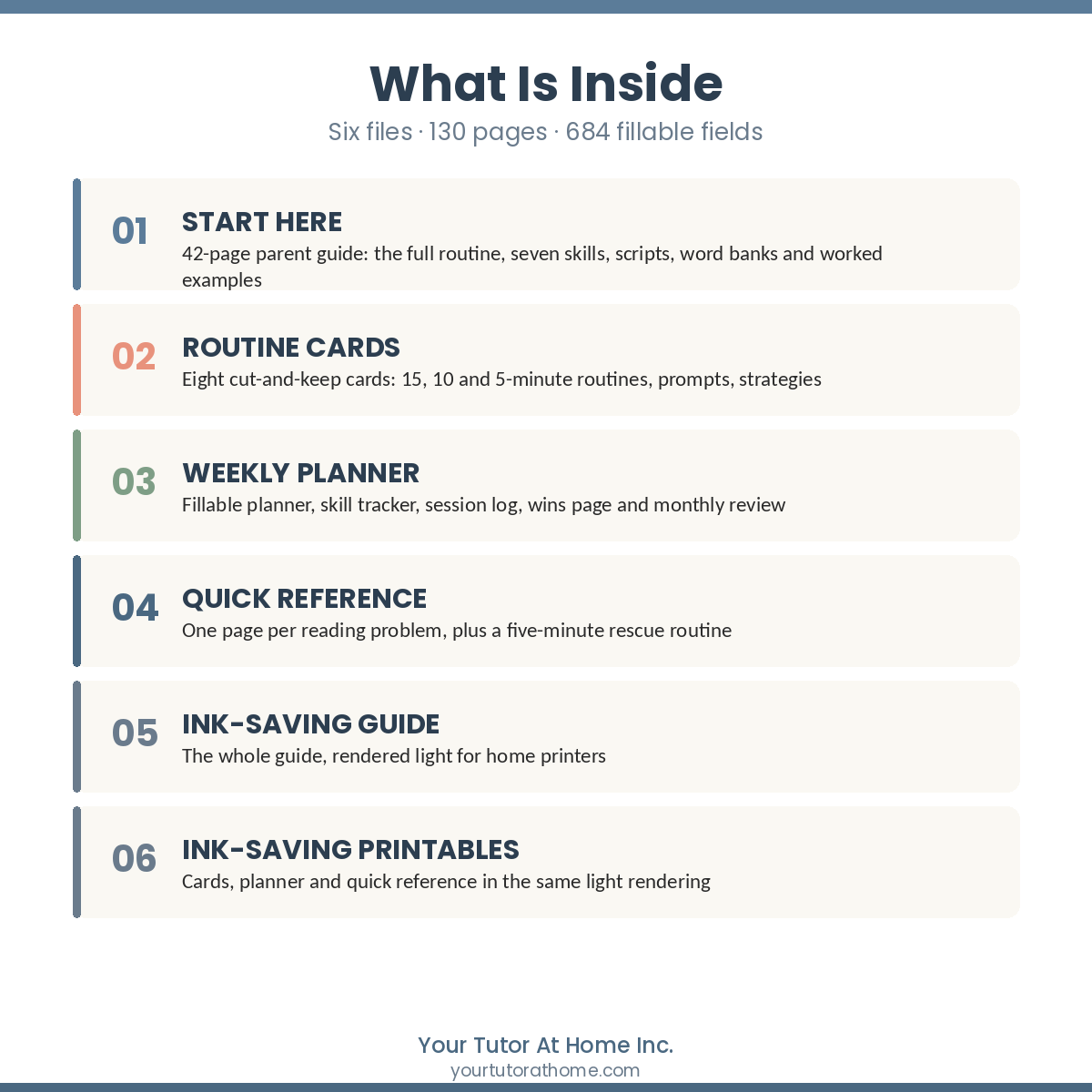
01 Start Here — a 42-page parent guide covering the full routine, seven reading skills, parent scripts, word banks, three worked family examples, ten troubleshooting scenarios and an eight-question FAQ.
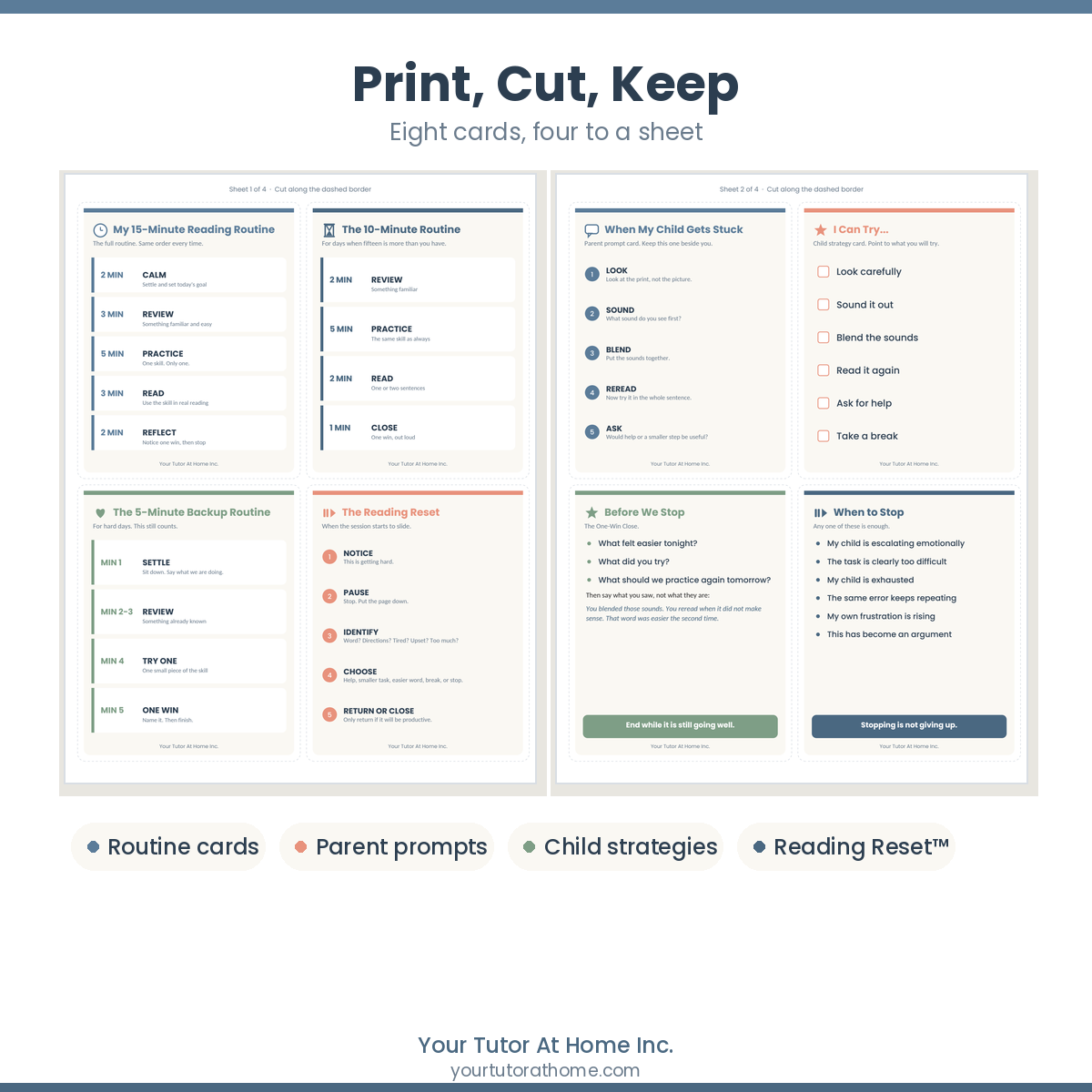
02 Routine Cards — eight printable cards: the 15, 10 and 5-minute routines, the Reading Reset™, a parent prompt card, a child strategy card, and two closing cards. Four to a sheet, cut and laminate.
03 Weekly Planner — fillable weekly planner, four-week skill tracker, session log, reading wins page, materials list and monthly review.
04 Quick Reference — one page per problem. Guessing, blending, sight words, word-by-word reading, no comprehension, refusing to start, plus a five-minute rescue routine.
05 and 06 — ink-saving editions of everything, for home printers.
130 pages. 684 fillable fields. Type on screen or print and write. Between them the six files cover every part of a daily reading routine, from the first two minutes to what you decide to practice tomorrow.
The Five Steps, Explained
Minutes 1-2, Calm. Choose the material before you call your child over. Sit beside them, not opposite. Say today’s goal in one short sentence.
Minutes 3-5, Review. Something familiar and easy. Five letter sounds, five sight words, or one sentence from yesterday.
Minutes 6-10, Practice. One skill. The guide includes a table that matches what you are seeing at home to the skill that needs the work, so your daily reading routine is aimed at the right thing rather than everything.
Minutes 11-13, Read. Use the skill in real reading. Practiced short a? Read cat, map, fan, then The cat sat.
Minutes 14-15, Reflect. The One-Win Close™. Name one thing your child did, then stop — while it is still going well.
What to Do When Reading Gets Hard
Every home reading session goes wrong sometimes. The guide includes the Reading Reset™: notice, pause, identify, choose, then return or close. It also includes parent scripts for the moments you have three seconds to decide what to say, and a clear list of when to stop.
Stopping an unproductive session is not the same as giving up on reading. A daily reading routine that ends early on a bad night survives; one that gets forced through does not.
Who This Is For
Parents and caregivers of children roughly ages 5 to 9, adjusted by reading level rather than birthday. A daily reading routine works at any of those ages because the structure stays the same and only the skill changes. It suits children who guess words, cannot blend sounds, read word by word, or read accurately and remember nothing. Teachers and tutors use the cards and planner too. If your child is already receiving reading support at school, ask their teacher which skill they are working on and practice that same skill — aligned practice helps, a second competing program does not. For background on early reading development, Reading Rockets and Understood are both reliable, and the CDC’s child development pages cover the wider milestones.
How to Start Your Daily Reading Routine Tonight
Print file 02, cut out the 15-Minute Routine Card, and read two pages of the guide. That is enough to run tonight’s session. You do not need to read all 42 pages first, and you do not need to announce a new system to your child. A routine that is explained becomes a negotiation; a daily reading routine that is simply run becomes normal in about four days.
If you want to work on specific skills alongside this, pair it with our phonics worksheets or the Reading Confidence Workbook. If you are not yet sure why reading is difficult, start with the free reading checklist. For the rest of the day’s rhythm, see our printable routine cards.
What This Is Not
This is not a phonics curriculum, a reading assessment, or a promise that fifteen minutes fixes every reading difficulty. It does not diagnose dyslexia or any other condition. It teaches you how to structure the practice; other resources teach which skills to practice in depth.
A daily reading routine makes home practice calmer and better aimed; it is not a substitute for school instruction or a professional evaluation. If your child is falling further behind despite consistent practice, talk to their teacher and ask about a formal evaluation. The guide includes a full page on exactly when to do that.
Questions Parents Ask
Is fifteen minutes really enough? For daily practice at home, yes. Consistency across weeks does the work, not length.
Should we practice every day? Three to five days a week is plenty. Seven is not better, and it makes a missed day feel like failure.
What if we fall off the routine? Restart with one five-minute session and go back one step. There is no catch-up in this system, and a daily reading routine is far easier to restart than to rescue mid-collapse.
Is it fillable? Yes. 684 fields across the pack. Type on screen, or print and write.
How fast will we see progress? Willingness usually shifts within a week. Skill changes take three to six weeks of a consistent daily reading routine, sometimes longer, and that is within the normal range.
Free instant download. Six PDF files. Print at home as often as you like, for as long as you like.


Reviews
There are no reviews yet.