
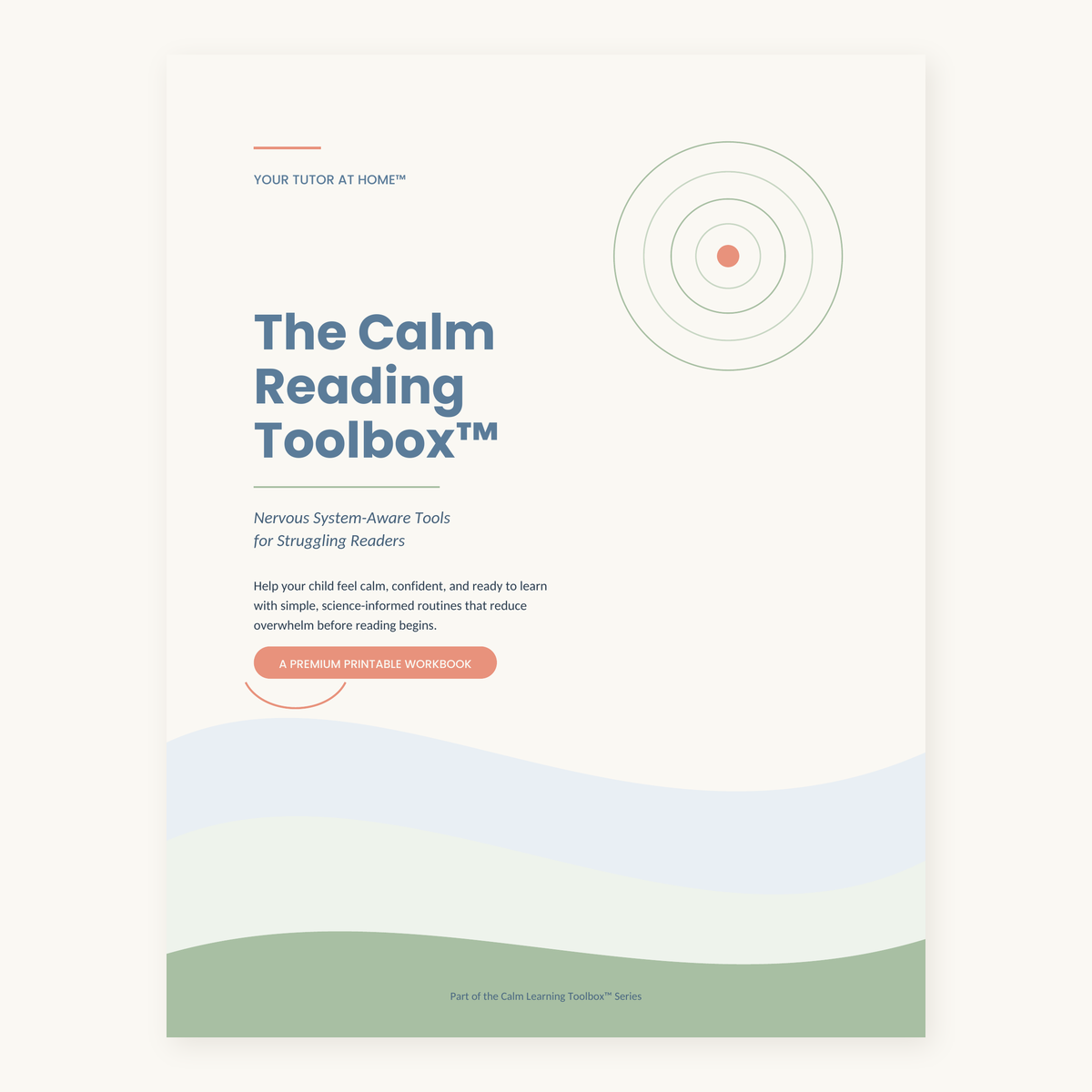
The Calm Reading Toolbox™ — Reading Anxiety Tools for Kids Ages 5–11
$27.00
Your child cannot sound out a word while their body is preparing to run. If reading ends in tears most nights, you are not looking at a phonics problem — you are looking at reading anxiety.
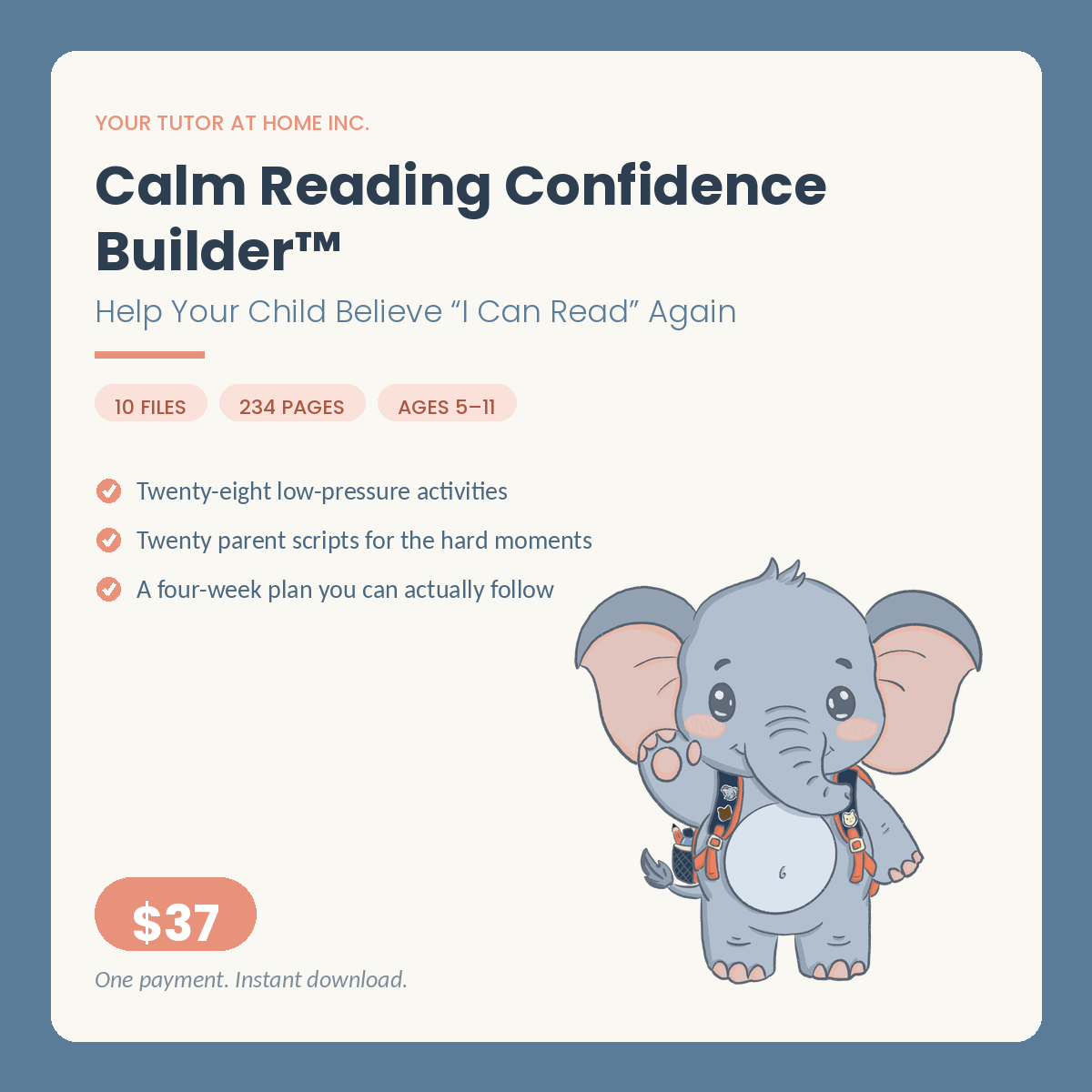
This is not another phonics program. It is the five minutes before the book opens: 137 pages of nervous-system-aware tools that get a child calm enough to learn.
- 30 before-reading calming tools, all five minutes or less
- 11 tools for the moment it starts to slide
- 50 parent scripts for when you have run out of your own words
- Printable cards, trackers, games and a 30-day plan
137 pages · Instant PDF · Ages 5–11 · Lifetime access
Product Description
If reading ends in tears most nights, you are not looking at a phonics problem. You are looking at reading anxiety. You have been told your child needs more practice. So you tried. And it got worse.
Reading is one of the most demanding things we ask a young brain to do. But the thinking brain only gets a turn once the protective brain decides it is safe — and to a child who has felt slow and watched, an open book is a threat. That is not defiance. That is biology.
The Calm Reading Toolbox™ works on the part everyone skips. Not the phonics. The state your child is in when the phonics arrives.
In this guide
- What reading anxiety actually is
- Is this reading anxiety, or a phonics gap?
- What reading anxiety looks like at your kitchen table
- What is inside — all 137 pages
- How to use it tonight
- Who this reading anxiety toolbox is for
- Who this is not for
- What you get
- About Mrs. Nathalie
What reading anxiety actually is
Reading anxiety is not a mood and it is not an attitude. It is a protective response running in a small body that has learned to associate books with being wrong in front of someone who matters.
The mechanics are simple enough once someone explains them. A child who feels watched and behind goes into fight, flight, freeze or fawn. Blood moves away from the parts of the brain that hold letters, sequence sounds and retrieve words. The child is not refusing to try. In that moment, the equipment for trying has genuinely gone offline.
Which is why more practice makes it worse. Every extra session at the kitchen table adds another entry to the file marked reading is where I fail. You are not building skill. You are deepening the association, kindly, night after night, with the best intentions in the world.
This is the piece almost every reading program skips. They start at the letters. Reading anxiety starts before the letters, and if you do not deal with it first, the letters never land.
Is this reading anxiety, or a phonics gap?
They look almost identical at the kitchen table — the refusing, the guessing, the tears. But they need opposite responses, so it is worth two minutes to work out which one you are living with.
If your child can read the words on a calm day but falls apart on a bad one, that is reading anxiety. The skill is there. Access to it is not. This is the right place to start.
If reading is steady but slow and the sounds simply are not there yet, that is a gap. Start with the Sound-by-Sound Practice Pack instead and come back here if the tears carry on once the skills arrive.
Not sure? Take the free 2-minute reading quiz and it will tell you which one you are dealing with.
Plenty of families have both, in which case the order matters: calm first, skills second. A regulated child can absorb instruction. A braced one cannot, however good the instruction is.
What reading anxiety looks like at your kitchen table
- Refusing before the book is even open
- “I’m stupid,” or “I can’t”
- Stomachaches at homework time
- Guessing wildly at words they read fine yesterday
- Melting down over a single correction
Every one of those is a nervous system doing its job. None of them are choices, and none of them respond to more phonics. Once you can name reading anxiety for what it is, you stop taking it personally — and that alone changes how the next session goes.
What is inside — all 137 pages
- Part 1 — Why reading is not just about reading. Fight, flight, freeze and fawn in plain parent language, with a checklist to spot which one you are seeing.
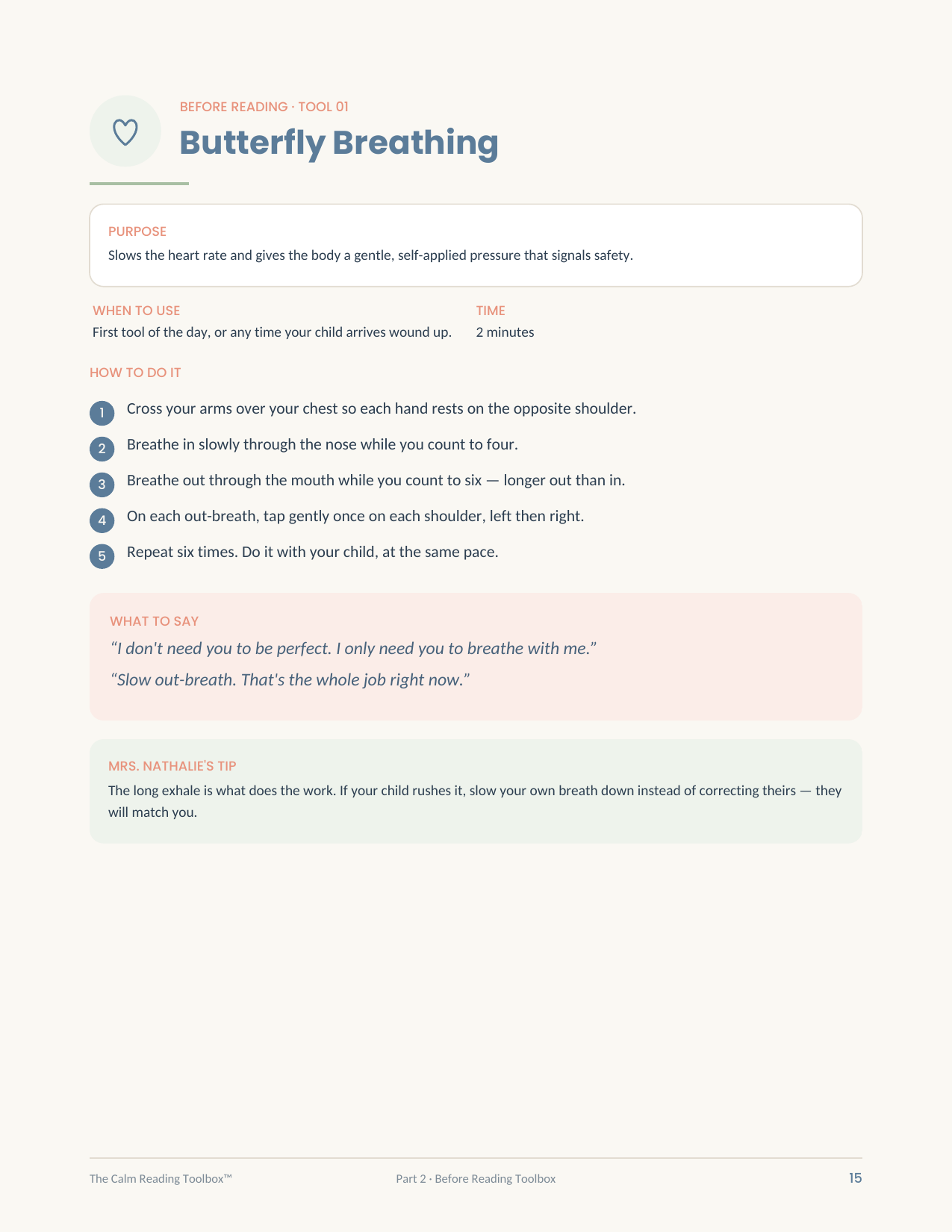
- Part 2 — The Before Reading Toolbox. 30 calming tools, one per page: purpose, when to use it, how to do it, what to say. All five minutes or less.
- Part 3 — The During Reading Toolbox. 11 tools for the moment it starts to slide.
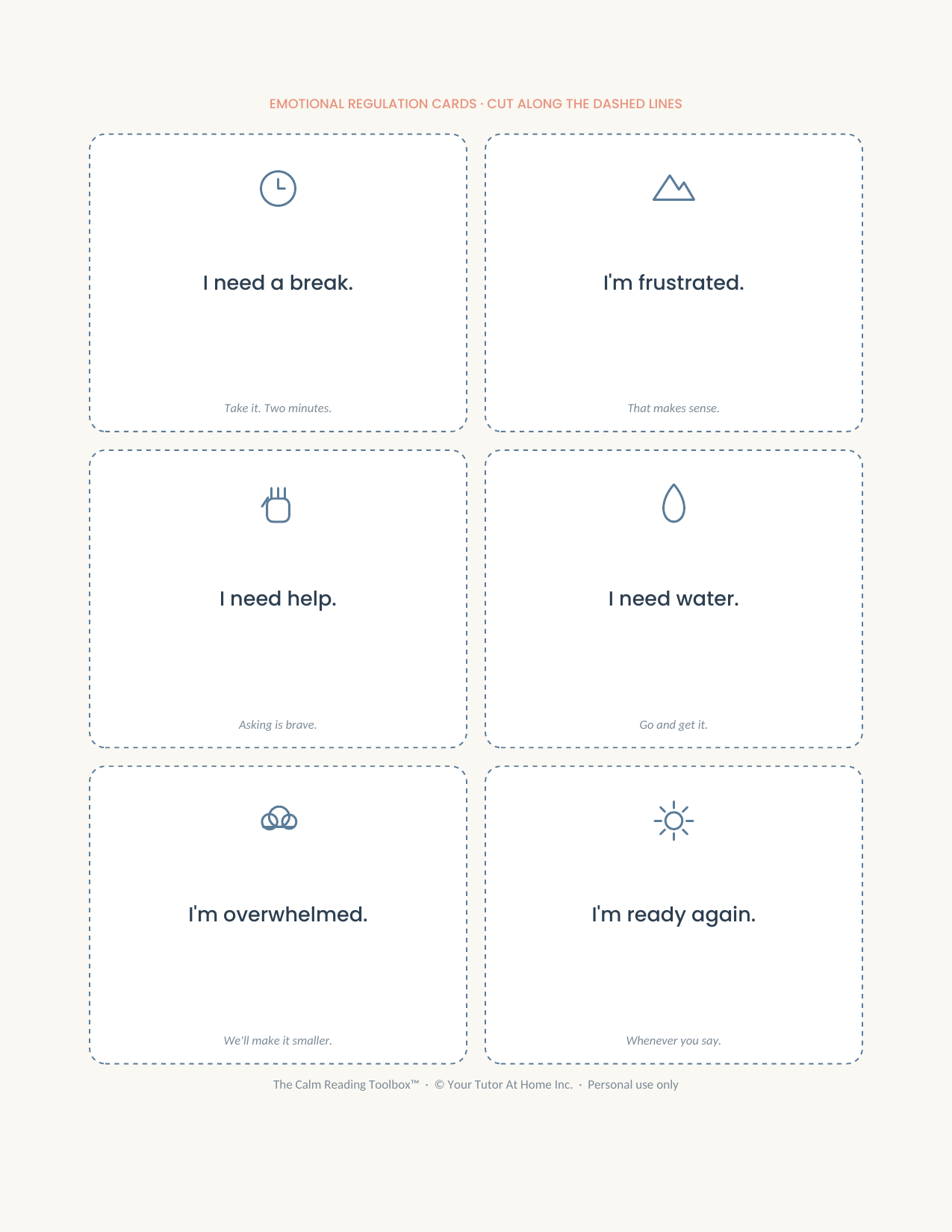
- Part 4 — Emotional Regulation Cards. 12 printable cut-out cards.
- Part 5 — Confidence Builders. 30 printable cards for the child who says “I’m stupid.”
- Part 6 — Calm Reading Games. 25 ways to read without it feeling like reading.
- Part 7 — Parent Scripts. 50 swaps for the moments you have run out of your own words.
- Part 8 — Reading Reset Plans. Four ready-made sessions: 5, 10, 15 and 20 minutes.
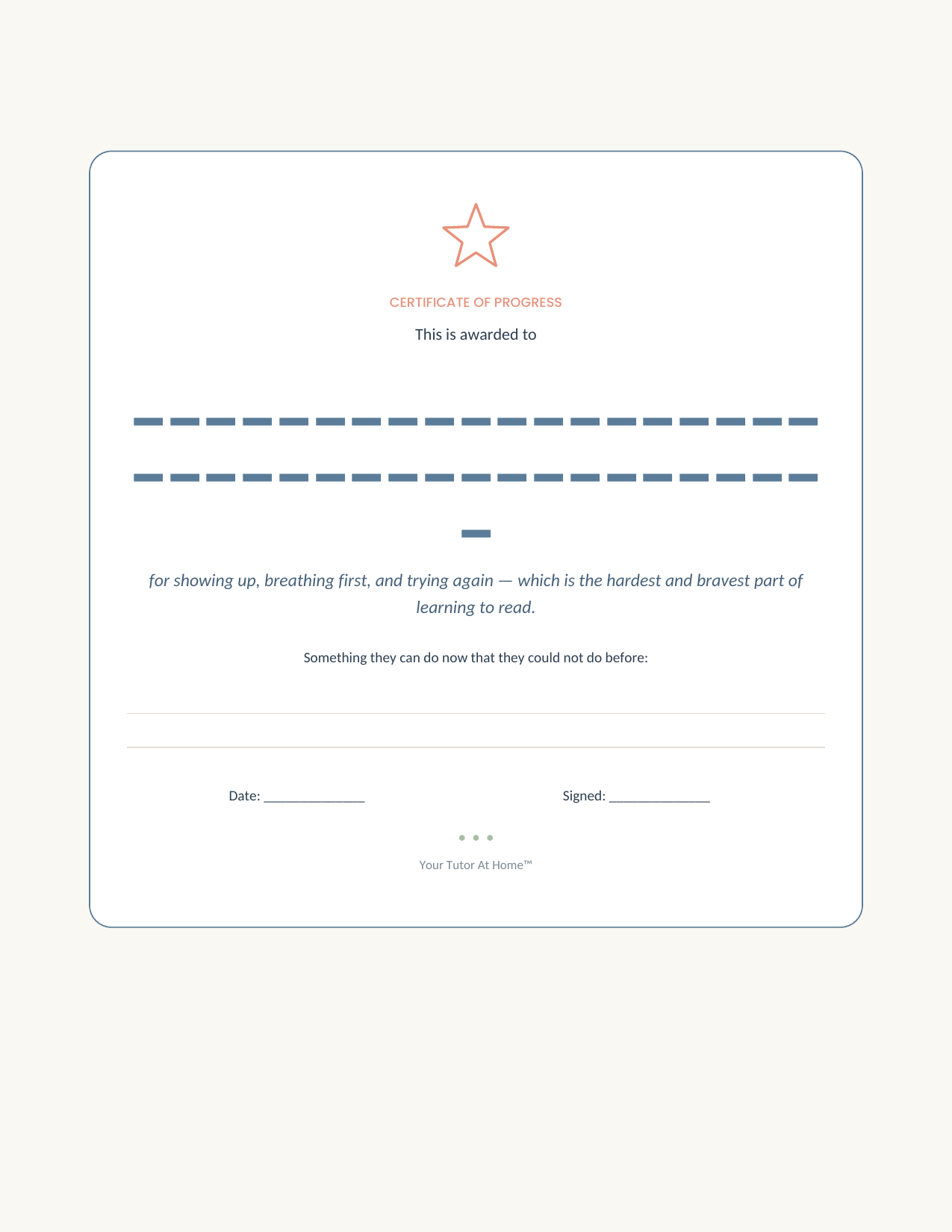
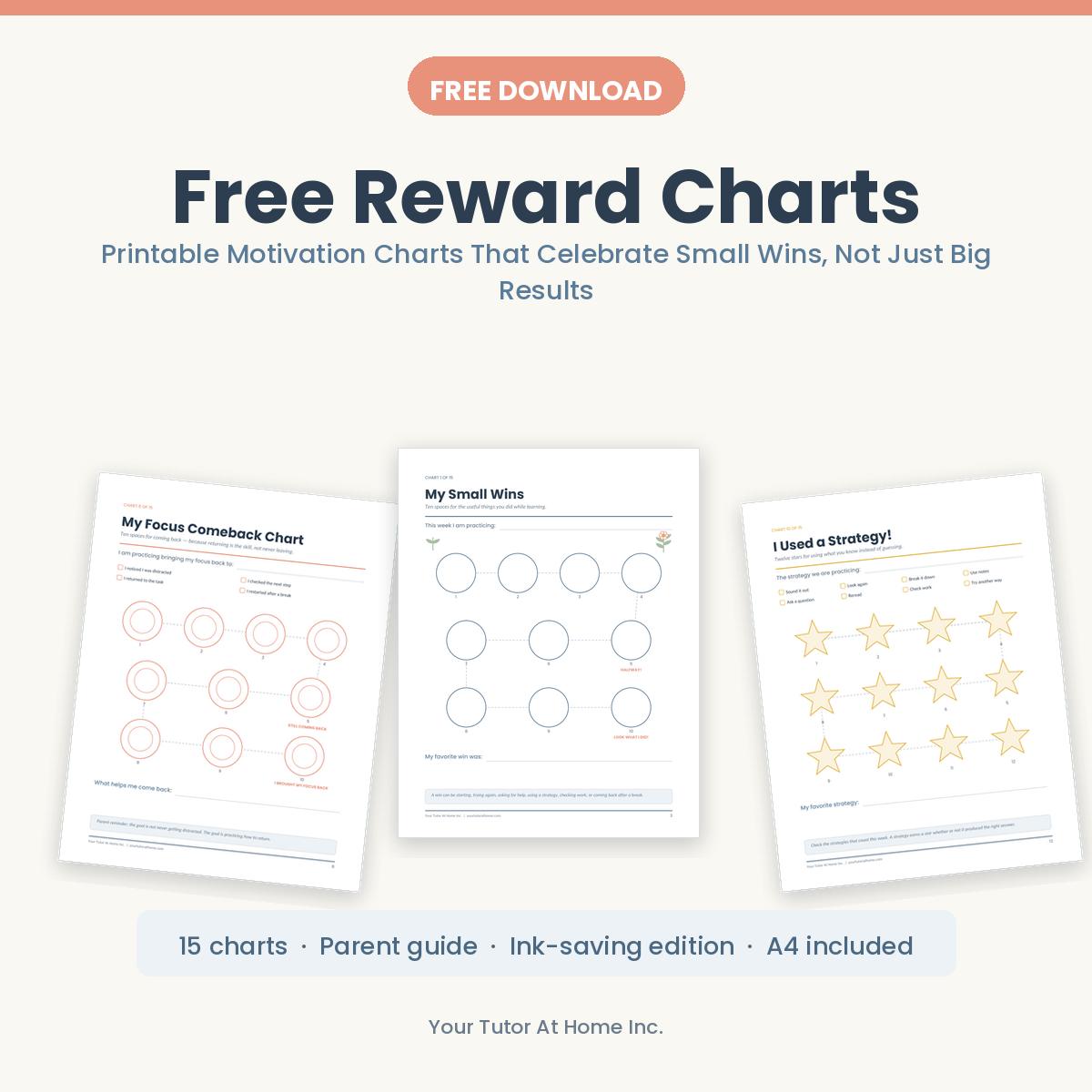
- Part 9 — Printable Tools. 15 trackers, charts, certificates and checklists.
- Part 10 — Troubleshooting. The eight hardest situations, one page each.
- Bonus. 50 Calm Reading Challenges, 12 reward coupons, and a 30-day Calm Reading Plan.
How to use it tonight
You do not read 137 pages before you start. Open Part 1, work out which stress response you are looking at, then pick one tool from Part 2 and use it before the book comes out tonight. That is the whole first session, and it is usually the first evening in months that does not end badly.
The tools are deliberately short because reading anxiety peaks at exactly the moment you have least patience left. Five minutes is the ceiling on purpose. If a tool takes longer than that, it will not survive a Tuesday. Reading anxiety does not wait for a good week.
From there, most families settle into a rhythm: one calming tool before, one during tool held in reserve, and the parent scripts open on the counter for the sentence you cannot find yourself. The 30-day Calm Reading Plan in the bonus section sequences it for you if you would rather be told what to do each day.
Who this reading anxiety toolbox is for
This is for you if reading ends in tears or arguing. If your child says “I’m stupid.” If you have tried apps, flashcards and reward charts and nothing sticks. If your child is anxious, ADHD, dyslexic, autistic, or simply worn down by school.
It suits children roughly ages 5 to 11, and it does not ask you to know any phonics terminology. If you can read a page out loud, you can run every tool in it.
It also works well next to skill-based practice rather than instead of it. Parents often pair it with the 4-Week Reading Reset Planner for structure, or move on to the Reading Confidence Workbook once the tears have stopped and the child is ready to build on calm ground.
If you want to read more about the underlying research, Reading Rockets has excellent free parent guidance on shared reading, Understood.org is the best free resource on learning and thinking differences, and the Child Mind Institute covers childhood anxiety in accessible parent language.
Who this is not for
This is not for you if you want a phonics curriculum, and it is not for a child whose reading anxiety has never been part of the picture. There are no scope-and-sequence charts here and no decodable readers. This prepares the brain for a curriculum; it does not replace one.
It is also not a diagnosis. If your child’s distress reaches beyond reading — sleep, appetite, friendships, school refusal — that is worth a conversation with your pediatrician or school counselor, and these tools sit comfortably alongside that support rather than in place of it.
What you get
- 137 pages of reading anxiety tools across 10 parts, plus a bonus section
- 30 before-reading tools and 11 during-reading tools, all five minutes or less
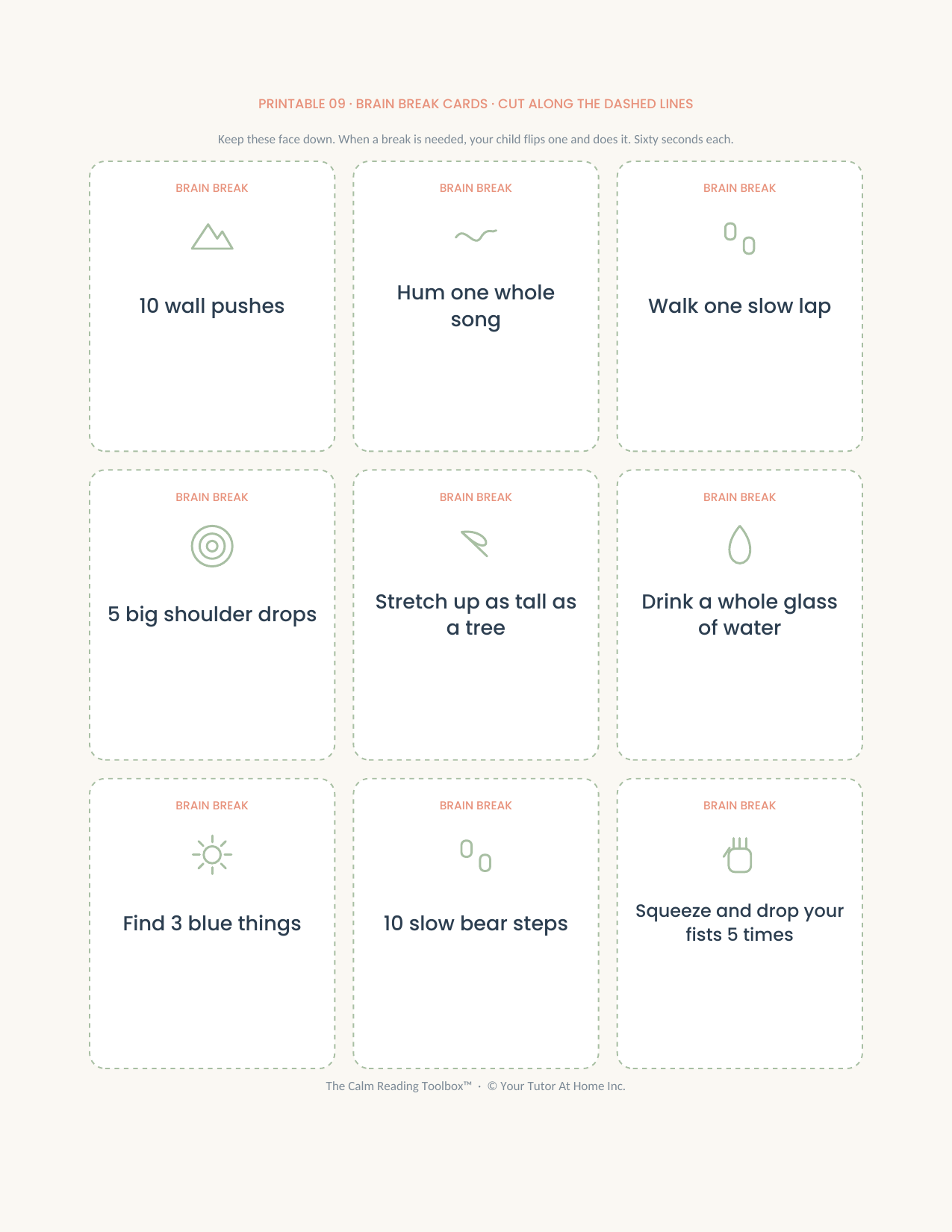
- 50 parent scripts, 42 printable cards, 25 games and 15 printable trackers
- Four ready-made reading reset sessions and a 30-day plan
- Instant PDF download, US Letter, print at home as often as you need
- Lifetime access — re-download and re-run it with a younger sibling later
- Personal, single-family use
About Mrs. Nathalie
Written by Mrs. Nathalie, an experienced tutor with more than 20 years working with struggling readers, neurodivergent learners, and children of every learning style. Everything here is built on the C.A.L.M. Learning Method™ — calm first, then skills, then confidence, then independence.
You do not need to fix reading anxiety before tonight’s session. You only need one tool, used once, before the book opens.

Reviews
There are no reviews yet.